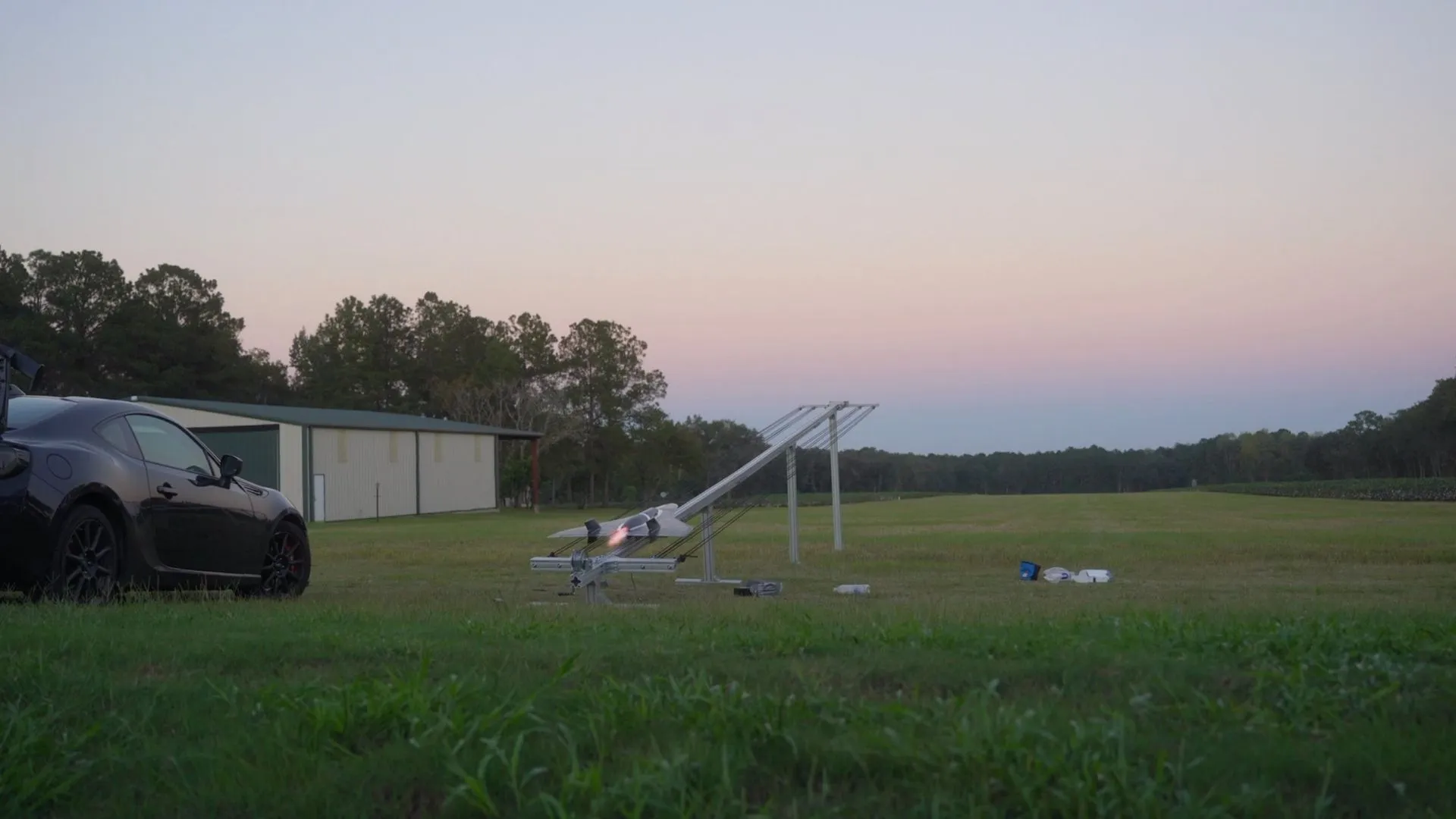
A jet-powered drone built in a US university dormitory has broken the world record for the fastest jet-powered aircraft, according to a social media post by Georgia Tech aerospace engineering student Tomas Salvo.
The plane, which he called the Reaper, reached a speed of 491 miles per hour (790 km/h) and carried a payload of 2.6 pounds (1.2 kg).
The radio-controlled (RC) drone reached a maximum altitude of 6,500 feet, covered a total range of 31 miles at full speed, and maintained flight at that speed for four minutes.
Smallest jet-powered drones
He built three such models, and each of them achieved the record speed Salvo saidthey are “the fastest small jet-powered drones in the world.”
The engineer added that the aircraft he is building can be launched from either a truck or a railway line and can reach peak altitudes in less than 20 seconds.
“The Reaper can be launched on rail or truck, climb to 2,000 m (6,600 ft) in less than 20 seconds and then fly 50 km (31 miles) at full speed,” he posted on his social media account.
In a video posted online, Salvo, along with two others, were seen demonstrating the takeoff from an open field, with screeching sounds heard in the background as the plane’s engine ignited before giving it the final push for takeoff.
3D printed titanium nozzle
His 3D printed aircraft has a titanium nozzle on the engine that replaces the standard nozzle. This means the engine sits significantly further forward and improves the center of gravity without creating additional weight in the front area. The exterior is made from custom-molded carbon fiber with a laser-cut interior structure, keeping it lightweight with a total weight of 11 pounds.
Young engineers achieved record speeds, but it is still far from Mach 1, which is 767.3 mph (1,234.8 km/h).
In early October, a team of graduates from the University of Bath made a similar attempt to reach a speed of 0.8 Mach with their 3D-printed, jet-powered remote-controlled aircraft Kingchaser. The three-foot-tall aircraft was made of thermoplastics, polyethylene terephthalate glycol-modified (PETG), carbon fiber-reinforced polyphenylene sulfide (PPS-CF), carbon fiber rods and aluminum.
It reached a top speed of 205 mph (330 km/h) when powered by a miniature jet turbine capable of producing 63 newtons (N) of thrust.
The original plan was to accommodate a 150N jet engine to reach a speed of 614 mph (988 km/h). However, the team decided to build a vehicle that was 20 percent larger, weighing almost 20 pounds (9 kg), heavier than Salvo’s reaper.
The team also used titanium in their design, but limited it to the exhaust panels to protect the aircraft from the heat of the engine. The main skeleton consisted of an aluminum frame and was reinforced with steel to mount the engine.
In the US student’s most recent demonstration on October 30, the Reaper exceeded the top speeds achieved by the Kingchaser by almost 2.5 times, demonstrating robust technical design and performance.
After his final tests, Salvos was confident that he had built a reliable and repeatable system. He hopes to increase the top speed to over 500 mph (800 km/h) with small tweaks in his future testing.
