The drive for sovereign AI is also reaching university research laboratories, where control over data, models and calculations now shapes scientific work.
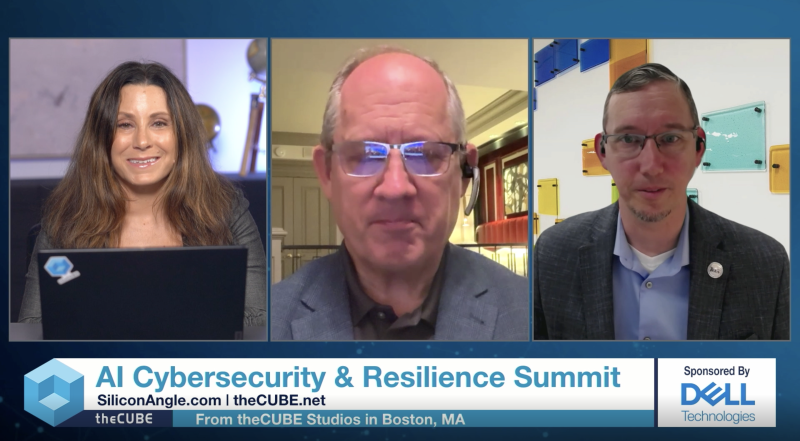
Universities are at an unusual crossroads in current technological change, as their work includes open education and tightly controlled federal research. According to Vince Kellen (pictured center), chief information officer of the Texas A&M University System, learning is at the heart of both missions, making AI a key enabling technology for expanding research and education.
“AI is a platform for thinking. It is a platform for discovery,” Kellen noted. “AI is, in a sense, the basis for everything we will do in the future – certainly also for what we do now in the present.”
Kellen and Casey Bryan (right), chief information officer of the Texas A&M Engineering Experiment Station, spoke with Krista Case (left) during theCUBE’s coverage of the AI Cybersecurity & Resilience Summit. They discussed how Texas A&M is creating a safe, controlled foundation for AI-powered research. (*Disclosure below.)
Building a sovereign AI foundation for large-scale research
The foundation of Texas A&M’s approach is IGNITE, short for Innovative Growth in Next Generation AI Technology Ecosystem. This is a government-funded AI and high-performance computing platform led by TEES, as the experimental station is called. Dell Technologies Inc. is building the system with graphics processing units from Advanced Micro Devices Inc. at an Equinix Inc. data center in Dallas. This investment will give research teams the computing power that their existing systems lack, Bryan emphasized.
“Part of our current challenge is that existing resources, while doing some of this work, are severely underutilized,” he said. “Research is ongoing but could be supported by capacity and scale, which I believe IGNITE will bring.”
But economics is just as important as capability. Public attention has focused on neoclouds and cloud providers, but Kellen says on-premises data centers are increasing significantly due to security controls and costs. High retail prices for AI computing resources now limit the ability of institutions to conduct scientific research.
“There is no way today to take the science to your classic Neocloud provider and do the same thing,” Kellen said. “It’s 5 to 10 times the cost.”
Controlling these assets significantly reduces costs and increases security, Kellen said. Sovereignty encompasses four pillars – data, infrastructure, capability and model, and governance – with Equinix providing physical protection for the computing power itself, Bryan added. As a government agency, TEES follows the National Institute of Standards and Technology’s 800-53 and 800-171 frameworks, as well as Texas Administrative Code 202, and wants IGNITE to be ready for Cybersecurity Maturity Model Certification Level 2.
“There are a lot of controls we need to put in place, but our researchers shouldn’t have to think about all of them,” Bryan said. “Using the functions should be absolutely seamless.”
This principle shaped the IGNITE build. When TEES sat down with Dell’s implementation team to plan workshops, security was a top priority, and the project’s architectural review board has since endorsed that direction, Bryan said. For institutions launching their own sovereign AI projects, this order is the lesson.
“The idea was to create a security foundation upon which all other operational components could be built and relied upon,” Bryan said. “Essentially, start security early – build it into the process earlier – and it’s much easier to maintain it from the start rather than having to worry about adding it at the end.”
Here is the full video interview, part of SiliconANGLE and theCUBE’s coverage of the AI Cybersecurity & Resilience Summit:
(*Disclosure: TheCUBE is a paid media partner for the AI Cybersecurity & Resilience Summit 2026 event. Neither Dell, the sponsor of theCUBE’s event coverage, nor other sponsors have editorial control over theCUBE or SiliconANGLE content.)
Photo: SiliconANGLE
Support our mission to keep content open and free by interacting with theCUBE community. Join theCUBE Alumni Trust Networkwhere technology leaders connect, share information and create opportunities.
- Over 15 million viewers of theCUBE videosto spark conversations about AI, cloud, cybersecurity and more
- Over 11.4k theCUBE alumni — Connect with more than 11,400 technology and business leaders shaping the future through a unique, trusted network
Founded by tech visionaries John Furrier and Dave Vellante, SiliconANGLE Media has built a dynamic ecosystem of industry-leading digital media brands, reaching over 15 million elite tech professionals. Our new proprietary theCUBE AI Video Cloud is a game-changer in audience engagement, leveraging the theCUBEai.com neural network to help technology companies make data-driven decisions and stay at the forefront of the industry conversation.
