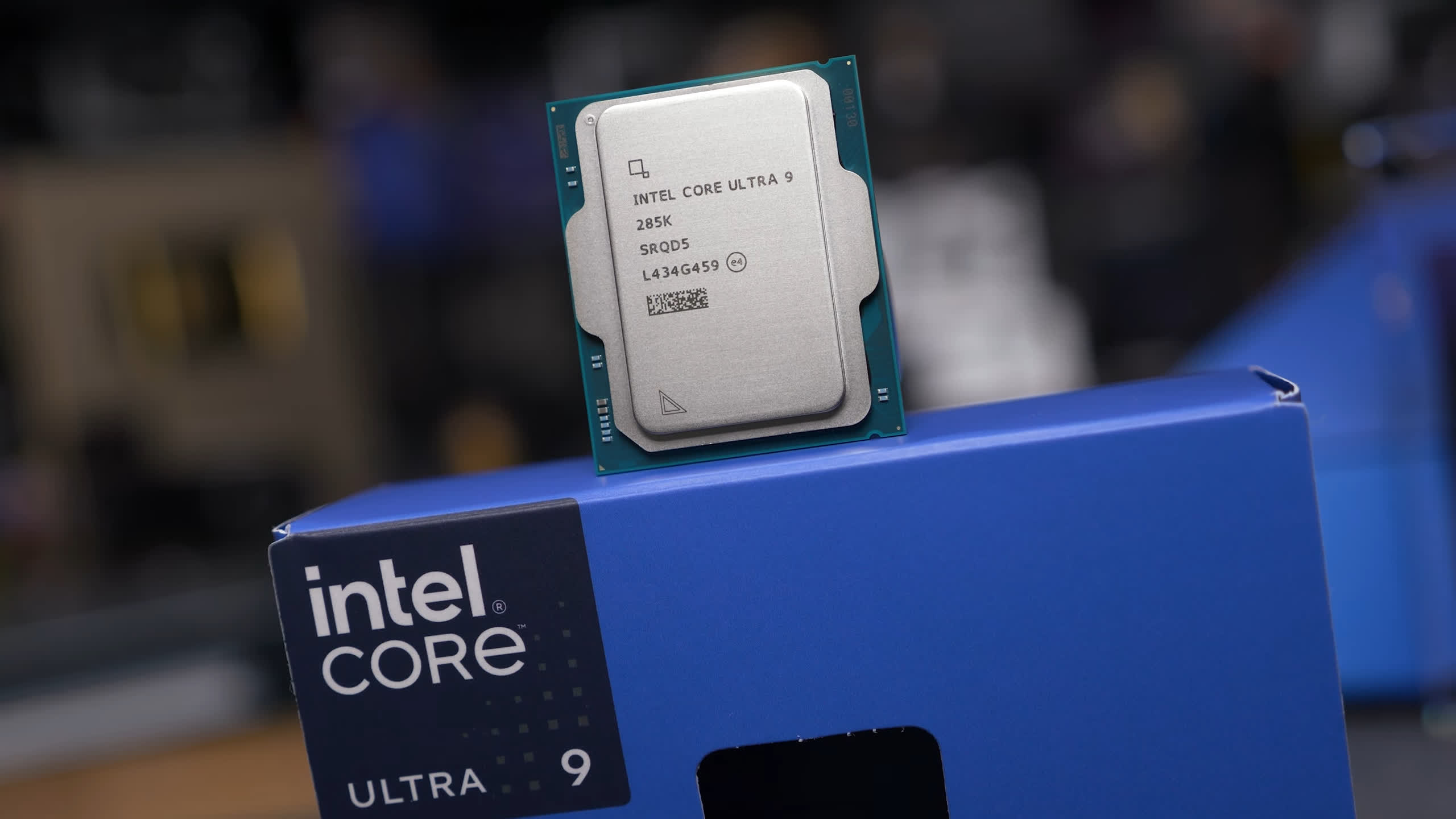
Winners and Losers: After years of losing ground to AMD, Intel finally regained a significant chunk of desktop CPU market share from its bitter competitor in the third quarter of 2026. The shift marks an unexpected turnaround for Intel given the weaker overall outlook for the PC market.
According to data from Mercury Research, Intel reclaimed about 5.1 percentage points of desktop CPU market share from AMD in the third quarter of 2026, increasing its overall share to over 70% and reducing AMD’s to below 30% for the first time in years. According to the report, Intel now holds about 70.1% of the desktop CPU market, while AMD accounts for the remaining 29.9%.
Intel also dominates the lucrative server market, but continued to lose significant market share to AMD in this segment. Intel reportedly accounted for 64.5% of all server CPUs sold between July and September, compared to 72.2% in the third quarter of 2025. The sequential numbers were only slightly better, with Intel’s market share falling one percentage point from 65.5% in the second quarter of 2026.
AMD, the world’s only other mainstream x86 chip vendor, was the obvious beneficiary, with its market share rising 7.7% year-on-year to 35.5%. Sequentially, the company’s share increased by one percentage point to 34.5% in the second quarter of 2026, indicating a significant slowdown compared to previous quarters.
While the above data excludes embedded SoCs and the IoT market, Intel is said to have performed well in this segment as well. According to the report, Intel’s overall CPU market share – including IoT and SoCs – grew 0.2 percentage points to 66.1% compared to the second quarter of 2026. However, year-on-year market share fell by 3 percentage points from 69.1% in the third quarter of 2025.
Analysts at Mercury Research believe that the main reason for Intel’s sudden turnaround was the company’s decision to reallocate production capacity to desktop processors amid lower demand for laptop CPUs. According to the researchers, Intel benefited from a surge in desktop CPU demand in the third quarter after “underserving this market in early 2026.”
To explain the surprising turnaround, Mercury researchers put forward another theory. They suggest that Intel maintained strong sales volumes across OEM and system builder channels during the quarter, even as AMD’s volumes fell due to a downturn in its core gaming and enthusiast markets. The slowdown was reportedly caused by rising PC hardware prices and gaming CPU supply shortages.
AMD’s increasing focus on the high-margin data center market also reportedly hurt its position in the consumer desktop segment. Although the company acknowledged that it was unable to meet retail demand, it prioritized production capacity and growth in data center and AI chips over consumer desktop volumes, aiming to surpass Intel’s total sales by the end of 2026.
