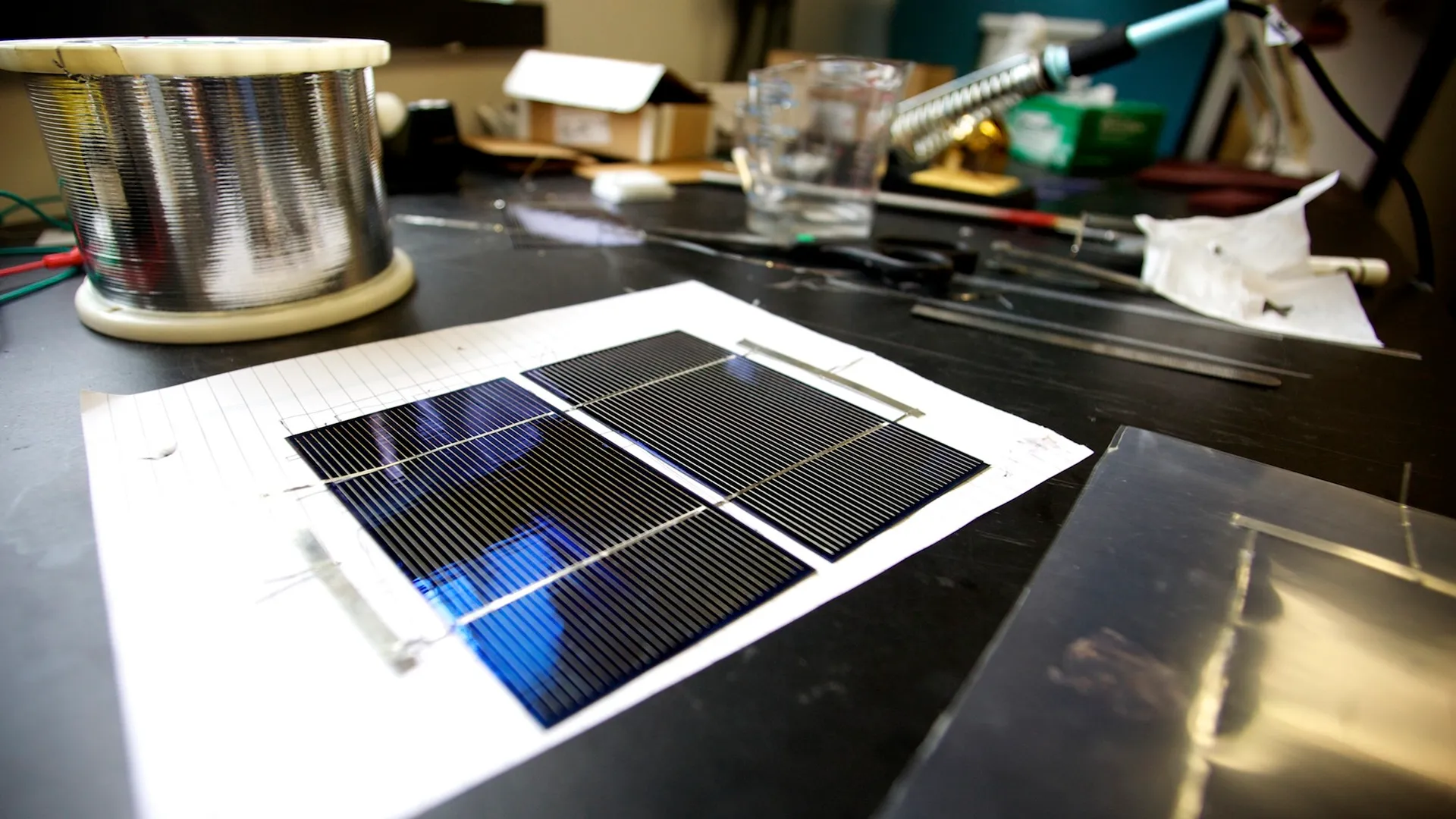
Researchers at Pennsylvania State University (Penn State) have developed a way to control the orientation of living cells using miniature solar cells, potentially offering a wireless alternative to bulky electrical systems used in tissue engineering.
The approach uses tiny photovoltaic cells spread across silicon chips to convert light into local electric fields that influence the cells’ orientation. By changing the size and arrangement of these microscopic solar cells, researchers can direct groups of cells into specific patterns without directly connecting electrodes to them.
The technique could eventually help scientists organize cells more precisely when developing biological tissues through 3D bioprinting.
Miniature solar cells guide the alignment
Bioprinting uses living cells and biological materials called bioink to build tissue layer by layer. The organization of these cells is important because their orientation can influence how tissues develop and function.
Researchers traditionally use electrical stimulation to influence cell orientation. However, these systems often rely on bulky devices, wired electrodes, and invasive connections that make precise control difficult.
To address this problem, the Penn State team developed structured arrays of silicon photovoltaic microcells. These tiny devices capture light, convert it into electrical signals, and generate local fields that influence cell behavior.
In a study published in Advanced functional materialsthe researchers tested two approaches. They changed the diameter of individual photovoltaic cells in the range of 80 to 800 micrometers and experimented with different arrangements while keeping the cell size constant.
The team placed commercially available human lung and skin fibroblasts on the silicon chips. Fibroblasts are connective tissue cells that help form and maintain the structural framework around tissue.
The samples were exposed to different light intensities for seven days. The researchers then compared their alignment to cells grown on chips that were not exposed to lighting.
Light patterns influence growth
The results showed that fibroblasts grown without illumination had a largely random orientation. However, cells exposed to light arranged themselves according to the patterns of the photovoltaic systems.
The researchers also found that changing the lighting intensity affects the electrical response of the solar cells, providing another way to regulate cell orientation.
By adjusting the size, spacing and arrangement of the photovoltaic microcells, the team was able to change the electric fields generated across the chip.
The approach does not provide complete control over cell organization, as interactions between neighboring cells continue to influence their movement and orientation. However, it shows how light-powered electrical stimulation can guide groups of living cells without wired electrodes.
The researchers now plan to test the technique on more sensitive cell types, including heart and muscle cells, to investigate whether electrical stimulation can also affect their functions.
You also want to go beyond flat surfaces and explore three-dimensional environments. This could allow photovoltaic systems to generate electric fields in different directions, allowing greater control over how cells organize in developing tissues.
The results could ultimately lead to more precise tissue engineering and regenerative medicine, although more work is needed before the approach can be applied to functional 3D printed tissues.
