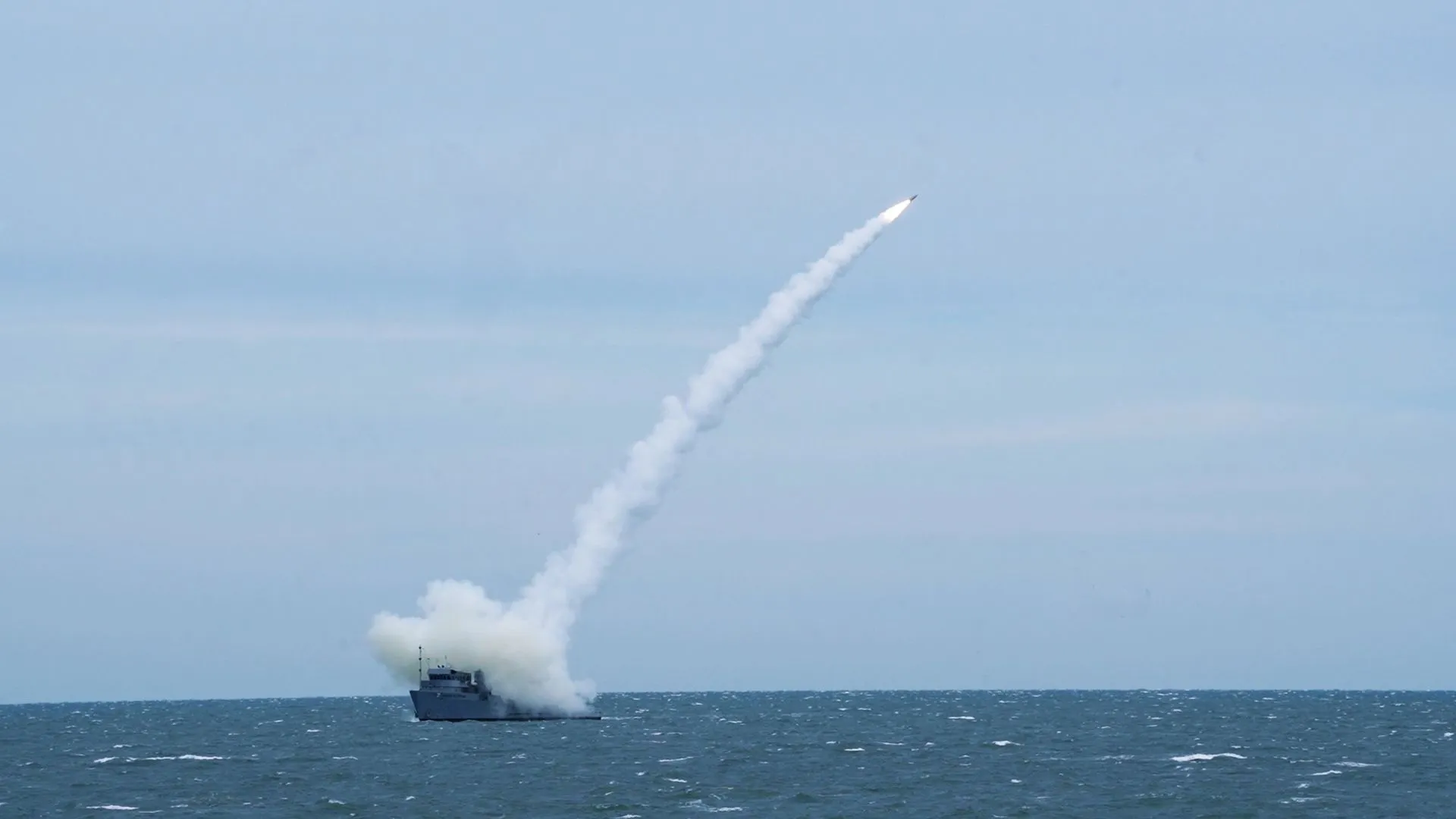
Hanwha Defense USA has demonstrated a new way to deploy precision-guided missiles at sea, launching its Chunmoo missile system from a ship off the coast of Mississippi. The Nov. 15 test deployed a palletized launch vehicle aboard a rocket test ship operated by Spaceport Company (TSC).
The demonstration brings land-based rocket artillery technology closer to maritime operations. It also examines how the U.S. Navy could deploy long-range strike weapons from different types of ships. Hanwha conducted two Chunmoo rocket launches as part of the test campaign.
Testing the capabilities of sea missiles
Hanwha designed the demonstration to evaluate how its Multiple Fixed-Launch Module (MFOM) platform performs in a maritime environment. The palletizable configuration allows operators to move the launch vehicle between platforms without relying on fixed weapon systems.
This flexibility could prove useful for naval operations involving smaller ships. It could also expand the uses of weapons on manned and unmanned ships.
The test focused on validating the launch vehicle and its electronic systems during offshore operations. The engineers also collected technical data to evaluate the platform’s performance. These findings will serve as a guide for further development of maritime precision strike capabilities.
Kevin Schoonover, executive vice president of missiles at Hanwha Defense USA, said the company aims to meet the U.S. Navy’s needs for advanced maritime strike systems.
He described the combination of Chunmoo rockets and palletized launchers as a potentially lower-cost option. Schoonover also noted the platform’s compatibility with next-generation manned and unmanned vessels.
Data from the demonstration could inform future distributed maritime operations. It can also help design expeditionary strike systems using palletized and containerized launch vehicle configurations.
Offshore test infrastructure
The Spaceport Company provided the ship and offshore launch infrastructure for the demonstration. The Mississippi-based provider specializes in mobile launch platforms for commercial space and national security missions.
Its activities include ship, barge and semi-submersible offshore platform launches. TSC claims to have supported more than ten launches through its mobile infrastructure.
Magnet Defense also took part in the exercise. The Hanwha partner monitored and evaluated the rocket launch with its magnetic research ship.
The participation of both companies gives the demonstration a further dimension. Offshore missile testing requires more than a functioning launch vehicle. The range infrastructure and tracking functions also play an important role in collecting reliable performance data.
Hanwha is expanding its naval ambitions
Hanwha’s maritime test program aims to establish a repeatable process for demonstrating sea-based missile launches. The company plans to use the results to refine future maritime weapon configurations.
The collaboration with Magnet Defense also goes beyond missile testing. The companies announced a strategic partnership in April to develop medium-sized unmanned surface vessels (MUSVs) for the U.S. War Department.
Such ships could eventually provide additional platforms for distributed naval operations. Combining unmanned surface ships with modular weapon systems could give military planners more operational flexibility. At this time, the Mississippi demonstration represents a testing milestone and not a confirmation of operational naval deployment. Further testing and evaluation will determine how the Chunmoo system performs in maritime environments.
