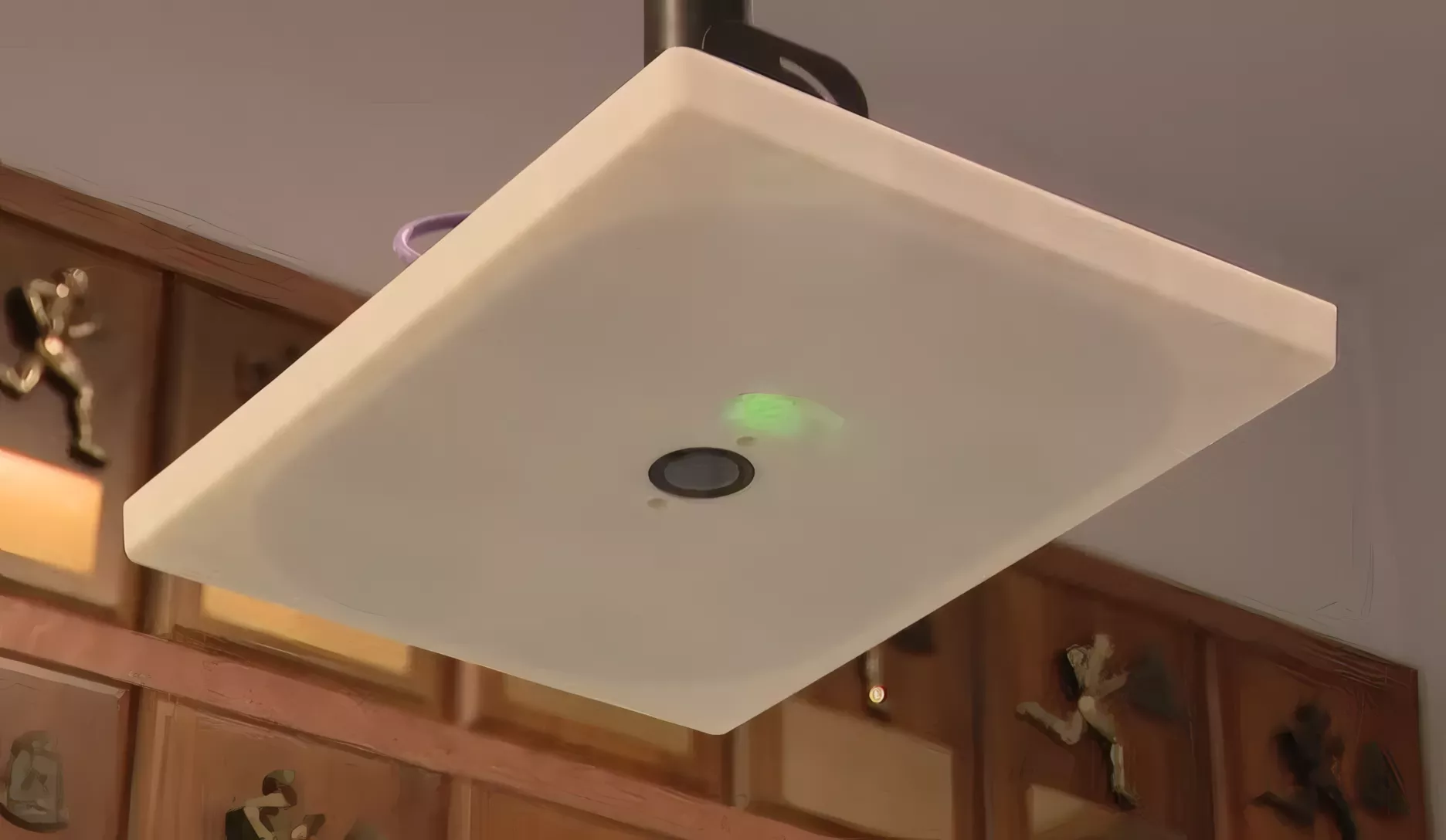
Face palm: It’s no secret that AI often gets things wrong, with varying degrees of consequences. Things can be quite serious if the system in question is supposed to detect weapons being smuggled into an educational institution. But that’s the situation at a Pennsylvania high school that disabled its AI-powered weapon detector after it continued to identify everyday objects as potential threats.
Hempfield Area High School is one of several schools across Pennsylvania that have agreed to help train Wi-AI. Developed by CurvePoint, a spinout from Carnegie Mellon University, Wi-AI uses Wi-Fi signals to search for hidden weapons.
Small sensors called SensePods installed near school entrances measure how people and the objects they carry change the way radio waves reflect around them. The software looks for patterns that it associates with a weapon and can alert personnel via text message, email or a dashboard. The system works without cameras, and CurvePoint says it can also track movement and occupancy without storing any identifying information.
During the pilot program, the system continued to collect training data from students after they entered the building, but was unable to tell the difference between a weapon and the common items children carry, such as a gun. B. school bags, metal water bottles and batteries, which led to a high number of false positive results.
It was hoped the model would achieve a 95% accuracy rate, which could have made it the primary safety system at the high school. But Superintendent Dr. Mark Holtzman told WTAE-TV (Channel 4): “It’s not close to 95%, I could tell you that.”
Skip Smith, co-founder and CEO of CurvePoint, said: “Hempfield served as a testing and evaluation site for our school security technology, rather than an operational deployment.”
“We are continuing to develop and evaluate the technology, but are not currently supporting operational deployments and cannot announce a deployment date.”
Smith blamed WiAI’s problems on “environmental challenges that impact reliability and consistency.”
The school district will get back the money it paid for the detectors because the program didn’t start full-time, although Holtzman said Hempfield would be open to testing CurvePoint’s technology in the future. For now, the school is sticking with its long-used OpenGate walk-through weapon detector.
This isn’t the first time a school’s AI-powered security system isn’t perfect. Last year, a 16-year-old student at Kenwood High School in Baltimore County, Maryland, was surrounded and handcuffed by police after an AI connected to the school’s surveillance cameras mistook a bag of Doritos for a gun.
