Intelligent data infrastructure is becoming a priority as companies move artificial intelligence beyond isolated pilot projects into production environments.
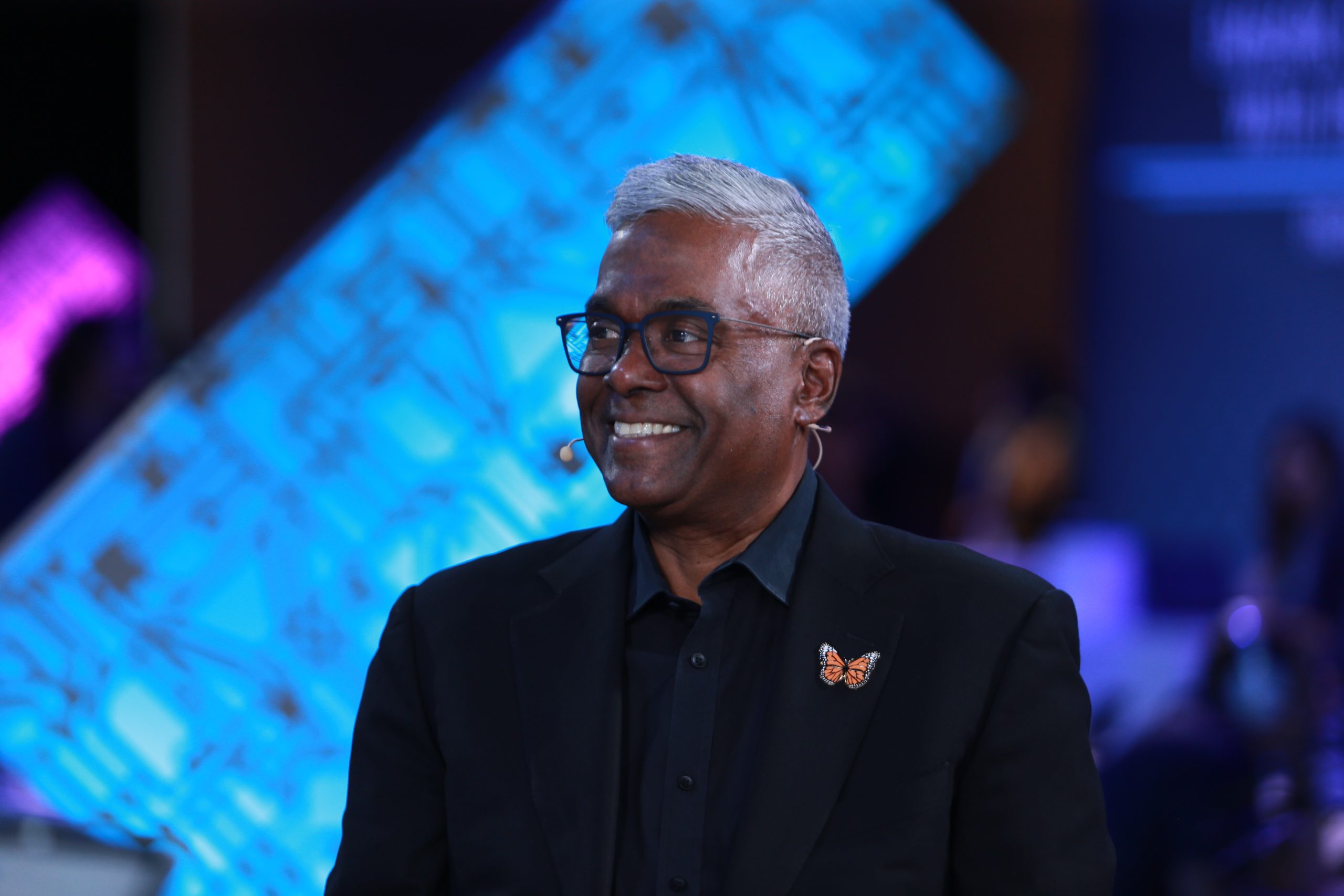
The shift places new demands on storage systems designed to support traditional applications, especially as enterprises introduce AI workloads in hybrid and multicloud environments. According to NetApp CEO George Kurian (pictured), NetApp Inc. is responding with a strategy that focuses on infrastructure modernization without requiring companies to abandon existing investments.
“I think the AI era requires organizations to be really good with their data, because data is the foundation of knowledge and knowledge is the intellectual property,” he told theCUBE. “To have knowledge, you need a really good intelligent data infrastructure that not only allows you to extract storage and context from your data, but also keeps it secure, well-managed and a resource you can trust.”
Kurian spoke with Christophe Bertrand of theCUBE Research and co-host Rebecca Knight during NetApp INSIGHT in an exclusive broadcast on theCUBE, SiliconANGLE Media’s livestreaming studio. As part of the event’s coverage, NetApp executives and technology partners discussed evolving enterprise data infrastructure needs and the challenges of bringing AI into production. (Disclosure below.)
Here is theCUBE’s full video discussion with George Kurian:
Here are three insights you may have missed in theCUBE’s coverage of NetApp INSIGHT:
Insight #1: An intelligent data infrastructure must support competing AI workloads.
Enterprise AI workloads are facing limitations in storage architectures designed for more predictable application needs. NetApp’s Novus architecture separates data and metadata management, allowing each to scale independently. According to NetApp Chief Product Officer Syam Nair, the company’s AI Data Engine is designed to discover, classify and prepare enterprise data for AI applications.
“Performance and throughput when accessing the data is a necessity for AI, but that will not be enough for agents to actually act on the data,” he said during the event. “If the data isn’t ready and it’s not protected, you’re going to get quick results. You’re going to get compromised results, but it might not be what you want.”
The demands of AI factories are also changing the way storage resources must be managed. NetApp’s approach aims to support high-throughput AI pipelines without sacrificing the responsiveness that other applications require, according to Arindam Banerjee, NetApp’s chief platform and technology officer, who spoke along with Jason Hardy, vice president of storage technology at Nvidia Corp.
“What happens is [that] Different types of workloads like transactional workloads for metadata and heavy sequential workloads for checkpoints, for example, are happening simultaneously,” Banerjee told theCUBE. “Previous architectures did one or the other very well.” They were never able to combine it and do both at the same time.”
Here is theCUBE’s full video interview with Jason Hardy and Arindam Banerjee:
Insight #2: Technology partnerships help companies get AI infrastructure up and running.
Modernizing enterprise infrastructure often requires companies to integrate existing applications while introducing new AI capabilities. NetApp and Oracle Corp. address this challenge with a co-developed, fully managed storage service that runs ONTAP natively on Oracle Cloud Infrastructure. According to Konstantinos Papamiltiadis, senior vice president of partnerships at Oracle Cloud Infrastructure, a division of Oracle, the offering is intended to make it easier to migrate existing ONTAP workloads without requiring application redesign.
“When I go into the OCI console, I have the option to use ONTAP as a native service,” he told theCUBE. “For me, the most important thing we were able to do, from an operational perspective, is that we bring everything together under a single interface that offers simplicity and consistency.”
NetApp and Oracle Corp. extend enterprise storage capabilities to the public cloud through a co-developed, fully managed service that runs ONTAP natively on Oracle Cloud Infrastructure. According to Konstantinos Papamiltiadis, senior vice president of partnerships at Oracle Cloud Infrastructure, a division of Oracle, the offering is intended to make it easier to migrate existing ONTAP workloads without requiring application redesign.
“When I go into the OCI console, I have the option to use ONTAP as a native service,” he told theCUBE. “For me, the most important thing we were able to do, from an operational perspective, is that we bring everything together under a single interface that offers simplicity and consistency.”
The integration challenge extends beyond cloud storage to the network and compute resources that support AI workloads. NetApp and Cisco Systems Inc. are expanding their FlexPod infrastructure with validated designs to reduce deployment complexity. The partnership has served 10,000 customers over 16 years, according to James Cole, vice president of data center networking, business development, partnerships and go-to-market at Cisco, and Alvaro Celis, chief partner and ecosystem officer at NetApp.
“Twenty or 10 years ago you would have designed your data structures and applications around infrastructure. Now we’ve turned that on its head,” Cole said during the event. “You’re really designing the infrastructure around data movement. Who better to do that together than the person you trust with your data and the person you trust with your network?”
Another partnership focuses on private AI use and measurable business results. The NetApp AIPod Mini combines NetApp infrastructure with Iterate Studio Inc.’s Generate platform and operates under the name Iterate.ai, said Brian Sathianathan, co-founder and chief technology officer of Iterate.ai. In one insurance operation mentioned in the discussion, an agent shortened the analysis of accident reports from about eight hours to eight minutes.
“AIPod Mini has connections to NetApp storage and communicates with NetApp using the proven ONTAP protocol,” he said during the event. “Then we run our Generate software on the AIPod Mini. This software has a [large language model] embedded in it, so you can run all your AI queries locally and completely privately within your four walls.”
Here is theCUBE’s full video discussion with Alvaro Celis and James Cole:
Insight #3: Autonomous infrastructure requires more than just intelligent automation.
As enterprises introduce autonomous agents into infrastructure management, intelligent data infrastructure must meet increasingly complex operational needs. NetApp’s unified control plane, delivered through the NetApp console, is designed to reduce routine administrative work through policy-driven automation. Agents responded to an overnight performance anomaly in a keynote demonstration, according to Sandeep Singh, senior vice president and general manager of enterprise storage at NetApp.
“Agents can implement the necessary quality of service rules in real time to ensure that the constraints there are met,” he told theCUBE. “And in this way no one is woken up. The correct result is achieved and there is no noise neighbor effect.” And people will be provided with an audit trail to go ahead and follow up on.”
However, automation cannot solve organizational questions about data ownership and responsibility. As companies expand their intelligent data infrastructure across applications and environments, leadership must take responsibility for the information these systems rely on. said Helen Yu, founder and chief executive of Tigon Advisory Corp., who appeared alongside Singh.
“It’s not a storage issue. It’s a leadership and responsibility issue,” she said during the event. “When teams don’t have constant access to… trusted data, they actually stop making decisions. They start finding workarounds.”
Here is theCUBE’s full video discussion with Helen Yu and Sandeep Singh:
To see more of theCUBE’s coverage of NetApp INSIGHT, check out our full playlist here:
https://www.youtube.com/watch?v=videoseries
(*Disclosure: TheCUBE is a paid media partner for NetApp INSIGHT. Sponsors of theCUBE’s event coverage have no editorial control over theCUBE or SiliconANGLE content.)
Photo: SiliconANGLE
Support our mission to keep content open and free by interacting with theCUBE community. Join theCUBE Alumni Trust Networkwhere technology leaders connect, share information and create opportunities.
- Over 15 million viewers of theCUBE videosto spark conversations about AI, cloud, cybersecurity and more
- Over 11.4k theCUBE alumni — Connect with more than 11,400 technology and business leaders shaping the future through a unique, trusted network
Founded by tech visionaries John Furrier and Dave Vellante, SiliconANGLE Media has built a dynamic ecosystem of industry-leading digital media brands, reaching over 15 million elite tech professionals. Our new proprietary theCUBE AI Video Cloud is a game-changer in audience engagement, leveraging the theCUBEai.com neural network to help technology companies make data-driven decisions and stay at the forefront of the industry conversation.
