Zoom Communications Inc. has spent the better part of the last few years building products to become more than just the video company everyone used during the pandemic. Third-quarter results released Monday showed the strategy is working, although much work remains to be done.
Total revenue rose 4.9%, but corporate revenue rose 8.6%, the strongest growth in 13 quarters. Zoom raised its full-year outlook and declared its first quarterly dividend of 25 cents per share.
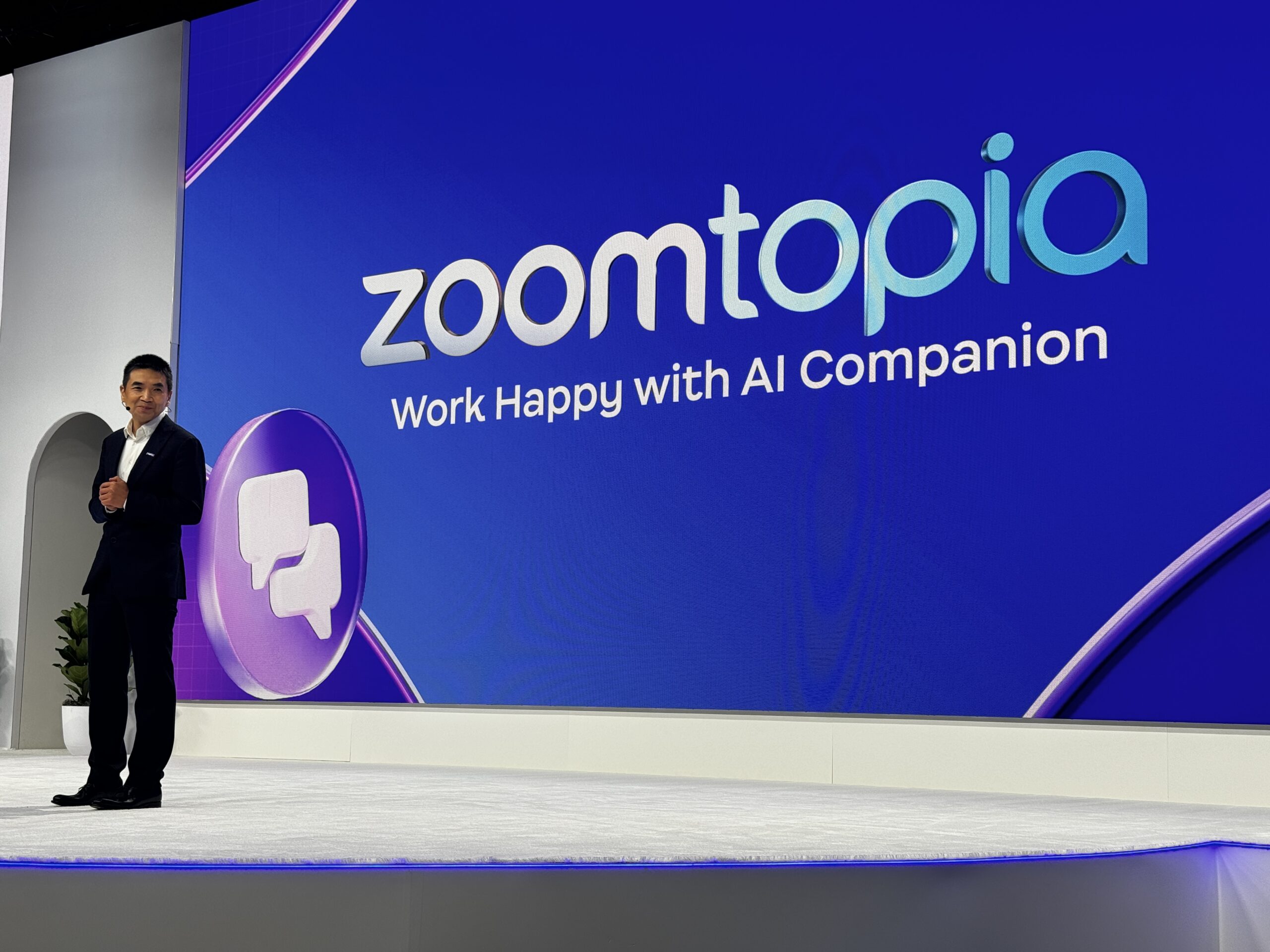
The acceleration should not be viewed as a quarterly anomaly, but as a reflection of the strategy the company has laid out Zoomtopia About a month ago – Transitioning from Closing Conversations. This strategy gives customers a reason to buy more of Zoom and builds a competitive advantage that is greater than most investors realize.
The concept of conversations to completion is so valuable that Microsoft used those exact words at its recent Ignite 2026 event. Actually, A whole session was held on this topic. While it may seem threatening that an 800-pound gorilla like Microsoft is jumping on a trend, Zoom has a significant lead and can use Microsoft’s marketing to add momentum to the current tailwinds.
From the conversation to the work to the conclusion
Almost all work begins with a conversation: a meeting, a call, a chat thread, or a customer interaction. Then everyone leaves and the real work begins: updating the customer file, writing the follow-up and planning the next step. Collaboration providers have always had the first step and left the second to someone else.
Zoom wants both. “We want to use AI to transform our company from a conversational provider to a completion system,” Chief Executive Officer Eric Yuan said on the earnings call. He later put it more clearly: “Conversation is step 1. Step 2, the AI takes over.”
His proof of this was Zoom’s own sales organization, which uses ZoomMate, the company’s agent framework. Sellers, Yuan said, “are no longer logging into the back-end CRM system.” The agent takes over after the call ends. With enterprise software, value shifts from where work is captured to where it is created.
The context is the moat
AI agents are quickly becoming commodities, as are the models behind them. What is scarce is the context, the knowledge of what was decided, by whom and why. In most companies, Zoom relies on the richest source: what people actually said to each other and to customers.
“Any agent without context really can’t do their job,” Yuan said. For this reason, the unified contextual layer Zoom featured in Zoomtopia is central to the story. It connects conversations to chats, documents and third-party systems, ensuring that people and agents work with the same information.
My Notes, the company’s AI note taker, extends this reach to third-party conversations and face-to-face conversations. Yuan said the number of monthly active users is nearly 2 million, with a financial services company expanding it to 80,000 wealth advisors. Chief Financial Officer Michelle Chang added that online customers using My Notes are associated with a 50% reduction in churn.
This will create a greater competitive advantage for Zoom. The more context a customer stores with Zoom, the more useful their agents become and the harder it is to leave. Zoom’s ditch is not the meeting. Think of it as a reminder of the meeting.
The platform takes over the sales
A layer of context is only as good as the number of conversations it captures, and this is where the breadth of Zoom’s platforms matters. Meetings, telephone, chat, contact center and now sales intelligence all flow into the same foundation, and each product is made smarter by the others.
Customer consolidation occurs. DSI Systems replaces five separate products with Zoom. According to Yuan, SolarWinds has expanded its Zoom licenses while “recalibrating its Microsoft package.” Corporate net dollar expansion returned to 100%, the highest level in 11 quarters. “The strong RPO growth reflects our continued success in securing larger, longer-term, multi-product platform contracts and demonstrates the growing demand for our AI-first platform,” Chang said.
When it comes to customer experience, completion is paid for. Zoom CX recurring revenue grew in the high double digits for the seventh consecutive quarter, and all ten of its largest CX deals included paid AI. Even more telling, Zoom said at Zoomtopia that 90% of its top 100 CX deals in the first half of the year were with customers who were new to Zoom. Contact center is no longer cross-selling. It’s a front door.
Chang described differentiation as “the ability to look at the customer experience in an entirely new way.” Specifically, she said: “The seamless handover from virtual agents to AI-assisted agents is a huge advantage for us.” AI-native startups have the virtual agent but not the human side. Legacy contact center providers have the people, but not the pace of innovation. Zoom offers both on one platform.
There is also an economic moat. Zoom runs the majority of its AI workload on its own small models, saving the expensive frontier models for more difficult tasks. “I fundamentally believe that no single model can do everything,” Yuan said. Gross margin increased despite increasing AI usage, a feat that a standalone product that resells another company’s tokens cannot easily achieve.
What investors are worried about
The quarter was strong, but analyst questions raised several concerns.
- The fourth quarter forecast points to a slowdown. Zoom forecast growth of 3.9% at the midpoint, down a full point from the third quarter. Chang attributed this to a “consistent forecasting methodology” and the online business cushioning price increases. Zoom has always taken a conservative approach, putting the onus on Zoom to demonstrate the consistency Chang mentioned over the next year.
- Online business is a burden. It still accounts for more than a third of sales, but has declined slightly and is under pressure in the top of the funnel as shoppers discover products in new ways, including via AI response engines. “The customer and buyer journey is changing,” Chang said.
- AI costs only go in one direction. Yuan acknowledged that “the cost of AI tokens is definitely increasing.” Technology balanced them out this quarter, but optimization is a treadmill. AI costs will go down and down over the next few years before eventually normalizing.
- Zoom has a consciousness problem. “As long as they know that Zoom already had a solution, they really trust Zoom,” Yuan said. Many don’t know it. Zoom eliminated its roles as chief revenue officer and chief marketing officer and combined both teams under Graeme Geddes as president of go-to-market. It’s the right solution, but reorganizing in the middle of acceleration carries risks.
- Model makers move up the rankings. When asked about Anthropic’s Claude Meetings beta, Yuan said: “Anthropic is a partner and we are also a very proud investor.” Enemies in the AI rarely stay in their lane. It will be interesting to see the impact that model providers will have. They are new to the market, but can develop a viable “good enough” product that could impact the lower end of the market, including products like Google Meet, the current “good enough” market leader.
- The latest AI products are not yet reflected in the numbers. Chang said Zoom has been “more cautious” in its long-term goals when it comes to new products, and Yuan asked for time: “We have to be patient.”
Some will interpret the dividend as a sign of maturity. With more than $7 billion in cash and free cash flow margins above 40%, I see a company that can fund innovation while returning capital.
Although these issues were raised during the call, most of the investor community remains positive about Zoom. In his note, Arun William Blair’s Bhatia wrote: “Churn and downsell rates are becoming more favorable, AI usage and monetization is increasing, and adoption of new products like Phone and Zoom CX is strong. We are encouraged by these trends and see potential for growth to increase in the future.”
Final thoughts
Zoom’s overall growth is similar to that of a mature software provider, but the company is changing, so it’s important to look beyond the numbers. The underlying company business is built as a platform that uses context to drive customers toward more products and longer engagements. Investors should pay attention to company growth, net expansion, and CX-AI attachment rates rather than revenue.
For information technology and business leaders, the lesson goes beyond Zoom. Conversation data is a strategic asset. Therefore, make conscious decisions about where they are stored and which agents can respond to them. Insist on openness so that the context can support the tools you choose. Start where completion is easily measurable: in the contact center and in sales.
Here Zoom proves that the conversation was never the product. The result is.
Zeus Kerravala is a Principal Analyst at ZK Research, a division of Kerravala Consulting. He wrote this article for SiliconANGLE.
Photo: Zeus Kerravala
Support our mission to keep content open and free by interacting with theCUBE community. Join theCUBE Alumni Trust Networkwhere technology leaders connect, share information and create opportunities.
- Over 15 million viewers of theCUBE videosto spark conversations about AI, cloud, cybersecurity and more
- Over 11.4k theCUBE alumni — Connect with more than 11,400 technology and business leaders shaping the future through a unique, trusted network
Founded by tech visionaries John Furrier and Dave Vellante, SiliconANGLE Media has built a dynamic ecosystem of industry-leading digital media brands, reaching over 15 million elite tech professionals. Our new proprietary theCUBE AI Video Cloud is a game-changer in audience engagement, leveraging the theCUBEai.com neural network to help technology companies make data-driven decisions and stay at the forefront of the industry conversation.
