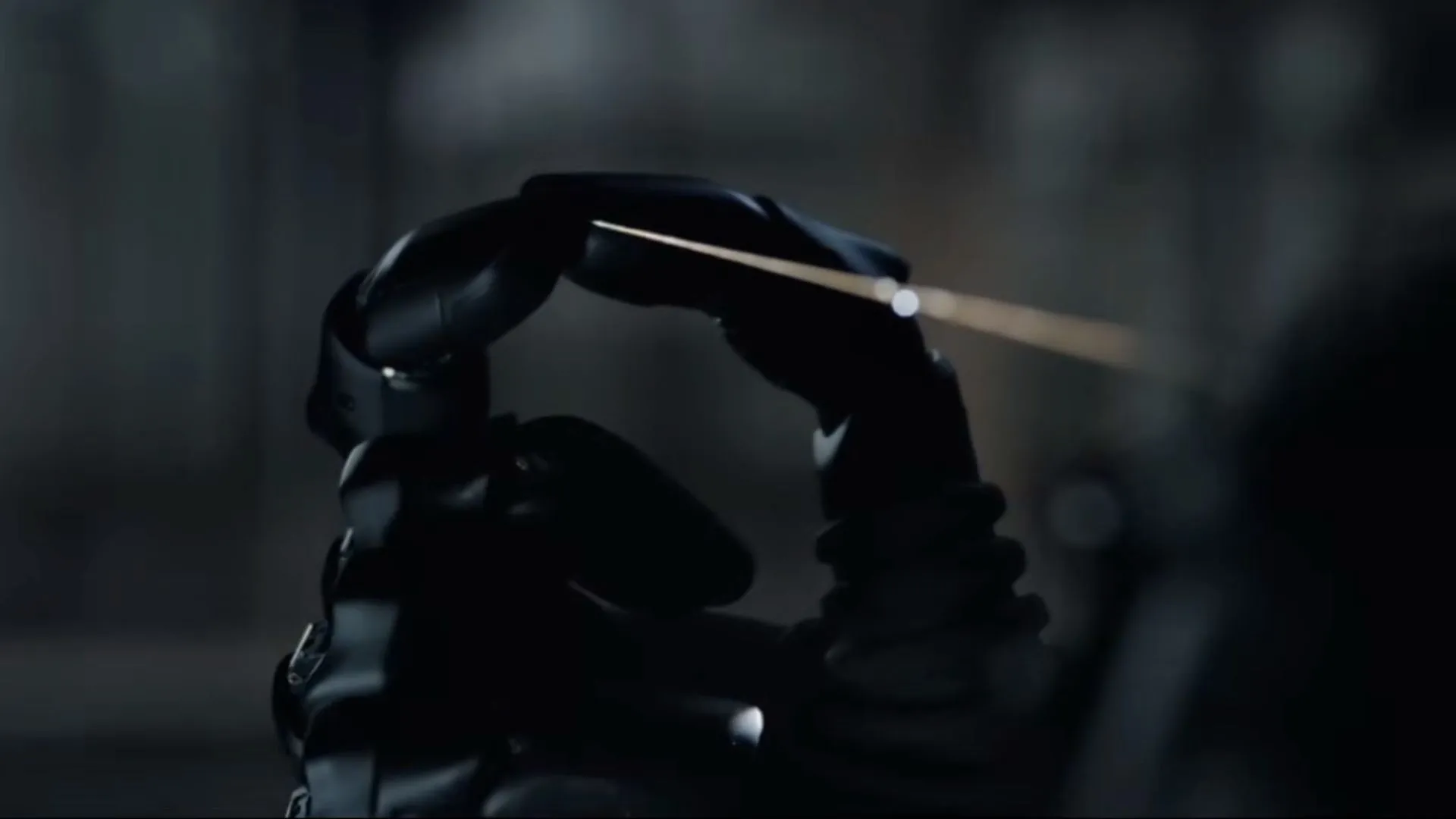
Chinese robotics startup AGILINK has demonstrated its robotic hand that performs basic embroidery techniques using silk thread. During the demonstration, a silk thread was divided into 16 finer threads, a needle was threaded, the fabric was stretched over a frame and the first stitches were made.
The company’s OmniHand 3 Ultra robotic hand used coordinated finger movements to maintain tension while separating and manipulating the delicate strands.
The demonstration highlights the challenges of using robotic hands to precisely manipulate thin, flexible materials.
Master of silk embroidery
AGILINK, a spin-off of Chinese robotics company AgiBot, has demonstrated the dexterous robotic hand with its OmniHand 3 Ultra, which performs techniques used in traditional Suzhou embroidery. During the demonstration, the robotic hand was taught to split silk thread, thread a needle, stretch fabric over an embroidery hoop, twist thread and make stitches.
Suzhou embroidery requires precise handling of the silk, which can bend, slip, and change shape with small changes in applied force. During the demonstration, embroidery master Fu Xianghong taught the robot how to manipulate the material – one of the most important steps was separating a main silk thread into 16 finer strands. The robot used one finger to separate the strands while its other fingers maintained tension.
In addition, the hand had to keep the fingertips in contact with the silk and at the same time allow the thread to rotate as it twisted. Threading the needle and sewing required additional control over position, strength, and finger coordination.
“Silk does not have a rigid shape. The strength of the fingers determines this. This makes embroidery a test of hardware and control together: a fully direct-drive hand with 21 active degrees of freedom and a visual-tactile sensor in each fingertip that detects contact based on surface deformation,” the company’s video description says.
According to AGILINK, the training process combined teleoperation data with reinforcement learning. In the final task, the robot performed a continuous movement in which the thread was rotated and then picked up. Because the thread ended up in a different position each time, the robot had to adjust its movements instead of following a fixed order.
Hand gains touch
The OmniHand 3 Ultra is about the size of a human hand and weighs 1.9 pounds (630 grams). It uses a direct drive architecture where the motors are connected directly to the joints rather than using tendons or intermediate transmission mechanisms.
The hand can reportedly hold 6.6 pounds (3 kilograms) stably and lift to 17.6 pounds (8 kilograms). It can be opened and closed in about 0.3 seconds and has a position repeatability of about 0.008 inches (0.2 millimeters).
Touch detection is another part of the system. Each fingertip uses a vision-based sensor that detects changes in the deformation of its contact surface. According to AGILINK, the sensors can measure forces in three dimensions and detect deformations as small as 0.08 millimeters. The palm also features a 300-point contact sensor.
The combination of mechanical design, tactile sensing and software control allows the hand to respond to materials that are difficult to manipulate with rigid robotic grippers. Silk presents a particularly challenging case as its shape and position can change upon contact.
AGILINK used the embroidery demonstration to show how his dexterous hand can perform tasks that require continuous adjustment of strength and finger position. The approach differs from robotic systems designed primarily for repetitive industrial operations where objects and movements are more predictable.
Other companies are also developing dexterous robotic hands with different design priorities. LinkerBot’s Left Hand L30 Pro uses five tendon-powered fingers and is designed for speed and repeatable movements. Boston Dynamics is taking a different approach with its latest Atlas pointer, which uses four digits and is aimed at industrial applications such as handling drills and welding tools.