According to the International Telecommunication Union (ITU), more than 99 percent of international data flows over undersea telecommunications cables. These fiber optic lines carry everything from cloud traffic to financial transactions to video calls between continents. Much of this hidden infrastructure depends on a surprisingly specialized industry: manufacturers that build cables designed to operate under the sea for decades.
One of the companies building this infrastructure is SubCom, which operates a 50-acre manufacturing campus in Newington, New Hampshire. The company designs, manufactures and installs underwater fiber optic networks, combining factory production, optical engineering, vessel operations and systems testing.
The facility is now being expanded as demand for international bandwidth grows. But his work involves more than producing long lengths of cable: Each system must be designed to transmit data over thousands of kilometers while withstanding pressure, water exposure and the physical stresses of installing on the seabed.
How optical fibers transport data across oceans
The heart of an undersea communications cable is optical fibers. These extremely thin glass strands transmit information as light pulses. Unlike traditional electrical cables, which transmit signals in the form of electrical currents, fiber optic cables can carry enormous amounts of digital information over long distances with relatively little signal loss.
However, the fibers cannot simply be thrown into the sea unprotected. Submarine cables consist of layers that protect the delicate glass from water, mechanical stress and other environmental hazards. Depending on the route, manufacturers may add protective layers and steel wire armor to help the cable withstand demanding conditions, especially in shallower waters where anchors and fishing gear pose a greater risk.
The design of the cable also depends on the intended operating environment. A lightweight design may be suitable for deep ocean areas, while more protected versions are used in areas where external damage is more likely. This means that a single submarine network can use different cable designs along its route, rather than relying on a uniform design.
Why a cable needs more than glass
Even with high-quality fiber optics, signals become weaker over long distances. Submarine networks therefore use optical repeaters installed along the cable route to amplify the signals, allowing the information to be relayed across ocean basins.
These repeaters must function reliably in a difficult to access and expensive environment. Your enclosures must withstand enormous water pressure, prevent water ingress and protect sensitive components. The cable itself also requires an electrical conductor to deliver power from equipment on land to amplifiers along the route.
At SubCom’s Newington campus, cable manufacturing is part of a larger integration process. The company says it builds the components of its subsea systems at the facility and assembles cables, repeaters and other equipment before deployment. The finished system is tested before it is loaded onto a cable laying ship.
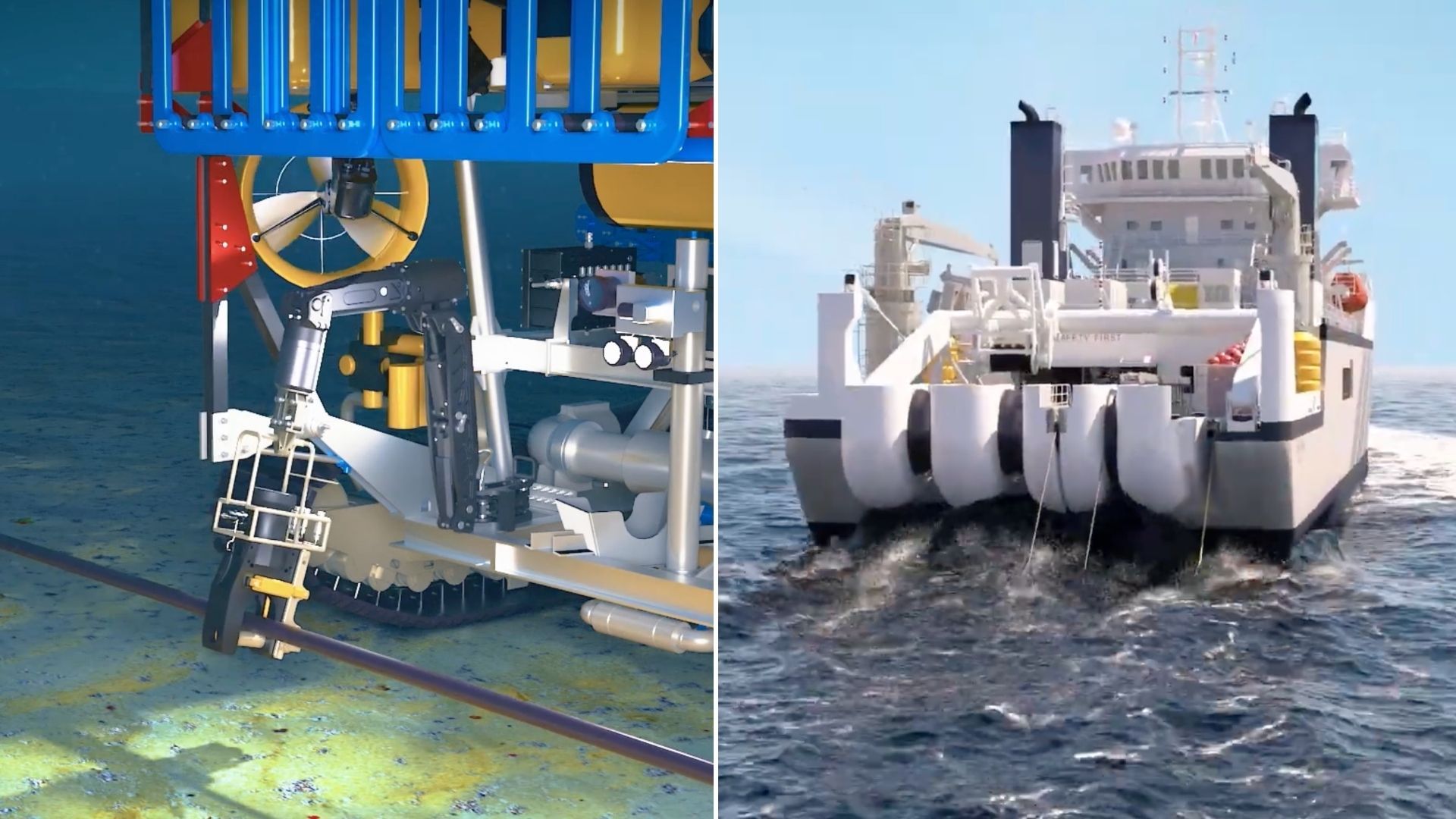
This factory-to-ship workflow is important because installing a cable across an ocean is an important marine engineering operation. Teams measure the seabed, plan a route, take into account the depth of the water and possible hazards, and carefully control how the cable is laid. Near shore, cables are often buried for additional protection, while sections in deeper waters may lie directly on the seabed.
A factory expanding to meet global data needs
The history of the SubCom Newington plant dates back to 1953 when it operated as Simplex Wire & Cable. Today it is a central part of a company that says it has laid more than a million kilometers (about 621,000 miles) of undersea cable systems worldwide, enough to circumnavigate the globe about 25 times.
The company is expanding the location to increase production. According to a January 2026 Portsmouth Herald report based on information from SubCom, the Newington plant produced about 58,000 kilometers (36,000 miles) of cable annually. The company wants to increase this number to around 77,000 kilometers (47,800 miles) by the end of 2026; in the longer term, the goal is 100,000 kilometers (62,000 miles) per year. The expansion includes more than 100,000 square meters of production space, new extrusion and power conductor lines and plans to create 75 to 100 jobs at the site.
This capacity is intended to serve a market characterized by growing data traffic, cloud computing and technology companies connecting data centers across continents. SubCom has worked on systems including Grace Hopper, which connects the United States, the United Kingdom and Spain, and SEA-ME-WE 6, a 19,200 kilometer (11,900 mile) network connecting Southeast Asia, the Middle East and Western Europe.
Submarine cables remain vulnerable to anchors, fishing activity, seabed disturbance and natural hazards, making careful routing, maintenance and repair essential. The ITU has highlighted the need to strengthen the resilience of these networks as they support international communications and economic activity.
The result is an often overlooked part of the Internet’s physical infrastructure. It may seem that data passes invisibly between screens, but much of it depends on fiber optics manufactured in specialized facilities, assembled into flameproof cables, tested on land and laid across the seabed. In Newington, this work will become an even larger industrial operation as global demand for international connectivity continues to grow.
