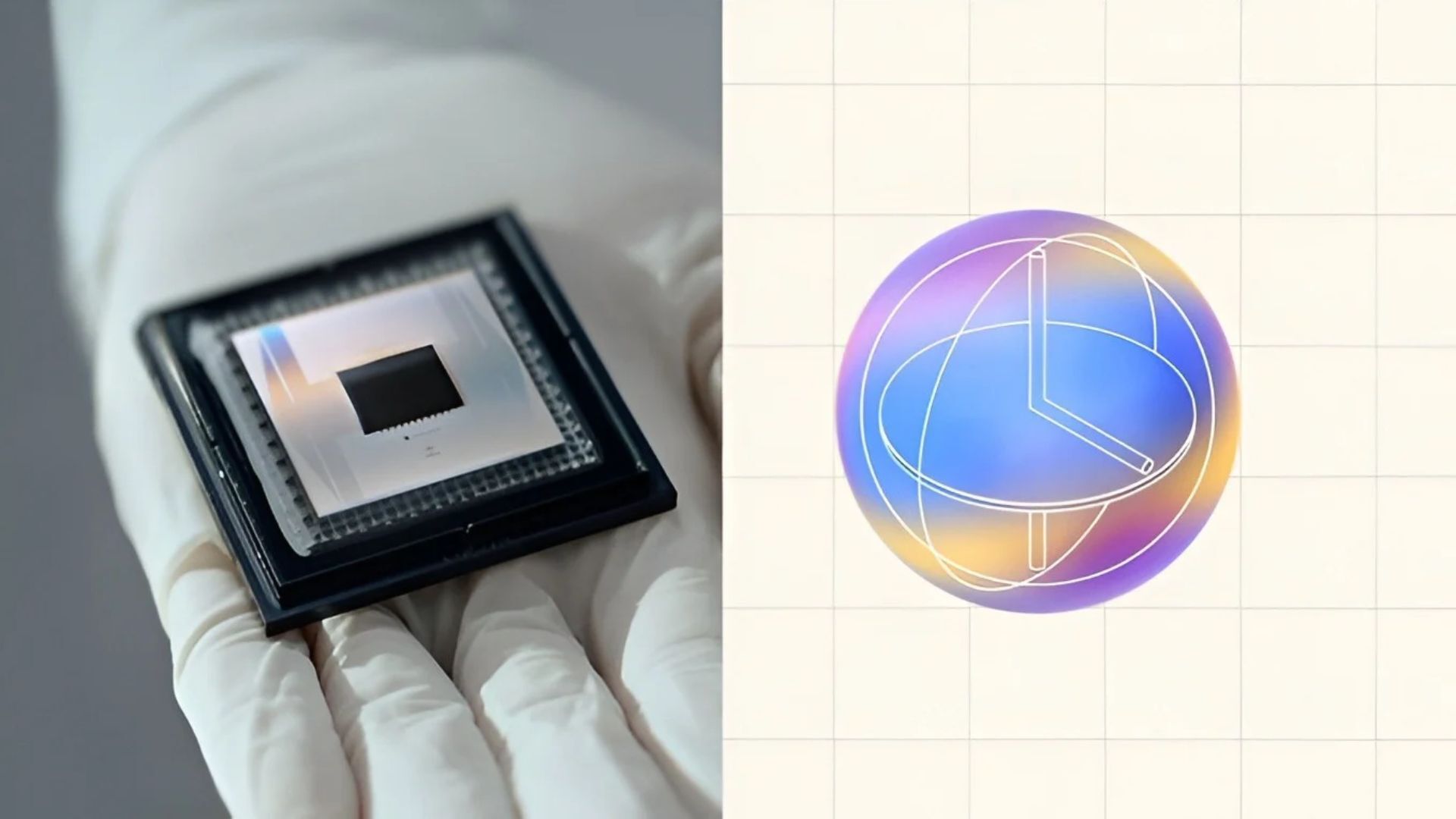
In a breakthrough that could help address a major bottleneck in practical quantum computing, Google has announced that its Willow processor has demonstrated a 40-fold error reduction in preparing specialized quantum states.
The technique, known as “Magic State Cultivation,” achieved 99.99 percent logic fidelity by creating high-precision quantum states necessary to perform complex calculations. Such states are essential for building powerful, error-corrected quantum computers.
However, creating these magical states has long been a major challenge. They are essential for performing complex quantum calculations, but creating them with sufficiently low error rates requires enormous computing resources. Some estimates suggest that up to 95 percent of a quantum computer’s capacity could be devoted to creating these states, leaving little room for actual calculations.
Further complicating the problem is that each magical state can only be used once, meaning quantum computers must constantly generate new states to perform operations.
Google’s latest experiment shows a method that could help reduce this burden on resources.
Filter out quantum errors
In 2024, Google Quantum AI researchers Craig Gidney, Noah Shutty, and Cody Jones developed the technique for cultivating the magical state by refining an earlier theoretical approach.
The method works like a filter. Researchers introduce a quantum state with flaws into a small area of a processor and take a series of carefully coordinated measurements to identify problems.
Attempts that fail these tests are discarded, while those that pass these tests produce much cleaner quantum states. These states can then be expanded into a larger form suitable for more complex quantum operations.
Although the approach was theoretically promising, several technical improvements were required to demonstrate it on actual quantum hardware.
During initial experiments, Google researcher Emma Rosenfeld came across unexpected measurement results. After months of testing and simulation, the team was able to trace the problem to noise caused by drifting electrical equipment and temperature changes in the laboratory.
This disruption affected the accuracy of the team’s existing measurement method. The researchers responded by improving the processor’s controls and developing a new benchmarking technique that used the growing process itself to evaluate results.
These changes helped the Willow processor achieve a 40-fold reduction in errors compared to quantum states produced without cultivation.
The experiment also produced logical T-states, a special type of magical state, with 99.99% accuracy.
Scaling remains a major challenge
Beyond reducing errors, Google researchers showed that the purified quantum states could be transferred between two different error correction methods.
The team moved the states from a distance 3 color code to a distance 5 surface code. These are two ways to organize quantum information to detect and correct errors, where the distance indicates the degree of protection of the code from specific errors.
This process, called “grafting,” showed that the carefully prepared states could survive the transition between the two methods on actual hardware.
The finding is important because future quantum computers may need to combine different error correction techniques to perform calculations reliably while limiting hardware requirements.
However, the demonstration does not mean that Google has solved the magic state bottleneck or built a practical, fault-tolerant quantum computer.
The company acknowledged that cultivation still needs to be demonstrated on a much larger scale before it can support useful quantum applications.
The study appears in the journal Science.
