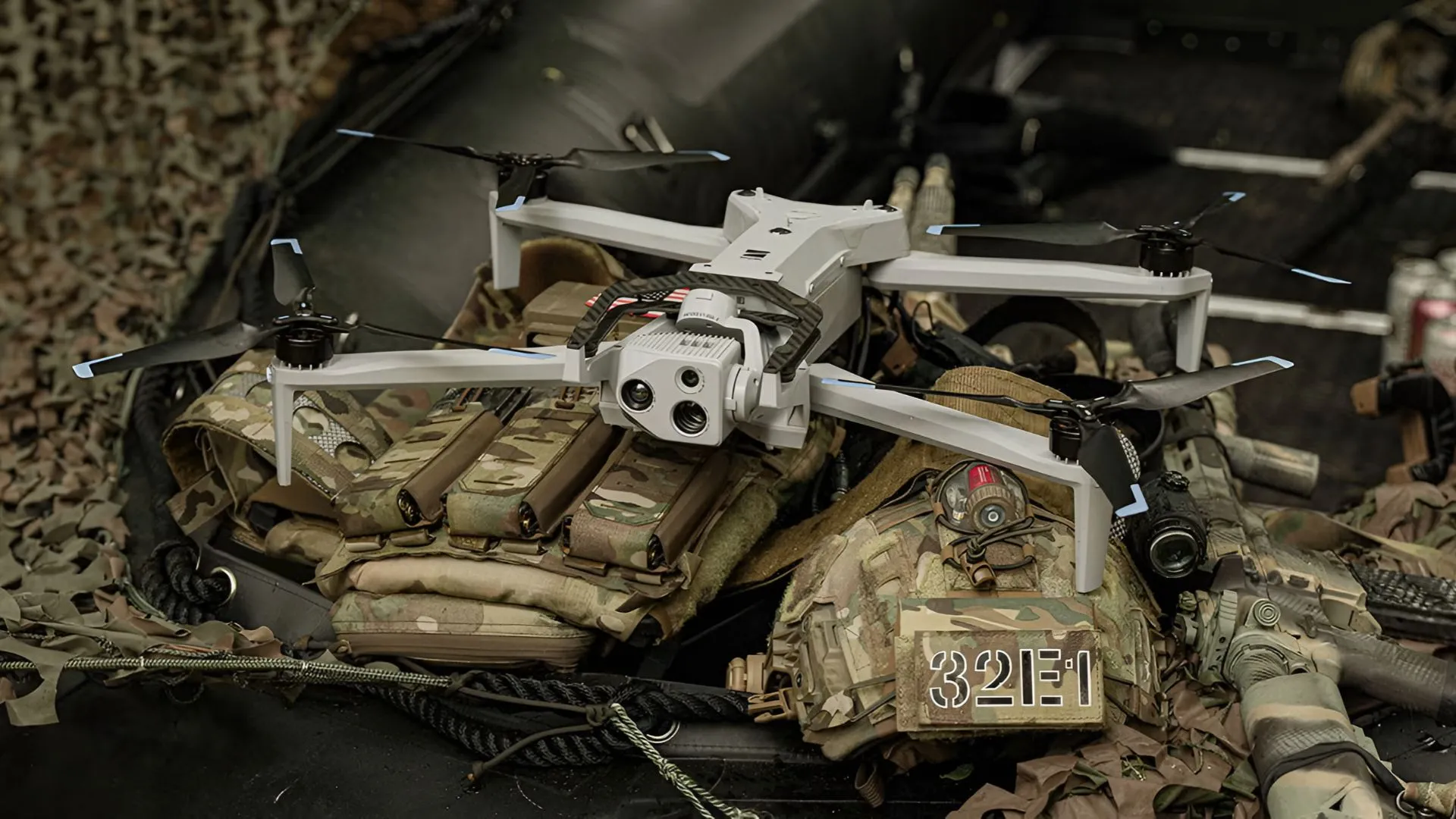
L3Harris Technologies and Skydio are integrating military drones with tactical radio technology to help U.S. forces maintain communications during electronic warfare threats. The partnership combines Skydio’s X10D drone with L3Harris radios and specialized waveforms designed to protect command links in contested environments.
The integration could help American troops operate unmanned aircraft systems (UAS) when adversaries seek to jam communications on the battlefield. In addition, drone operations will be linked to tactical radio networks already in use by US and allied forces.
The X10D is a compact drone designed for military reconnaissance, allowing troops to conduct aerial surveys of potential threats without exposing personnel to the same risks.
Drone integrates tactical radios
The companies have integrated L3Harris’ Falcon IV embeddable radios and Wraith waveform into Skydio’s X10D drone. The combination provides multi-layered jamming protection and adds electronic warfare capabilities to the aircraft.
The radio integration gives the drone access to communications technology designed for military operations. Maintaining command and control links is important when troops rely on airborne sensors to gather intelligence beyond their immediate positions.
Electronic interference can disrupt the connection between operators and unmanned aerial vehicles. Loss of this connection can complicate flight control and limit the provision of useful battlefield information.
L3Harris and Skydio want to reduce this vulnerability through their integrated system. The setup is intended to help warfighters continue to fly drones and communicate in environments where electronic warfare threatens those capabilities.
Existing radio networks increase the range
The partnership also relies on an extensive installed base of military communications equipment. According to L3Harris, more than 150,000 tactical radios in U.S. and allied inventories can host the Wraith waveform.
This compatibility could help defense forces integrate the capability into existing communications networks. It also provides a way to connect autonomous aircraft with equipment already used by military units.
The companies have also integrated Wraith Shield, a waveform that scans the radio frequency spectrum and identifies threats. The technology can detect and neutralize enemy drones, adding another layer to the integrated electronic warfare capability.
These features extend the partnership beyond connecting a drone to its operator. They also address the electromagnetic environment in which military aircraft and communications systems must operate.
Open systems support integration
The collaboration is based on open system architectures that enable different technologies to work together. Such designs can help militaries integrate new equipment without having to rebuild their entire communications infrastructure on a single platform.
Faisal Munir, president of mission-critical communications at L3Harris, said the partnership combines complementary technologies with robust networks. He added that the integration helps fighter jets communicate and operate unmanned aircraft in environments constrained by electronic warfare.
The approach reflects a growing technical challenge for modern militaries. Autonomous aircraft require reliable connections to deliver information and support operations, but adversaries can target these connections with electronic interference.
Integrating drones with established tactical radios provides one way to address this problem. The effectiveness of the approach will depend on how well the systems perform under operational conditions and against evolving electronic warfare threats.
