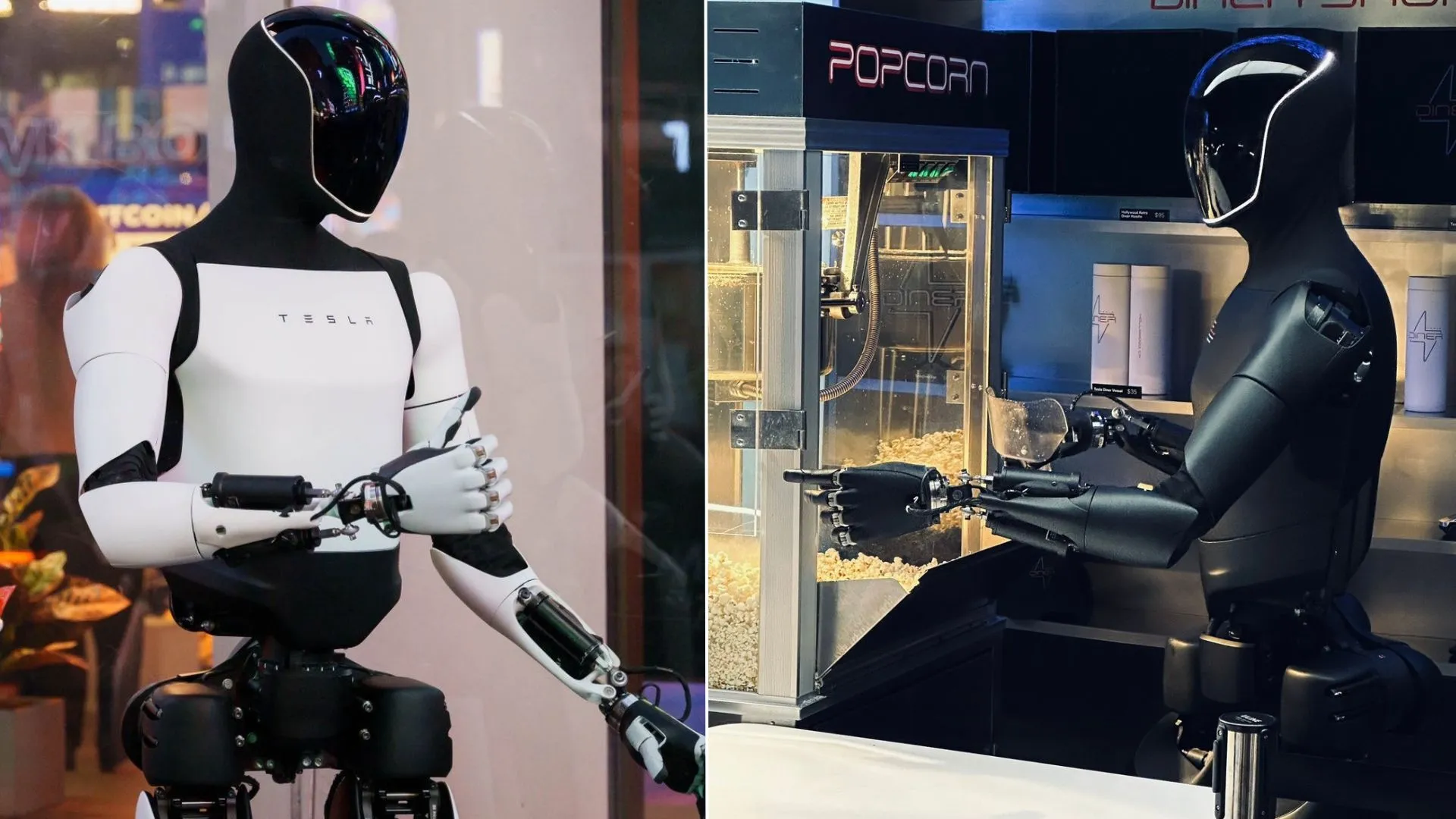
Tesla has begun producing its humanoid Optimus robots on production lines in Fremont, California, marking a major step toward commercial deployment. CEO Elon Musk now wants to increase production to 20,000 robots per week by the end of 2027.
The factory previously built electric vehicles, but Tesla has remodeled the production space for its robotics ambitions. The first production run marks the first time Tesla has manufactured Optimus units to production standards. However, achieving mass production requires further engineering work and improvements in manufacturing efficiency.
Tesla announced the milestone in its third quarter 2026 shareholder update. Musk warned investors that production would ramp up slowly because Optimus represents an entirely new product category for the company.
Tesla is taking on robot production
Tesla has established a manufacturing process that it deems suitable for a commercial Optimus product. The company continues to expect to refine its production methods and robotic hardware as it expands manufacturing.
Musk described the current phase as early production during Tesla’s earnings release. He warned that scaling production would bring setbacks as engineers grapple with the challenges of building humanoid robots in industrial quantities.
Reliability remains a major hurdle. Tesla wants Optimus to operate safely for extended periods of time without frequent repairs or component failures. Musk acknowledged that engineers still need to refine the robot’s design to meet these requirements.
The software also represents a major challenge. Tesla must develop the skills that allow Optimus to reliably handle unknown tasks. Musk said a lot of work remains before the robot can perform a wide range of activities on its own.
The planned production rate of 20,000 units per week would be an ambitious manufacturing target. To achieve this volume, Tesla would need to build a supply chain and production system that can support sustainable production.
Computing capacity supports robotics
Tesla is also expanding its computing infrastructure to support autonomous driving and the development of humanoid robots. The company plans to reach training computing capacity of 400 megawatts by the end of 2026.
This infrastructure will support software development for both its vehicles and the Optimus robots. Tesla has also continued construction of its manufacturing facility in Austin, where equipment is scheduled to begin commissioning in 2027.
The expansion of computing power reflects the significant processing demands associated with the development of autonomous machines. Optimus must interpret his surroundings, plan movements and carry out tasks in changing environments.
Tesla has yet to determine when Optimus will be commercially available on a large scale. The production progress marks an important milestone in manufacturing, but the robot’s practical capabilities are still a work in progress.
Battery supply bottleneck
Tesla’s manufacturing ambitions extend beyond robotics. The automaker identified battery availability as a persistent obstacle to its ability to increase global vehicle production.
To counteract supply shortages, Tesla is expanding battery-related activities at several locations. Projects include battery pack capacity in Berlin, cathode material production and lithium refining in Texas, and lithium iron phosphate cell manufacturing in Nevada.
Tesla has already delivered its first Megapack energy storage systems, built exclusively with its own LFP cells. The milestone gives the company greater control over a key battery technology used in its energy storage business.
Production of Tesla’s 4680 battery cells is also increasing. These cells will support increased production for the Cybertruck and Tesla Semi, as well as higher volumes of the Model Y.
The robotics push comes at a time when Tesla is under pressure in its core automotive business. Third-quarter revenue reached $28.04 billion, nearly flat from $28.09 billion a year ago. Profit fell 43% as expenses rose due to investments in robotics, computing infrastructure and autonomous driving.
Tesla’s ability to turn Optimus into a reliable commercial product will depend on more than just factory performance. Production scale, battery availability and software development must advance together before the robots can meet Musk’s ambitious production goals.
