Shifting enterprise AI workloads into production poses practical challenges for chief information officers. These challenges include managing costs, scaling the company’s AI infrastructure, and establishing governance models to keep agents under control and data secure.
Cost and control were key topics of discussion at Dell Technologies Inc.’s AI Leadership Symposium. Expanding AI workloads can drive up infrastructure and model costs, while the deployment of autonomous agents raises new questions about security, oversight and data access.
At the same time, companies are exploring different ways to run AI, from private cloud environments to models running directly on devices. This creates a demand for enterprise AI infrastructure and partnerships that can meet a broader range of deployment needs.
“Nobody is wondering whether to adopt AI; it’s pretty much a done deal,” said John Furrier, executive analyst at theCUBE Research. “They ask who controls it, where it runs and whose law governs it.”
Furrier spoke with industry experts from Dell, Deepgram Inc., Singulr AI Inc., MisaLabs Inc. and Intel Corp., among others, during the AI Leadership Symposium. Interviews covered the infrastructure, partnerships, and computing power needed to scale AI. (*Disclosure below.)
Here is the full theCUBE keynote analysis from John Furrier:
Insight #1: Token costs are forcing companies to rethink their AI budgets.
Cloud token invoices remain a major pressure point for enterprise AI budgets. So, according to Helen O’Sullivan, AI business development manager and solutions specialist at Dell, some companies are looking for ways to ease this pressure.
“Many of our clients that I serve in the Bay Area are struggling with the real immediate challenge of using up their token budget in a matter of weeks that they had committed to for months,” she told theCUBE. “You’re still using these frontier models, but you’re leveraging open source and on-premises infrastructure to eliminate at least some of the current token stress and token maxing.”
Companies can also make better use of existing data center capacity when evaluating investments in enterprise AI infrastructure. Dell and Intel are helping customers evaluate these options, said Tim Wood, Intel’s Northwest region sales manager, who joined O’Sullivan during the discussion.
“Many companies have already done it [central processing units] in their data center,” he said. “There may be existing resources and headroom in the infrastructure that they already have that is capable of handling some of these next-generation apps and workloads.”
Here is theCUBE’s full video interview with Helen O’Sullivan and Tim Wood:
Insight #2: Speed raises the stakes for AI agent governance and security.
As companies deploy more and more AI agents, they need better ways to monitor what those agents are actually doing and ensure their actions are consistent with company policies and intent. That means introducing run-time governance that can assess the behavior of AI agents during execution, according to Shiv Agarwal, co-founder and CEO of Singulr AI Inc., who spoke alongside Sri Viswanath, founder and CEO of Sycamore Labs Inc., and Victor Jakubiuk, co-founder of MisaLabs Inc.
“[It’s] as simple as an action where he accesses the internet to retrieve data or sends an email to a private account or something,” Agarwal told theCUBE. “That could be hidden deep within an agent action.”
Good AI governance also means setting limits on where models can access data and how they process it. According to Viswanath, CIOs often prefer virtual private clouds to keep sensitive information in a controlled environment.
“They’re also trying to design the architecture so that all the data stays there,” he said. “They don’t dare send it outside because then we don’t know where it’s going.”
The pace of AI development complicates these governance efforts. According to Jakubiuk, companies need to ensure that their systems behave as intended even as AI capabilities evolve.
“AI knows no limits to the speed of development and progress,” he said. “As a company, as an AI leader, you want to be able to leverage the latest and greatest and stay at the forefront.”
Here is theCUBE’s full video interview with Victor Jakubiuk, Shiv Agarwal and Sri Viswanath:
Insight #3: Silicon Valley’s build-it-yourself culture is changing companies’ AI infrastructure.
Deepgram is working with Dell and Fortanix Inc. to bring its voice AI models beyond the cloud to customer devices. Potential applications range from interactive voice response systems for small businesses to AI-enabled laptops for students, according to Nick Mann, technical program manager at Deepgram.
“I want our models to run natively on it, on the hardware,” he told theCUBE. “Air gap. That’s where we want to get to. The AI as a whole has to start meeting people where they are and how they will use it.”
Here is theCUBE’s full video interview with Nick Mann:
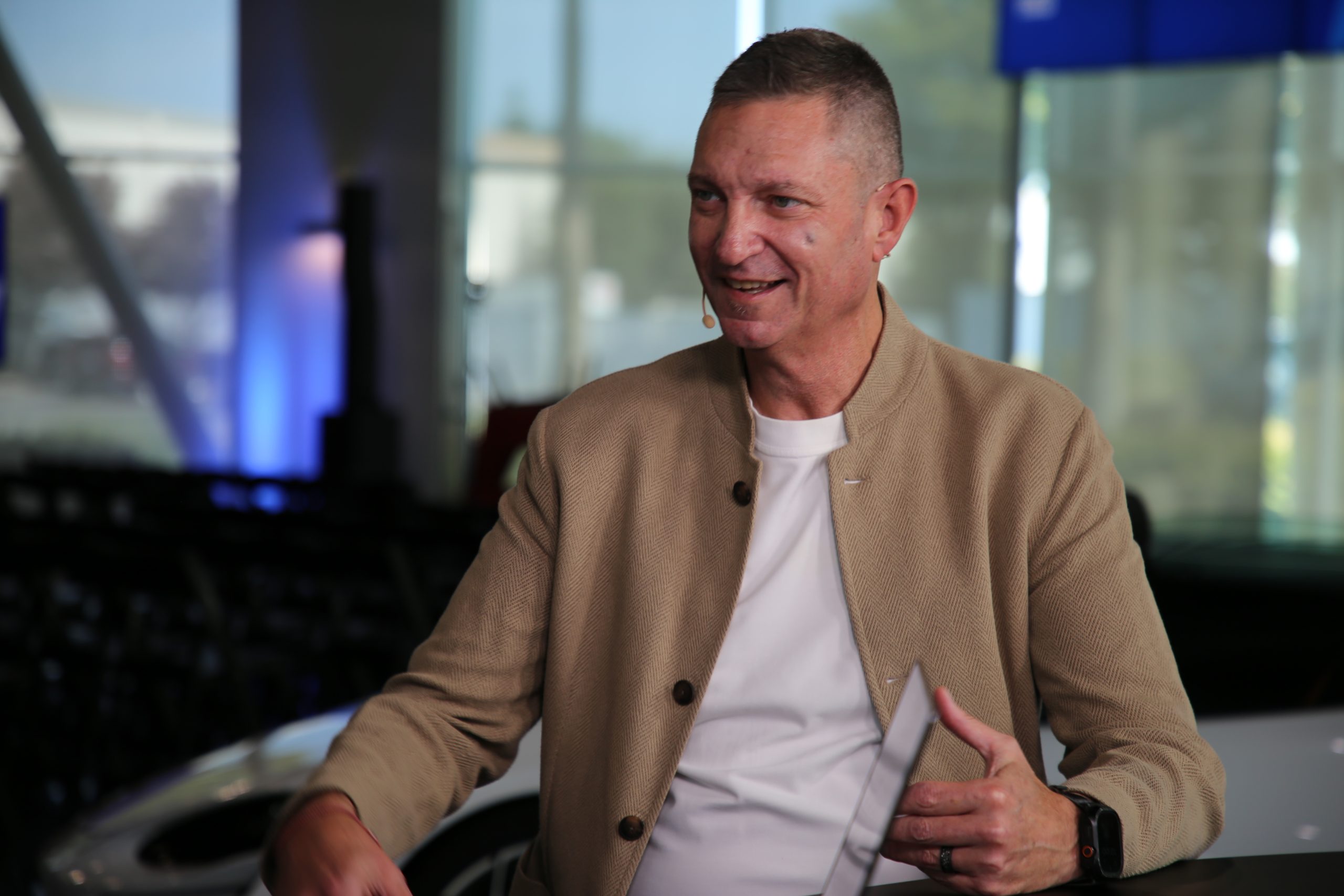
Deepgram’s plans reflect a broader push to develop AI solutions tailored to how customers want to build and use the technology. In Silicon Valley, where tech-savvy buyers often prefer to build their own solutions rather than buy packaged products, Dell is expanding its partner ecosystem to meet this demand, according to Sean O’Connor (pictured), ENT West regional manager, large enterprises and acquisitions at Dell.
“For us, this idea of an ecosystem is starting to change,” he told theCUBE. “Today we are here with Intel [Corp.]we are here with SHI [International Corp.]we are here with Microsoft [Corp.]. But this ecosystem is now starting to trickle down into private equity and venture capital.”
Here is theCUBE’s full video interview with Sean O’Connor:
Check out theCUBE’s full video coverage of Dell’s AI Leadership Symposium“:
https://www.youtube.com/watch?v=videoseries
(*Disclosure: TheCUBE is a paid media partner for Dell’s AI Leadership Symposium. Neither Dell, the sponsor of theCUBE’s event coverage, nor other sponsors have editorial control over theCUBE or SiliconANGLE content.)
Photo: SiliconANGLE
Support our mission to keep content open and free by interacting with theCUBE community. Join theCUBE Alumni Trust Networkwhere technology leaders connect, share information and create opportunities.
- Over 15 million viewers of theCUBE videosto spark conversations about AI, cloud, cybersecurity and more
- Over 11.4k theCUBE alumni — Connect with more than 11,400 technology and business leaders shaping the future through a unique, trusted network
Founded by tech visionaries John Furrier and Dave Vellante, SiliconANGLE Media has built a dynamic ecosystem of industry-leading digital media brands, reaching over 15 million elite tech professionals. Our new proprietary theCUBE AI Video Cloud is a game-changer in audience engagement, leveraging the theCUBEai.com neural network to help technology companies make data-driven decisions and stay at the forefront of the industry conversation.
