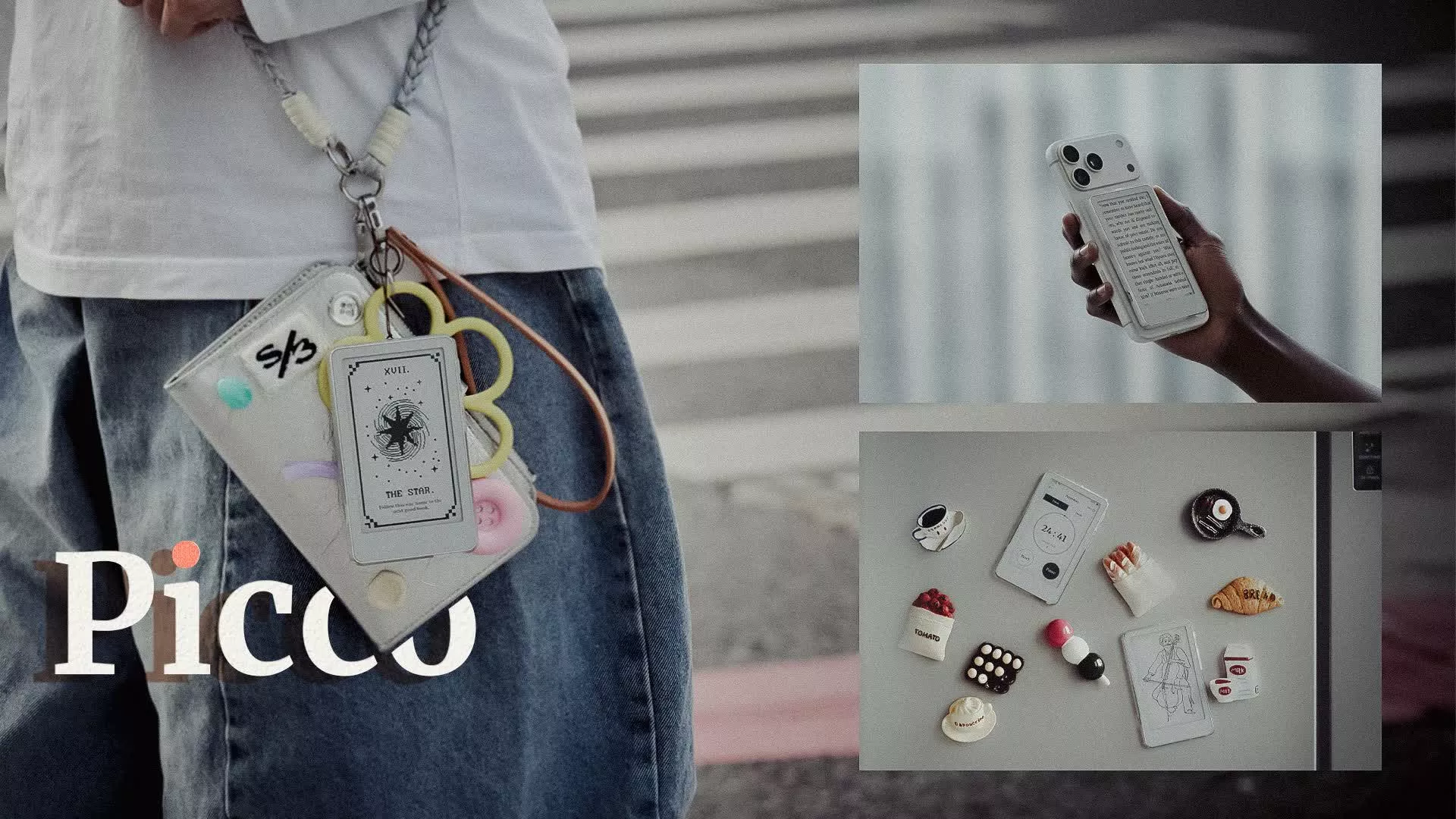
In short: Boox has finally lifted the curtain on its previously announced competitor, the Xteink X4, and has officially entered the emerging ultraportable e-reader market. The new device sacrifices some of the versatility of Boox’s established brands to achieve the smallest size and lowest price in the company’s entire catalog.
Pre-orders are now open for the Boox Picco, the first in a new category of smaller, cheaper e-readers from the company. The device, which attaches to the back of a smartphone, will be available in the US starting October for $100.
The Picco features a 3.97-inch monochrome E Ink touchscreen with a resolution of 480 x 800 at 235 PPI, a front light and physical page turning buttons. The device comes with a 16GB microSD card, but the storage is expandable up to 2TB. Weighing just 58g and measuring just 105.5 x 62 x 5.5mm, the Picco attaches to the back of a smartphone with a MagSafe connector, similar to the Xteink X4.
Compared to other Boox devices, the Picco’s main disadvantage is that it doesn’t use Android, but rather a minimalist operating system with built-in apps Pomodoro, Todo and Countdown. While it still supports numerous document and image formats, the company’s other e-readers and tablets are general-purpose devices that stand out from most competitors in that users can install any Google Play Store app or Android APK. The $80 Xteink, on the other hand, uses unlocked firmware so third-party developers can provide custom apps.
Users can transfer e-books and other documents to the Picco in three ways: via the Boox Tiles app, a web-based tool at booxtiles.com, and a direct USB-C connection.
Boox calls the Picco the first member of its “Tiles” device line and opens a new size category below its 6- to 7-inch e-readers. The unveiling follows a major refresh of the company’s product lineup, which includes the recently launched Palma 3, a $340 6.13-inch e-reader with digital pen functionality. Other new Boox devices include the 10.3-inch Note Air6 C and the 8.52-inch Note Mini C.
Perhaps the company’s most important upgrade is in software. With the exception of the Picco, the new devices have been updated from Android 11 to Android 16, expanding the range of supported apps and putting them just one operating system generation behind the latest Android phones.