As the United States expands nuclear power to provide reliable, carbon-free electricity, it still faces a major challenge: disposing of the radioactive waste left behind by spent reactor fuel.
To address this problem, U.S. Assistant Secretary of Energy James P. Danly announced Thursday a $5.4 million grant to the Texas A&M Engineering Experiment Station (TEES) to develop reactor fuel technology that could convert long-lived nuclear waste into a new energy source.
“America’s energy future depends on bold innovation and strong partnerships between the federal government, national laboratories, universities and industry,” Danly said. “This project shows how we can address the long-term challenges posed by nuclear waste while advancing technologies that strengthen our nation’s energy security,” he added.
Turning nuclear waste into fuel
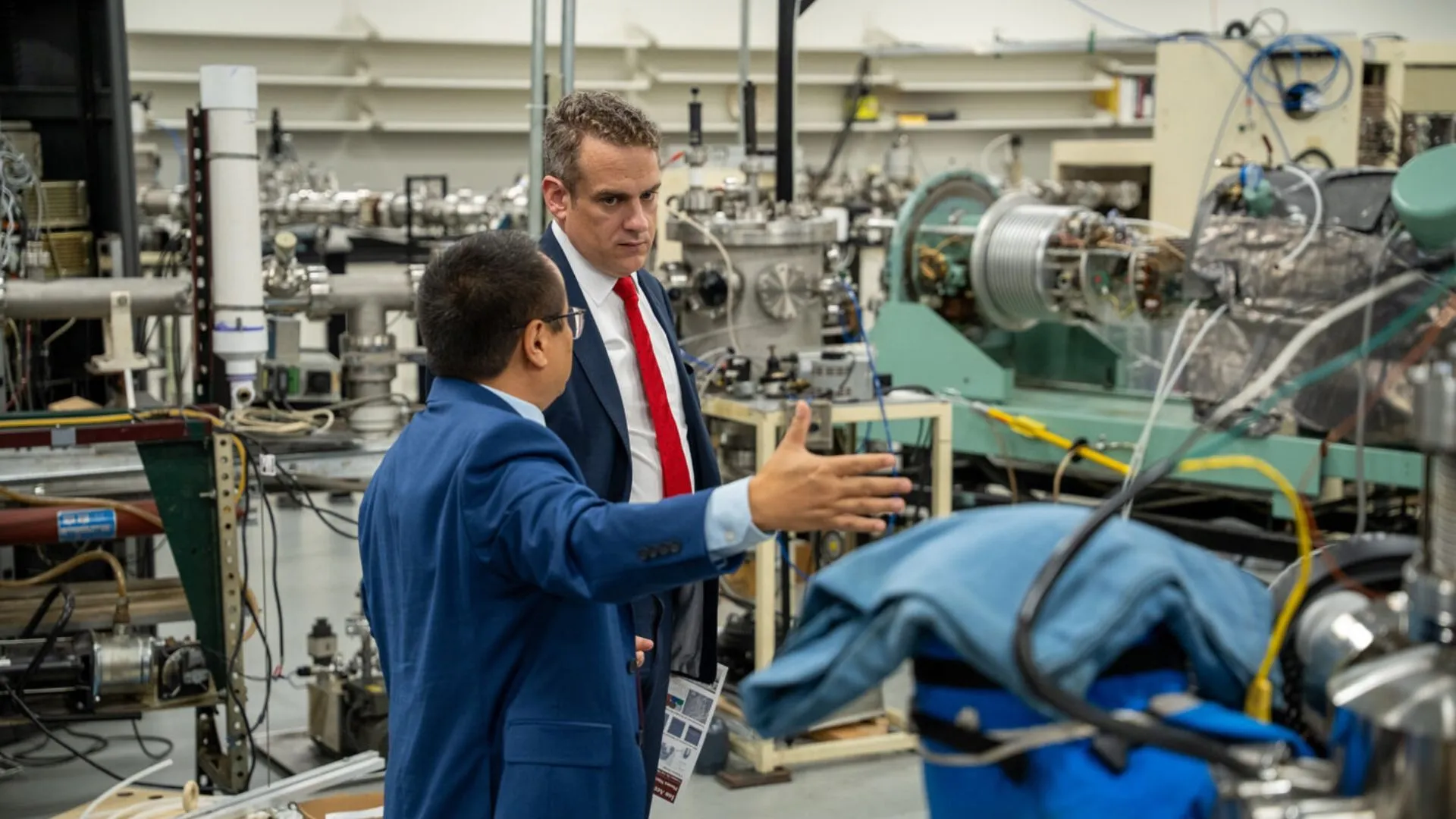
The U.S. Department of Energy (DOE) grant supports the project led by Lin Shao, a professor in the Department of Nuclear Engineering at Texas A&M University. According to the university, as part of this project, Shao is exploring the possibility of converting nuclear waste into fuel using a thorium molten salt reactor.
In addition to studying methods to address long-term exposure to radioactive nuclear waste, the project would also focus on developing advanced reactor technologies that can provide reliable energy for future generations, Shao said. Researchers will integrate fuel preparation, experimental testing, computer modeling and reactor design throughout the project.
Texas researchers will collaborate with scientists at Savannah River National Laboratory and industry partner Natura Resources on this project.
Alternatives to waste disposal
Meanwhile, other labs across America are exploring alternative nuclear fuel recycling technologies to reduce radioactive waste storage from thousands of years to just hundreds.
Scientists at Argonne National Laboratory (ANL) have begun developing technologies that could recycle used fuel for use in advanced reactors. Researchers are turning to pyroprocessing, a technique that uses high temperatures to physically or chemically alter solid materials to convert spent fuel into material that can be reused in modern nuclear reactors.
In addition to funding research into recycling nuclear waste into fuel, the DOE also funds studies to find methods to permanently dispose of the radioactive waste that remains after recycling used nuclear fuel.
Researchers found that deep drilling could provide a safe and relatively inexpensive way to permanently dispose of radioactive nuclear waste, according to a study published by the ministry more than a month ago.
Deep Isolation, a California-based company founded a decade ago, is working to make real-world underground disposal of spent nuclear fuel and hazardous nuclear waste. In January 2026, the Company launched a large-scale, deep commercialization pilot in Cameron, Texas, to demonstrate its deep well disposal system.
Underground disposal of nuclear waste is also practiced by other countries, including Finland, Sweden and France. However, the technology used by these countries is different from American deep drilling technology. In the former approach, geological deposits are created by blasting and digging huge underground tunnels, shafts and caverns.
The facility is located in Eurajoki, Finland, and is the world’s first permanent underground repository for spent nuclear fuel. Built more than 400 meters (1,312 feet) deep into 1.9 billion-year-old crystalline bedrock, it will contain and permanently dispose of nuclear waste for more than 100,000 years. The facility will be housed in disposal canisters designed to keep radioactive spent fuel completely isolated.
