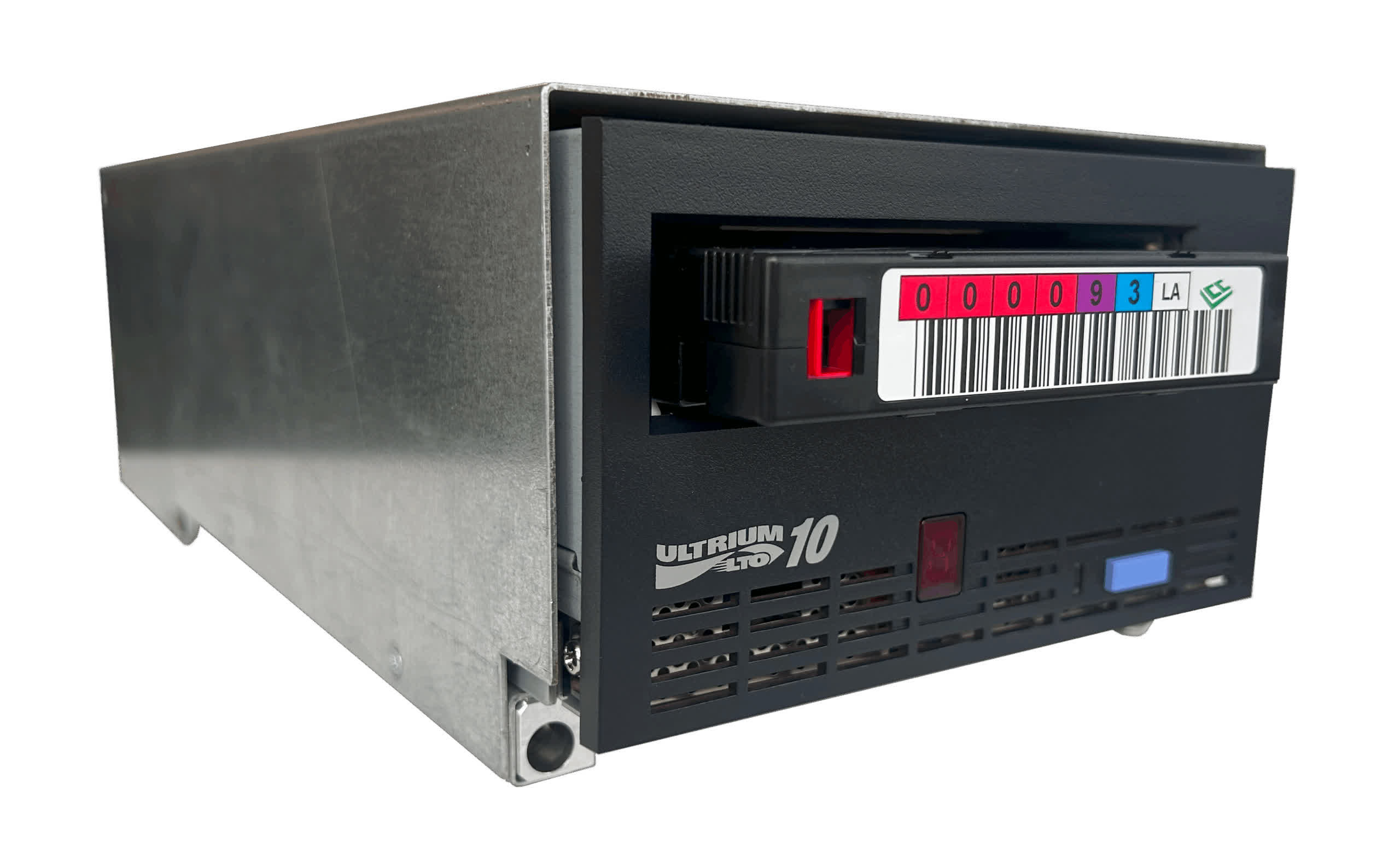
Thanks, AI: Although magnetic tapes have their origins in the beginnings of computer science and digital media, they have never completely disappeared from the market. In fact, demand for data storage is currently so high that tape manufacturers are investing millions to expand their production capacity.
Fujifilm recently announced a significant new investment in its magnetic tape production operations. The Japanese giant will spend 10 billion yen, or about $64 million, to expand production capacity at its Kanagawa factory in the city of Odawara. The site manufactures magnetic tape for data storage purposes, and there is no doubt that the IT world today is in dire need of cost-effective, reliable storage solutions.
The new investment will run from fiscal year 2026 to 2028, Fujifilm said. The company will use the reallocated funds to expand Kanagawa’s manufacturing facilities and is also expected to open new positions. Fujifilm said magnetic tape is increasingly being used by cloud providers and data center operators, so the company needs to increase its production output to about five times current levels to better meet market demand.
Of course, Fujifilm cites generative AI and other AI-related services as key drivers for the growing demand for magnetic tape. The massive amounts of digital data collected by AI companies – both for model training and inference workloads – need a secure place to store it. Magnetic tape can store enormous amounts of data and retain it for long periods of time without requiring the significant financial investments associated with SSDs and other modern storage solutions.
Fujifilm’s Kanagawa facility will focus on producing the company’s version of the LTO-10 tapes, which are based on the LTO Ultrium standard. The LTO format was developed in the 1990s as an open standard alternative to proprietary tape formats and is managed by a consortium of IT companies including HPE, IBM and Quantum Corporation.
LTO-10 tapes were released earlier this year, offering a native capacity of 40 terabytes. With compression, a single LTO-10 tape can store up to 100TB. The transfer rate in both cases is 400 megabytes per second, which should not be a problem given the “cold” storage usage for which magnetic tape is typically used.
In addition, the LTO consortium is already planning the next upgrades to its tape technology. The LTO-11 format is expected to launch in 2029 and will offer a native capacity of 70TB. Future plans include tapes capable of storing 120TB (LTO-12), 210TB (LTO-13), and even 365TB (LTO-14) of uncompressed data on a single cartridge. That’s honestly an incredible amount of storage no matter how you look at it.
Fujifilm also highlighted the company’s long history with magnetic tape products. Initial research efforts began in the 1950s and evolved in response to new formats, including broadcast and consumer videotape systems. Fujifilm released its first LTO-based product, the LTO Ultrium 1, in 2000, while the latest LTO Ultrium 10 format was introduced just a year ago.
