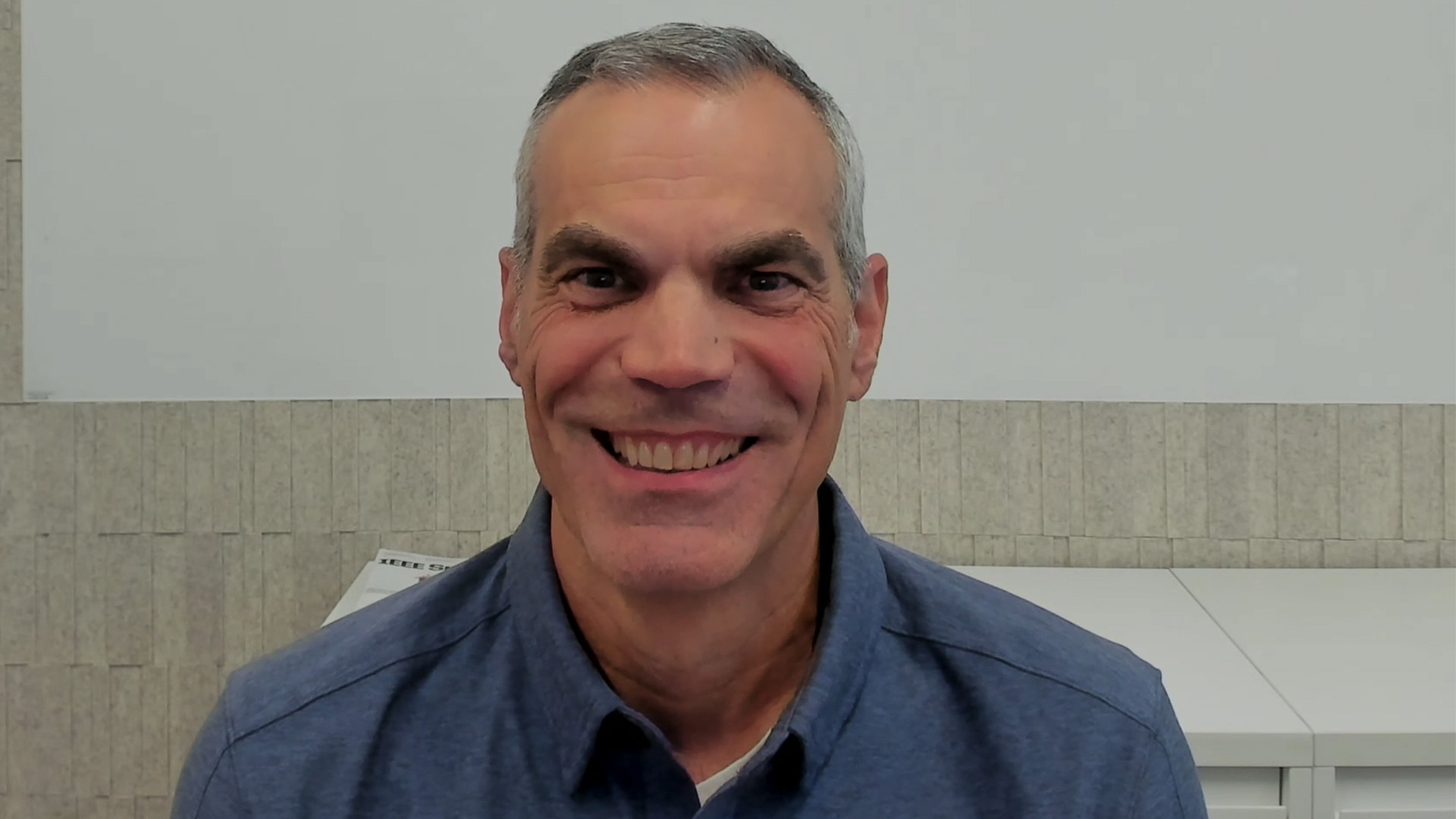
As Director of HPE Labs, Andrew Wheeler (pictured) is in a unique position to witness rapid advances in artificial intelligence and new developments in the emerging field of quantum computing.
But there’s a third area that Wheeler, an HPE fellow and senior vice president, is often asked about. It leverages HPE’s decades of experience in high-performance computing with sensitive data and national security environments to deliver a privacy-compliant infrastructure.
“Given my unique role in the company, I’m guaranteed to be asked two questions every time I have most of my customer interactions: something about AI and then something about quantum,” Wheeler said. “But now I would say the final discussion is about sovereignty. It’s a combination of those three that’s guaranteed to come up in every external conversation I have.”
Wheeler spoke with Dave Vellante, principal analyst at theCUBE Research, for the video series “Sovereign AI: From Strategy to Reality” during an exclusive interview on theCUBE, SiliconANGLE Media’s livestreaming studio. They discussed how AI, sovereignty and quantum technology are becoming business imperatives as companies rethink who controls their data, infrastructure, models and economy. (*Disclosure below.)
The need for control drives data sovereignty
Customer interest in data sovereignty is growing with the widespread adoption of enterprise AI. Companies increasingly need to maintain strict control, local processing and regional boundaries over sensitive data rather than exporting telemetry or training models via external cloud services.
“I look at it a little bit like sovereignty is a natural progression of a lot of the privacy regulations that have been enacted around the world in recent years by various government agencies,” Wheeler told theCUBE. “Approximately over 170 countries around the world have enacted national privacy or data protection frameworks. Now AI is giving it even more fuel.”
HPE’s work in quantum readiness overlaps with the company’s delivery of data sovereignty solutions. This is about helping customers improve their readiness through cryptographic posture management and infrastructure transformation while maintaining compliance, sovereignty, resiliency and operational continuity.
“As a nation, you don’t want to be in a situation where you don’t have an answer… you want to make sure you’re adequately protected against anything that quantum could do from a threat perspective,” Wheeler said. “But also as a capability, you want to make sure that you’re equipped and your country is essentially ready to take advantage of the benefits that quantum brings. It’s a very natural evolution of the discussion and the news cycle as you move from AI to quantum in terms of this sovereignty discussion.”
Future research to further develop quantum technology
HPE’s work in preparing for a quantum secure future includes integrating post-quantum cryptography readiness capabilities across key infrastructure areas, including computing and networking. Hewlett Packard Labs is exploring a range of solutions that could help companies implement advanced security to protect critical data and systems.
“One of the things we’re studying in terms of quantum networks is what’s called quantum key distribution,” Wheeler explained. “Fundamentally, this is about using quantum properties to securely distribute encryption keys between parties. Ultimately, this allows us to enable extremely secure communication. As we look to expand this concept of zero trust networks, quantum key distribution could well play a key role in this.”
Wheeler’s team is also working intensively on the area of confidential computing for AI. HPE already offers a range of solutions for data-at-rest encryption, including controller-based encryption, self-encrypting drives (or SEDs), and dedicated software integrations.
However, according to Wheeler, there is another, equally important area where data protection is particularly important.
“I need to protect data in transit,” Wheeler said. “As I move from one server to the next, whether it’s from a cloud environment to an on-prem environment or all combinations thereof, you want to make sure that a threat actor doesn’t interfere and get your data. How do we protect data while it’s actually being manipulated, whether it’s in a CPU, a GPU or some other accelerator? That’s an area we’re working on.” [and] Other members of the industry and academic community are working on this.”
Change security assumptions
HPE was part of a select group of organizations that participated in Project Glasswing, an Anthropic PBC initiative that provided participating organizations with access to Claude Mythos Preview. Mythos is a groundbreaking AI model with advanced software analysis and vulnerability detection capabilities.
As Wheeler noted in a blog post this week, AI, sovereignty requirements and new technologies like quantum are changing the security assumptions that companies have relied on for decades. HPE’s experience with Mythos through Project Glasswing informs the company’s efforts to strengthen its cybersecurity practices.
“Through our participation in Project Glasswing and participating in this initial evaluation, we have a really deep understanding of the impacts,” Wheeler told theCUBE. “We’ve taken a number of steps to fundamentally improve our own internal design lifecycle and the way we do things. Everything is now mission critical, whether it’s computing, storage or networking.”
Here is the full video interview, part of SiliconANGLE and theCUBE’s coverage of the Sovereign AI: From Strategy to Reality video series:
(*Disclosure: TheCUBE is a paid media partner for the “Sovereign AI: From Strategy to Reality” interview series. Neither HPE, the sponsor of theCUBE’s event coverage, nor other sponsors have editorial control over theCUBE or SiliconANGLE content.)
Photo: SiliconANGLE
Support our mission to keep content open and free by interacting with theCUBE community. Join theCUBE Alumni Trust Networkwhere technology leaders connect, share information and create opportunities.
- Over 15 million viewers of theCUBE videosto spark conversations about AI, cloud, cybersecurity and more
- Over 11.4k theCUBE alumni — Connect with more than 11,400 technology and business leaders shaping the future through a unique, trusted network
Founded by tech visionaries John Furrier and Dave Vellante, SiliconANGLE Media has built a dynamic ecosystem of industry-leading digital media brands, reaching over 15 million elite tech professionals. Our new proprietary theCUBE AI Video Cloud is a game-changer in audience engagement, leveraging the theCUBEai.com neural network to help technology companies make data-driven decisions and stay at the forefront of the industry conversation.