A hydrophone located half a kilometer beneath the Beaufort Sea has spent seven years listening to the Arctic.
His images show how dramatically the underwater environment changes throughout the year. This is important for scientists trying to detect signals from earthquakes, explosions and human activity.
Researchers at Los Alamos National Laboratory analyzed the continuous recordings to create a long-term acoustic reference for the region. Such recordings remain unusual in the Arctic, where harsh conditions make sustained monitoring difficult.
The team used data from one of the sensors at NOAA’s Ocean Noise Reference Station. Located 500 meters below the ocean’s surface, the station records sounds traveling through the water.
This long-term view gives researchers something they rarely have in the Arctic. It shows what normal underwater conditions sound like before an unusual event comes into the picture.
Ice becomes a signal
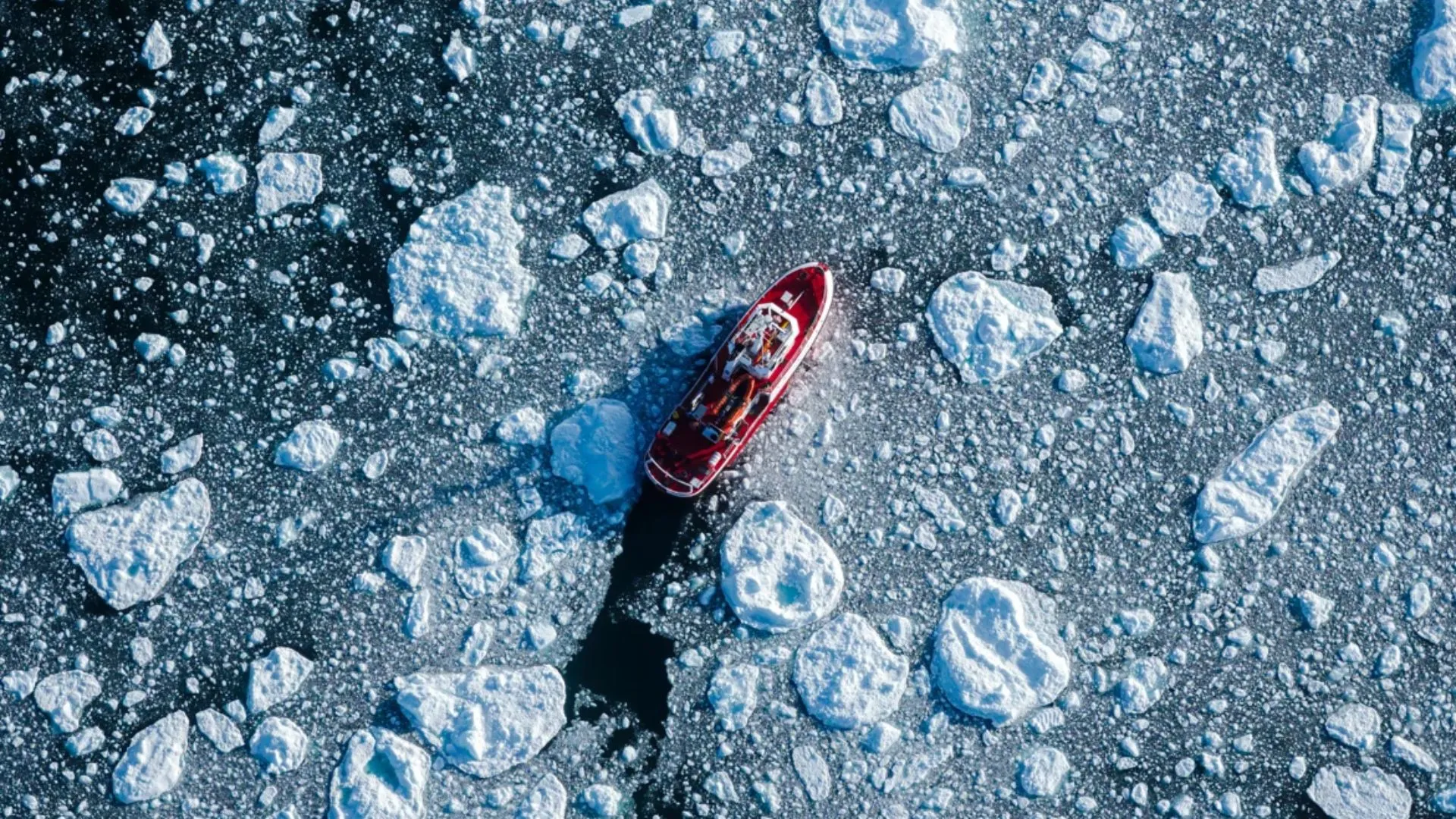
Sea ice plays an important role in shaping this acoustic environment. Its influence is particularly pronounced in the Arctic winter.
The movement and deformation of ice causes significant underwater noise. Summer brings a different pattern, with waves becoming the dominant source of sound.
These seasonal shifts can make event detection difficult. A signal that stands out in one season might be harder to distinguish in another season. “Before you can reliably detect something unusual, you need to understand what is normal,” said Siobhan Niklasson, the study’s lead author.
Niklasson and her colleagues used the seven-year record to examine these changing conditions. Their analysis shows how the acoustic background varies throughout the year.
The researchers also identified noise from seismic surveys, in which air guns are used to examine the geology beneath the seafloor. Such studies add another human-made source to the Arctic soundscape.
The ocean carries distant signals
Hydrophones can detect sounds that travel considerable distances in seawater. This capability makes them useful for monitoring remote parts of the Arctic.
Earthquakes can produce acoustic signals underwater that reach sensors far from their origin. Explosions can also produce different signals depending on location and environmental conditions. Ship traffic adds another layer to the acoustic picture. This also applies to waves, wind and ocean activities.
Separating these sounds requires more than just detecting an increase in underwater noise. Scientists need enough background data to determine whether a signal represents something unusual.
The Los Alamos study provides this context at an Arctic site. It also shows how environmental conditions can influence what surveillance systems can detect.
Demand is increasing
The timing is important as activity continues to change across the Arctic. The retreat of sea ice is freeing up waters that were once difficult to reach most of the year.
More ships and resource exploration could lead to additional acoustic activity. Geopolitical interest in the region also creates a greater need for reliable surveillance.
A longer acoustic recording could help researchers track these changes against an established baseline. It could also improve their understanding of when natural noise obscures interesting signals.
The study does not attempt to create a single system to monitor the entire Arctic. Instead, it provides a detailed reference for interpreting sounds recorded beneath the Beaufort Sea.
Seven years of continuous listening now give researchers a clearer picture of this underwater environment. The results could help find out what stands out when things get unusually loud in the Arctic.
The study was published in Journal of the Acoustical Society of America.