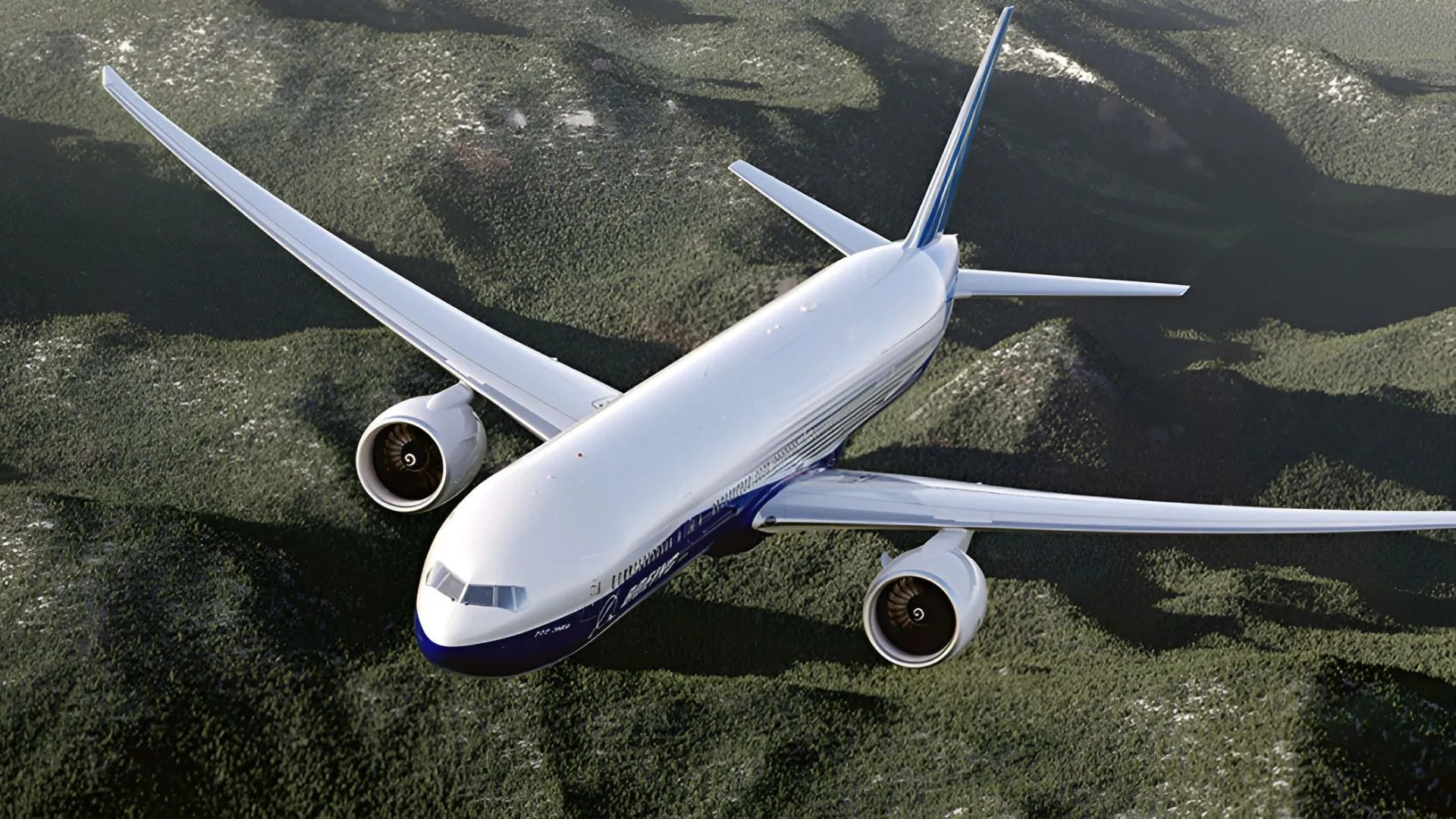
Stratolaunch is adding a Boeing 777-200ER to its hypersonic test fleet, giving the company another aircraft capable of carrying its Talon-A vehicles into the air.
The Mojave, California-based company announced the acquisition on September 30. It said the additional airline will increase its total flight capacity by 35 percent and expand operational capabilities.
The 777 will join Stratolaunch’s existing carrier aircraft, Roc and Spirit of Mojave. Engineers will modify the wide-body aircraft to release Talon-A vehicles through its fuselage.
This work is scheduled to be completed in 2027. Once operational, the aircraft will provide Stratolaunch with another opportunity to bring reusable hypersonic test vehicles into flight.
Larger fleet for flight testing
Stratolaunch has expanded its flight operations as demand for hypersonic testing increases. The addition of another airline could give customers more options to plan missions without relying on a single aircraft.
The company also expects the larger fleet to be able to support operations from multiple locations. This is important for test programs that require specific ranges, weather conditions or mission profiles.
Three carrier aircraft could also support parallel missions. Stratolaunch said the additional capacity will help reduce scheduling constraints and support higher flight frequency.
The 777 has another advantage due to its size and range. Engineers can use the aircraft as a reusable first stage and bring Talon-A to altitude before releasing it for hypersonic flight.
This approach allows the test vehicle to begin its mission from the air. It can also help researchers collect data during flight profiles that ground-based launch systems cannot easily reproduce.
Talon-A is driving demand
Talon-A has become the core of Stratolaunch’s hypersonic testing business. The autonomous vehicle launches from a carrier aircraft and performs high-speed atmospheric testing before returning for recovery.
Stratolaunch said it completed 10 successful hypersonic flights with Talon-A in July. The milestone was reached several months after the company was awarded a $90.8 million contract under the War Department’s Test Resource Management Center’s MACH-TB program.
This award applies to airborne performance test vehicles. The program provides Stratolaunch with another important opportunity to support hypersonic development in the United States.
Zachary Krevor, president and CEO of Stratolaunch, said the 777 will strengthen the company’s ability to meet customer demand. “As the demand for hypersonic technologies continues to grow, we are expanding the scale of operations to make routine hypersonic testing a reality,” Krevor said.
He added that the aircraft will provide greater flexibility as Stratolaunch works to increase its testing capacity.
Another carrier is added
The 777 acquisition gives Stratolaunch three carrier aircraft with which to plan future missions. These additional aircraft could be particularly useful as government and commercial programs seek more frequent flight options.
Hypersonic development depends heavily on flight tests and the data collected during these missions. More available carrier aircraft can provide engineers with additional opportunities to evaluate vehicles and onboard systems in real-world flight conditions.
The new Boeing 777 will not enter service immediately. Stratolaunch must first complete the necessary modifications to meet Talon-A and its air launch requirements.
Scheduled for completion in 2027, it will mark another step in the company’s efforts to expand its testing infrastructure. Once the aircraft enters the operational fleet, Stratolaunch will have greater flexibility to plan missions and respond to customers requiring additional hypersonic flight data.