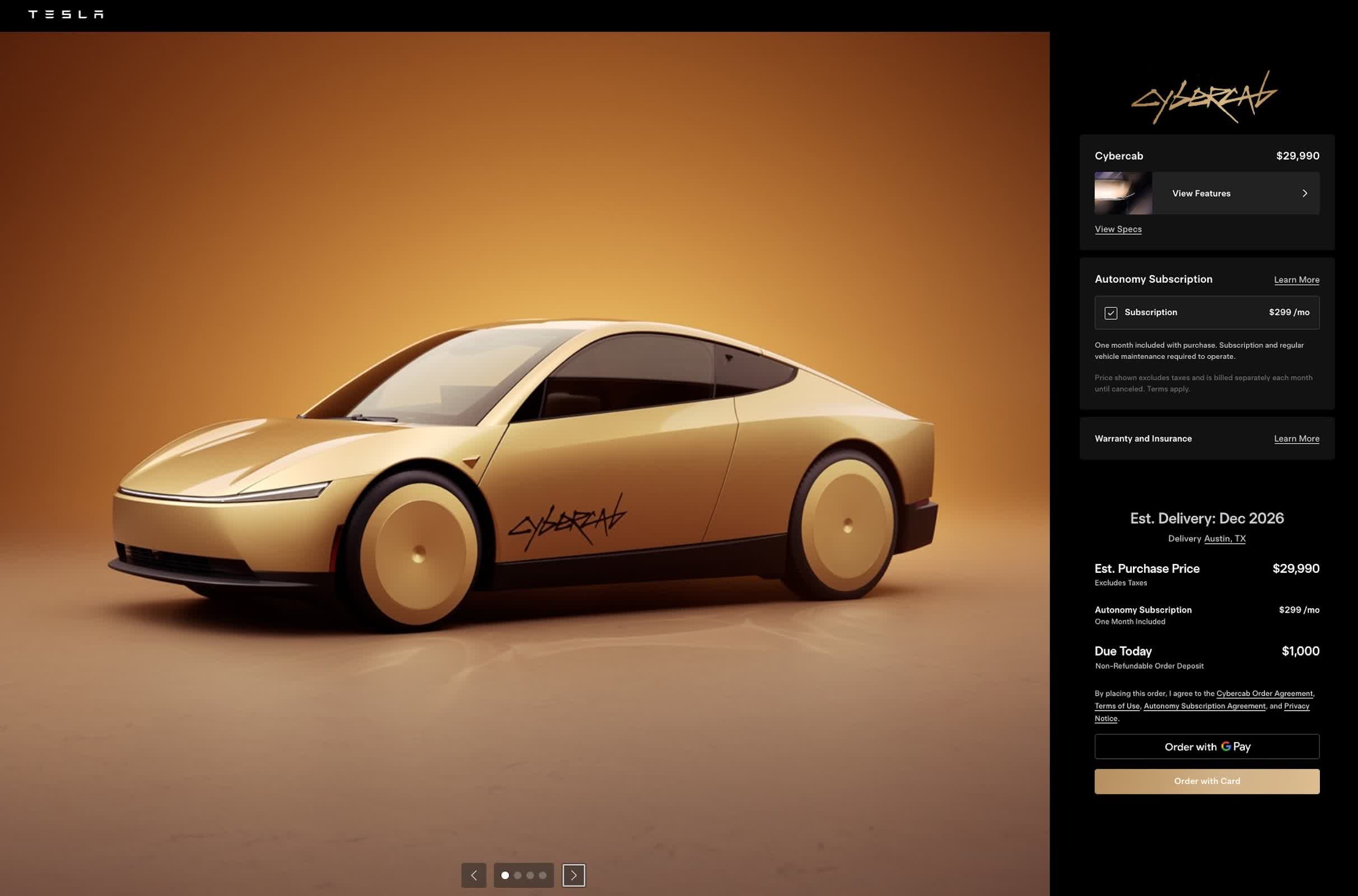
Conclusion: The two-seater electric vehicle requires a monthly subscription to operate, it cannot be driven manually, and it cannot be used to make money. But Tesla is now selling its Cybercab, the robot taxi without a steering wheel or pedals, to private buyers for $29,990. Owners must pay $299 per month for the software that does all the driving and are not allowed to use the car to make money. Sales begin before federal safety authorities have decided whether the car can legally drive on public roads.
The purchase offer is initially only valid by invitation. Tesla announced this on its Robotaxi account on The Cybercab will “only be available in supported service areas,” meaning buyers must live in a city where Tesla already operates its robotaxi service. The email also states: “Initial availability is limited.” Buyers must pay a non-refundable $1,000 deposit to meet a December delivery window, and Tesla does not guarantee that date. The company hasn’t said how it chooses who gets an invite or how many cars go to private buyers instead of its own fleet.
The vehicle is already carrying passengers. In September, Tesla added the Cybercab to its Austin Robotaxi service, previously deployed on Model Y vehicles. The crowdsourced robotaxi tracker counts 278 cybercabs in use, about 40% of Tesla’s fleet.
The design sets this purchase apart from purchasing any other Tesla. The company charges $99 per month for full self-driving on its regular models, and an owner who abandons that plan can continue to drive the car normally. The Cybercab does not have any controls that one person can operate. The Autonomy subscription is the only thing that moves it. So if an owner cancels or Tesla suspends the account, the car cannot be used on public roads. The plan includes autonomous driving, maintenance and towing, but no insurance.
The monthly fee increases the costs significantly. If the first month is included in the purchase, five years of payments add up to about $17,600, bringing the base cost before taxes, fees and insurance to about $47,600. This is more than a new Model 3 or Model Y, both of which can be driven anywhere in the country.
Tesla only needs to give 30 days’ advance notice of pricing, and owners who continue to use the service after the rules change will be treated as if they had agreed to it. There will be no partial refund for the remainder of a month if an owner cancels or Tesla suspends access.
The ban on commercial use is a clear break with the original lineup of the car. When Elon Musk unveiled the Cybercab at the We, Robot event in 2024, he described a $30,000 driverless car that owners could plug into Tesla’s robotaxi network to make money while they slept or worked. He didn’t mention a subscription. The purchase terms now exclude ridesharing, delivery work and Tesla’s own network. Tesla AI boss Ashok Elluswamy has suggested the second quarter of 2027 as a possible date for adding customer-owned cars to the network. Until then, owners have no option to offset the monthly fee.
Musk posted about the launch of X and said it will grow, subject to “regulatory approval.” He also called the $299 fee “too high” and said it should be $115 per month, or more in line with FSD’s $99 price.
Musk mocked YouTuber Marques Brownlee for promising to shave his head if Tesla delivered a sub-$30,000 Cybercab before 2027. Brownlee replied that he thought his hair was safe.
The regulatory question is still open. Federal Motor Vehicle Safety Standards require traditional controls such as steering wheels and pedals. NHTSA has launched a formal review into how Tesla self-certified a vehicle without a steering wheel, pedals or side mirrors. Tesla submitted its legal justification to the agency in October and asked that the entire response be kept confidential. The agency has not yet decided.
Insurance and liability are also unclear. Tesla has not explained how private auto insurers will cover a car that never has a human driver, or how responsibility will be divided between the owner and Tesla if the car itself causes an accident while driving.
