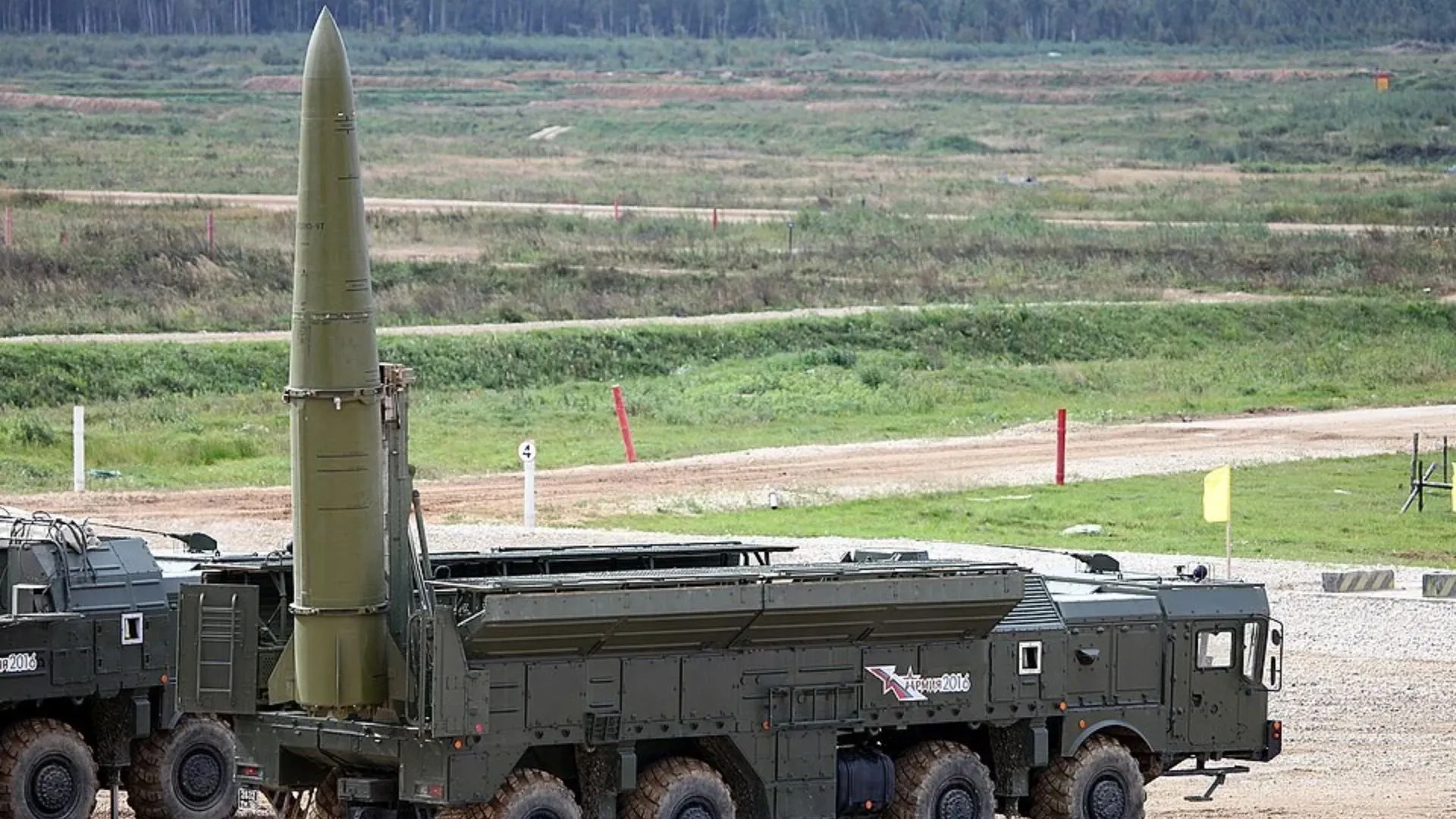
Russia has given its Iskander ballistic missiles optical and radar upgrades to improve their accuracy along the Dnipro River in Ukraine. The improved accuracy is aimed at cutting logistical links between the left and right banks of the river and worsening living conditions in Ukrainian cities ahead of the approaching winter.
Since early October, Russia has increased its attacks on key bridges and power grids in Ukraine, destroying infrastructure and logistical support in key cities. On October 1 and 2, Russia attacked the southern bridge in Kiev, while on October 3 and 4, it targeted the northern bridge. The central bridge in the city of Dnipro was hit on October 30, while the cable-stayed bridge in Zaporizhia was targeted on October 6.
The North Bridge was attacked again last week. But with a difference. While the previous attacks consisted of jet-powered drones, last weekend’s attack consisted of Iskander ballistic missiles with improved homing heads.
Why use ballistic missiles?
Since the beginning of the conflict, Ukraine has used smarter electronic warfare (EW) wherever possible to counter Russian aggression. This defensive layer blocks the electronics of incoming projectiles and minimizes the damage caused. While bridges are narrow structural targets, the drone strikes failed to achieve the desired results, forcing Russia to change its strategy.
Ballistic missiles are rocket-propelled weapons with a wide range and can carry a range of powerful warheads. The Iskander is a short-range ballistic missile with a range of 310 miles (500 km) and can carry high-explosive shrapnel, fuel-air explosives and even thermonuclear warheads.
Regardless of range or warhead, ballistic missiles work on the same principle: they fly using power to gain speed and altitude. Then the engine switches off and the rocket follows a parabolic arc and flies towards the target at high speed.
When the rocket reaches its desired altitude, the onboard computer positions it in line with its target. However, the path is guided by gravity and has a lot of room for error. This makes the missiles unsuitable for precise targets such as bridges. But Russia’s rearmament changes that completely.
Russia’s Improved Missiles
The Russian upgrade of Iskander ballistic missiles includes radar and optical homing devices. These allow the rockets to change their trajectory in the final phase of their flight, increasing accuracy to a few meters. The aim is to hit the bridges more precisely, as was shown last weekend by four Iskander missile attacks on the North Bridge in Kiev.
Ukrainian authorities expect these attacks to intensify at the beginning of winter. According to Ukrainian media reports, the Russian strategy is to attack key bridges along the Dnipro River in order to cripple both military and civilian logistics on both banks.
Military strategy and technology experts have confirmed that Russian upgrades have likely increased the missiles’ accuracy. However, their ability to bring down Kiev’s most important bridges also depends on the quality of the Ukrainian bridges’ construction technology. Important river crossings in Ukraine are heavily developed and the likelihood that Russia will be able to destroy them currently remains quite low.
