What just happened? In another move that highlights the military’s evolution toward a future where machines fight, Defense Secretary Pete Hegseth has announced the creation of a new military command to expand the use of autonomous and robotic capabilities across the U.S. military. It’s called Autonomous Warfare Command or the somewhat scary AutoWarCom.
Hegseth announced the initiative during his State of the Force address on September 30 in Quantico, Virginia. A four-star officer will lead the command, which would be added to the military’s existing 11 combatant commands. The last addition was the US Space Command in 2019.
“The pace of war is changing faster than the process of supporting it,” Hegseth said (via Reuters) in a speech that also announced the creation of an office for religious affairs.
“Cheap computing power, superintelligence and advanced commercial manufacturing have enabled the proliferation of low-cost, high-precision attacks,” Hegseth added.
As always, there is a lot of bureaucracy to get through before AutoWarCom becomes a reality. Air & Space Forces Magazine reports that the Pentagon aims to have it in place by October 1, 2027 and will work with Congress for the necessary authorization. Its remit will include drones, AI, and command and control systems, but its leadership and exact structure remain unclear.
The command is intended to accelerate the development and deployment of autonomous and semi-autonomous systems. Hegseth also wants the armed forces to introduce military specializations with an emphasis on autonomy and offer personnel specific career paths in this area.
War is expensive. In July, it was reported that the US lost an estimated $1 billion worth of Reaper drones during its campaign against Iran. The Pentagon’s Massed Modular Aircraft project is looking for cheaper, modular aircraft that can be used in greater numbers, although losses are expected. If drones are shot down regularly, the military would prefer replacements that don’t cost a small fortune.
“These days we need both quality and quantity,” Hegseth said.
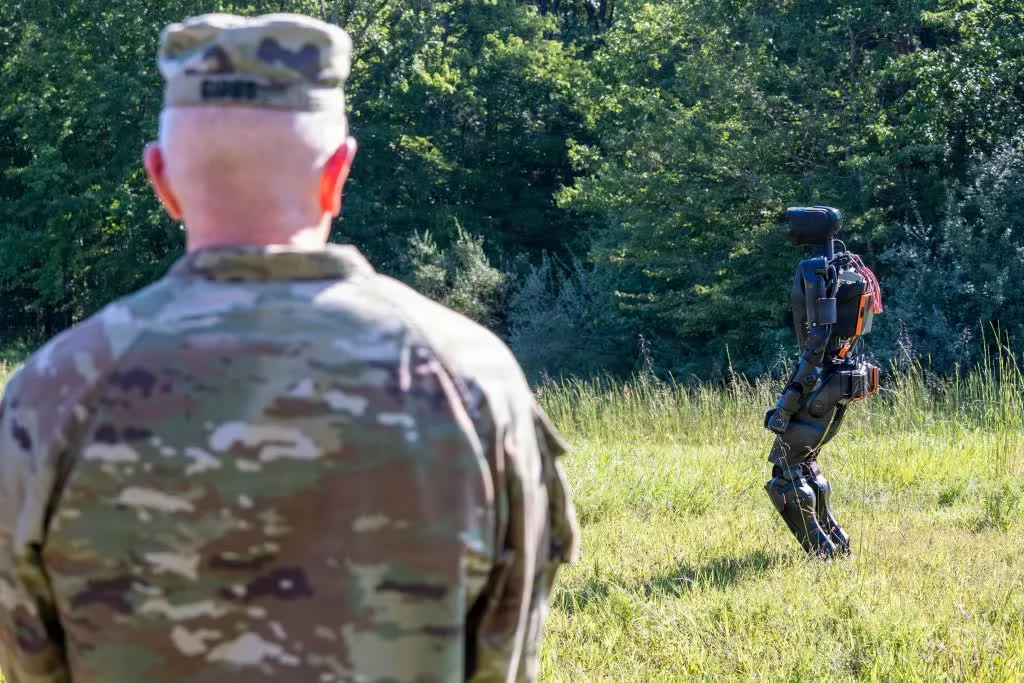
The announcement is another example of how humanoid robots are making their way into the military. This week it was reported that the Army has selected five winners of its xTechHumanoid competition, including Alex, the robot from the Florida Institute for Human and Machine Cognition. Despite the very common name, it features ballistic protection and combines AI with human control for dangerous missions.
China does not want to be left behind in this race. The US rival has been exploring the military use of humanoids, including reconnaissance, logistics and possible clearance operations alongside troops.
The military role of AI already extends beyond controlling machines to include intelligence analysis, logistics and targeting. This also means that a hallucination can have significant consequences. It was recently reported that US forces nearly intercepted a Chinese ship after an AI-powered intelligence report misidentified its cargo as material for a nuclear weapons program. Staff prepared to board and the planes were already in the air before officials reviewed the report. A human review discovered the error, but only after preparations were already underway.