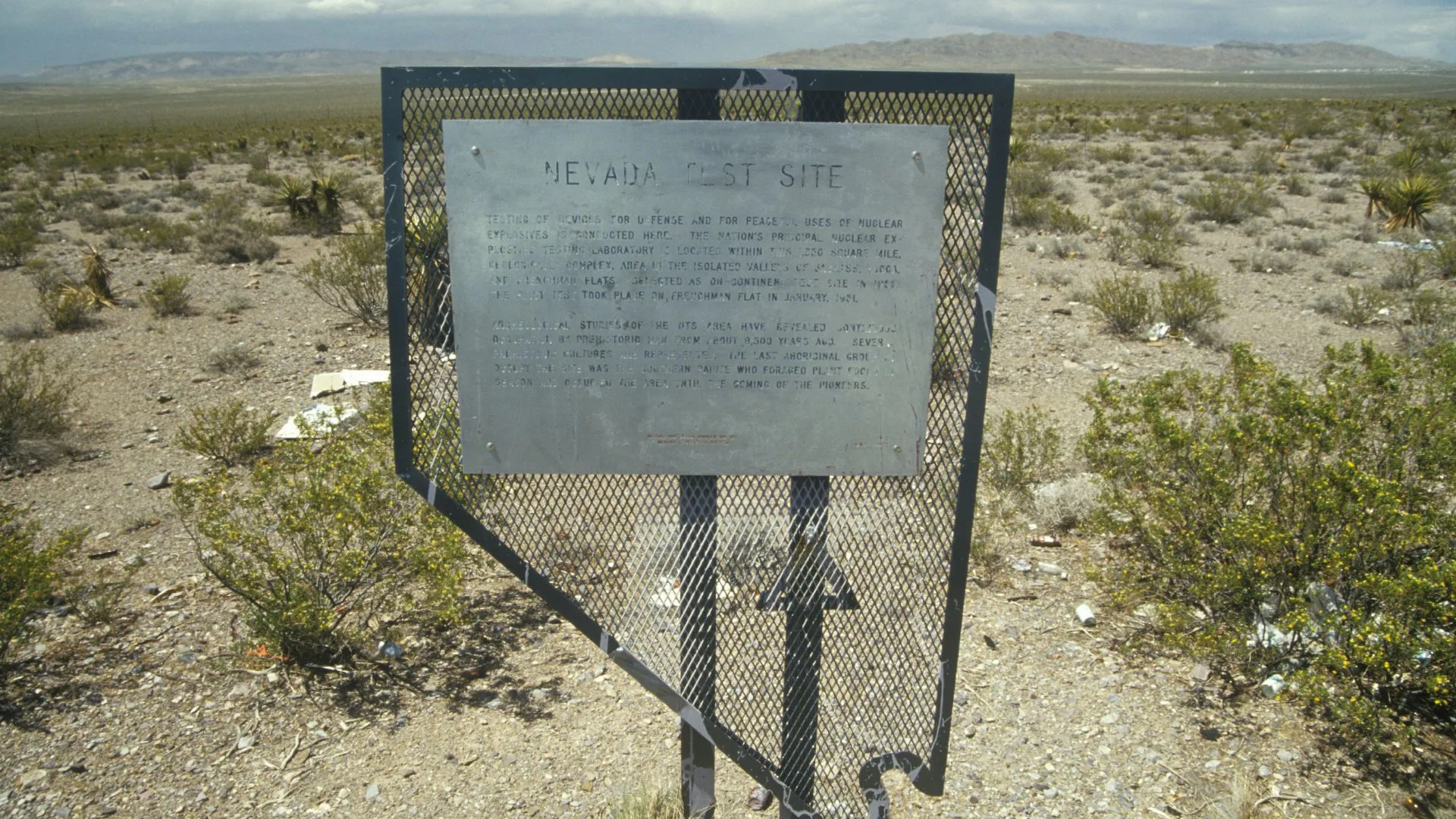
The U.S. Department of Energy’s National Nuclear Security Administration (NNSA) has conducted an underground test of chemical explosives in Nevada to study how to identify hard-to-detect nuclear explosions. The experiment took place at the Nevada National Security Site and was intended to improve the detection of low-yield explosions related to possible tests by China and Russia.
The non-nuclear test took place in a tunnel at the site, which is about 65 miles northwest of Las Vegas. The site was also used during the development of the first US nuclear weapons.
NNSA said Wednesday that measurements collected during the experiment will help scientists improve models and algorithms used to identify and characterize foreign nuclear detonations.
Testing a harder-to-detect explosion
The experiment used a conventional chemical explosive without involving a nuclear weapon or nuclear detonation. The focus was on a method called “decoupling,” which can reduce the signals produced by an underground explosion. NNSA said the test was intended to strengthen U.S. capabilities to identify a so-called “decoupled” explosion.
The agency linked the test method to US information that China conducted at its Lop Nur nuclear test site in June 2020.
“Just as a stealth aircraft looks smaller on radar, decoupling can greatly attenuate signals picked up by nuclear detection sensors, making a large explosion appear smaller,” the statement said.
In a traditional underground test, a device is placed deep underground near the surrounding rock. The resulting shock waves propagate through the ground and can be detected by monitoring devices. A decoupled test uses a large underground chamber that can reduce the seismic signals reaching the sensors.
Sensors record data from the explosion
During the experiment, researchers used various types of advanced sensors to study the explosion and its effects. The equipment included accelerometers and seismometers to measure ground motion.
The test also used infrasound sensors, electromagnetic sensors, chemical and radiotracer samplers, and meteorological instruments. NNSA said the measurements collected will support scientific models and help refine detection algorithms.
The overall goal is to improve the way scientists estimate the properties of underground explosions. Better measurements could help U.S. surveillance systems identify nuclear detonations and determine their characteristics when they occur.
NNSA did not provide a date for the experiment.
The test follows calls to resume nuclear testing
The announcement came after President Donald Trump called on the United States to resume underground nuclear weapons testing. In October 2025, Trump said he had ordered the Pentagon to immediately resume nuclear testing on par with China and Russia.
“We stopped [testing] many years ago, but as others are conducting tests, I think it is appropriate to do so,” he said at the time.
Since this announcement, no U.S. underground nuclear weapons test has taken place.
The recent experiment in Nevada does not represent a return to nuclear explosive testing. The United States has maintained a moratorium on nuclear explosive testing since 1992.