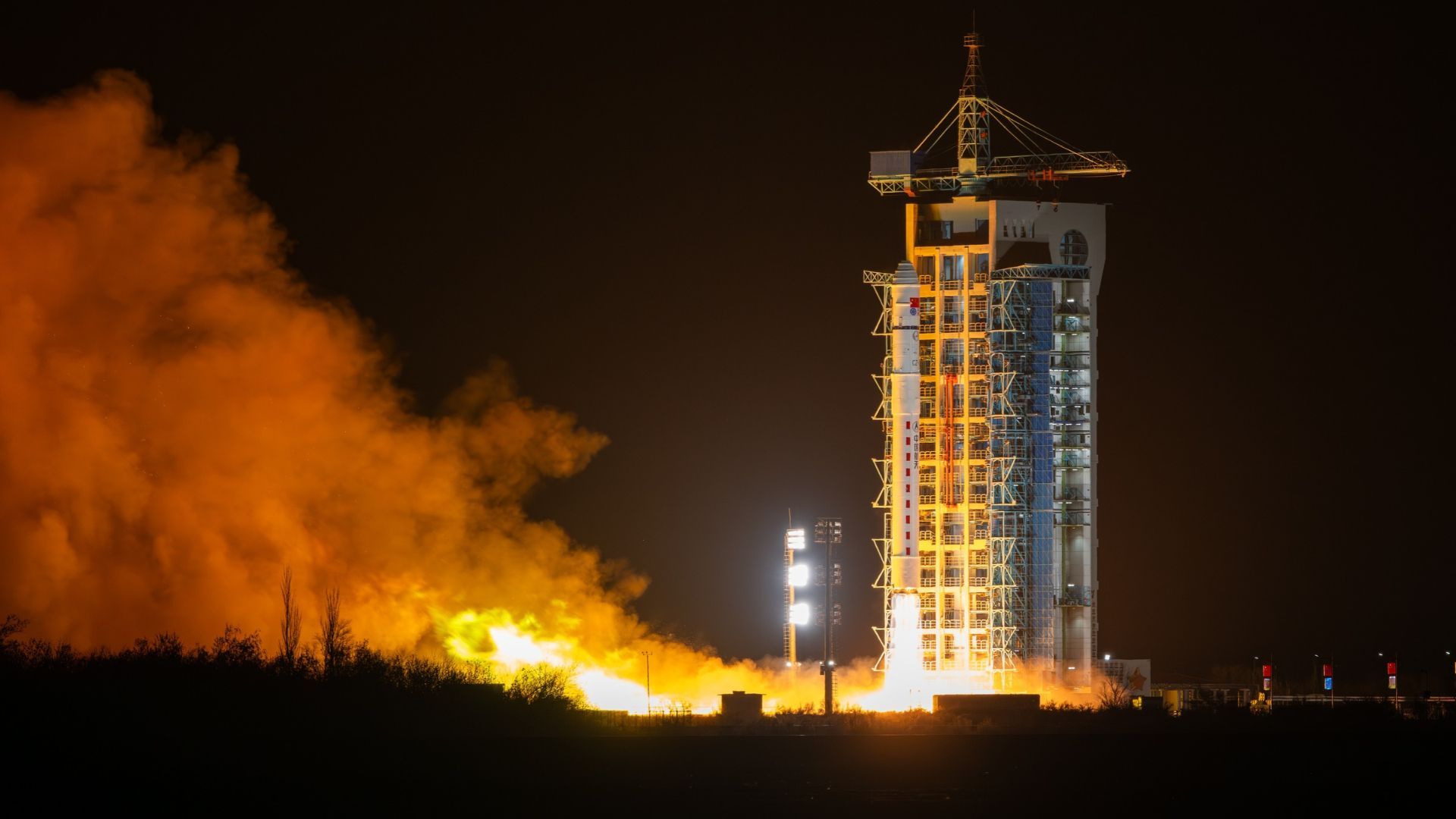
China has sent another experimental spacecraft into orbit, adding a relatively mysterious satellite to its growing fleet of technology test missions. A Long March 2D rocket placed Shijian-24 into a planned sun-synchronous orbit from the Taiyuan Satellite Launch Center on November 19.
The rocket lifted off from Launch Complex 9 in Shanxi Province at 6:51 a.m. Chinese Standard Time. China confirmed that the spacecraft had reached its intended orbit and declared the mission a complete success. The launch also marked the 678th flight of China’s Long March rocket family.
The Unknown Mission of Shijian-24
China has not disclosed Shijian-24’s specific mission objectives nor identified its manufacturer. However, the spacecraft’s designation offers some clues about its possible role.
China uses the name Shijian for spacecraft that test technologies and establish operations. The term means “practice” in English. Another category, Shiyan, identifies experimental spacecraft focused on technology development. These designations help distinguish different types of technology demonstration missions within China’s space program.
Shijian-24 could also have significant physical dimensions. The 2D Long March rocket used a payload fairing with a diameter of 3.8 meters. This casing protected the spacecraft during its journey through the atmosphere. The relatively wide fairing provides a useful indication of the payload range available for the mission.
The satellite’s planned sun-synchronous orbit could support missions that require constant lighting conditions. Such orbits prove useful for Earth observation and other applications. However, China has not confirmed whether Shijian-24 will perform either role.
The spacecraft joins a relatively small group of Shijian missions launched this year. China had already placed Shijian-31 into a highly elliptical orbit in June. A previous attempt with Shijian-32 failed in January.
China also expanded its Shiyan fleet in March. Two Shiyan-30 satellites entered orbit along with the less documented Shiyan-33 spacecraft. Their missions again demonstrate China’s interest in testing new spacecraft technologies using dedicated orbital platforms.
Long March 2D can handle the cold
The November 19 mission also presented some additional ground-level challenges. Due to the cold weather in Taiyuan, launch teams had to modify their preparations for Long March 2D.
Engineers installed additional thermal insulation on the rocket before launch. The material separated harmlessly in the first moments of the flight. Ground crew also heated critical areas of the vehicle before takeoff.
These preparations helped protect sensitive equipment and systems from low temperatures. Thermal management remains important during the startup process, especially when vehicles are exposed to changing environmental conditions. Even relatively routine launches require adjustments when weather impacts ground infrastructure and rocket hardware.
Interestingly, this Long March 2D did not include the hardware changes introduced to another vehicle a week earlier. This earlier rocket received flight computer improvements and design optimizations. These changes included the removal of aerodynamic fins from the vehicle.
China did not explain why the latest missile lacked these modifications. The older production batch could explain the difference, although officials have not confirmed this possibility.
China’s growing launch record
The mission added another milestone to China’s increasingly busy launch calendar. It was the 108th flight of the Long March 2D family.
The Shanghai Academy of Spaceflight Technology, which is developing the rocket, also recorded its 284th Long March mission. Its commercial launch vehicle subsidiary markets the Long March 2D.
The rocket remains an integral part of China’s orbital missile fleet. China has now conducted 82 orbital launch attempts in 2026. The latest mission adds another spacecraft to the country’s growing satellite infrastructure.
