High-performance computing (HPC) is merging with artificial intelligence faster than many research teams can adapt. Computing capacity is hard to come by and workloads now run across clouds and on-premises clusters. The metric that matters is the shift from peak performance to time to discovery.
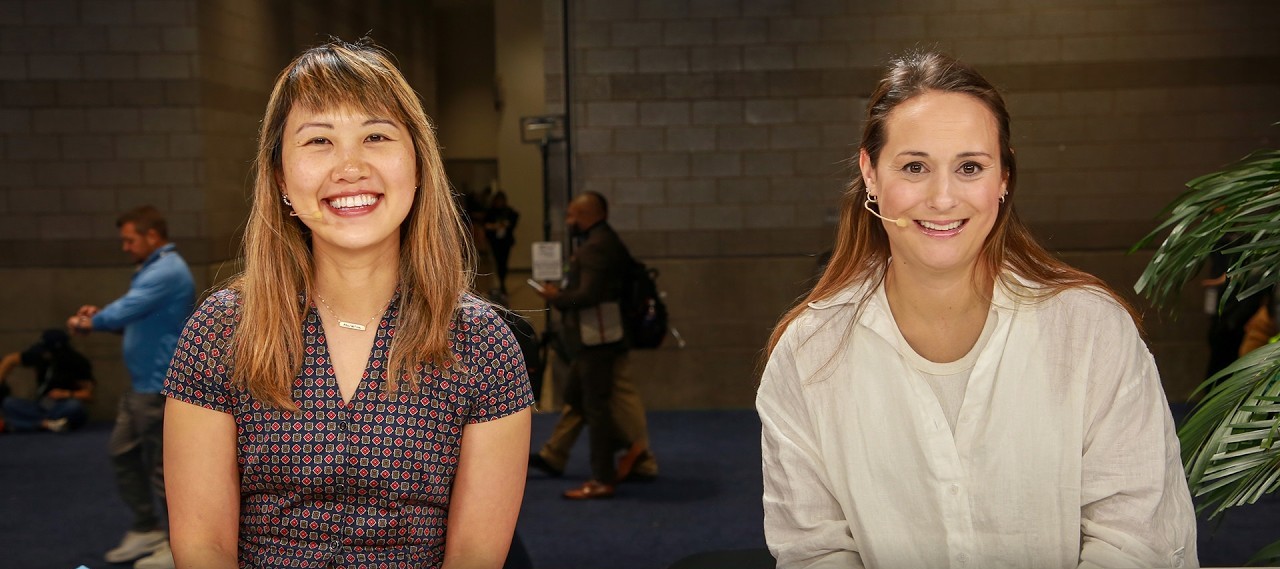
This shift will be evident when supercomputing and AI converge at SC26 in Chicago. According to Annie Ma-Weaver (pictured left), head of high-performance computing product at Google Cloud, a unit of Google LLC, researchers need more computing power than a single site can provide, and cloud providers are now introducing AI agents as the layer that connects scattered resources.
“We encourage that flexibility. And we understand that researchers really need access to computing power, but they don’t necessarily want to learn all the details of how to connect that computing power together and how to orchestrate it across all of their different clusters,” Ma-Weaver said.
Ma-Weaver and Megan Gawlik (right), product manager for high-performance computing at Google Cloud, spoke with John Furrier and Gemma Allen of theCUBE Research at SC26 during an exclusive broadcast on theCUBE, SiliconANGLE Media’s livestreaming studio. They discussed how AI agents simplify access to distributed computing resources, transform simulations and weather forecasts, and raise questions about researchers’ dependence on AI-generated results. (*Disclosure below.)
Agentic HPC shifts the focus from flops to discoveries
Google Cloud is building its agent HPC strategy on three pillars: purpose-built hardware, open source orchestration like Slurm and Kubernetes, and collaborative AI agents, Ma-Weaver explained. The company laid out the approach in its SC26 announcements. Gawlik said agents now help scientists search research literature, debug code and generate hypotheses in minutes instead of weeks.
“You have the opportunity to explore more scenarios and potentially use the same time to test the rationality of the emerging hypothesis,” Gawlik said. “I think it’s not just a speed thing, but I think it’s an accuracy thing that you can really achieve with that extra speed.”
The simulation also changes. In the past, engineers ran simulations over an entire parameter space. Now they can use AI in advance to decide which candidates are worth testing, Ma-Weaver noted.
“What we see with computer-aided design, for example, is that you can actually identify in advance which parameters are not essential and not have to run the simulation, reducing the overall simulation time,” she said. “We also find that if you do design and have initial prototypes, you can generate new, novel and creative prototypes.”
The profits are already reaching the weather forecast in production. The National Oceanic and Atmospheric Administration’s forecasting platform has heavy, tightly coupled workloads and previously only ran on-premises, but now runs on Google Cloud, Ma-Weaver explained. The National Hurricane Center also used Google’s WeatherNext model to predict the path and intensity of Hurricane Melissa in October 2025, Gawlik noted. But the increasing reliance on AI-generated results also poses a risk for younger researchers who may rely on machine results instead of developing critical thinking skills, she added.
“AI is still not perfect,” Gawlik said. “I think even though there is an output, let’s call it AI slop. It could still be slop.”
Here’s the full video interview, part of SiliconANGLE and theCUBE’s coverage of SC26:
(*Disclosure: Google Cloud sponsored this segment of theCUBE. Neither Google Cloud nor other sponsors have editorial control over content on theCUBE or SiliconANGLE.)
Photo: SiliconANGLE
Support our mission to keep content open and free by interacting with theCUBE community. Join theCUBE Alumni Trust Networkwhere technology leaders connect, share information and create opportunities.
- Over 15 million viewers of theCUBE videosto spark conversations about AI, cloud, cybersecurity and more
- Over 11.4k theCUBE alumni — Connect with more than 11,400 technology and business leaders shaping the future through a unique, trusted network
Founded by tech visionaries John Furrier and Dave Vellante, SiliconANGLE Media has built a dynamic ecosystem of industry-leading digital media brands, reaching over 15 million elite tech professionals. Our new proprietary theCUBE AI Video Cloud is a game-changer in audience engagement, leveraging the theCUBEai.com neural network to help technology companies make data-driven decisions and stay at the forefront of the industry conversation.
