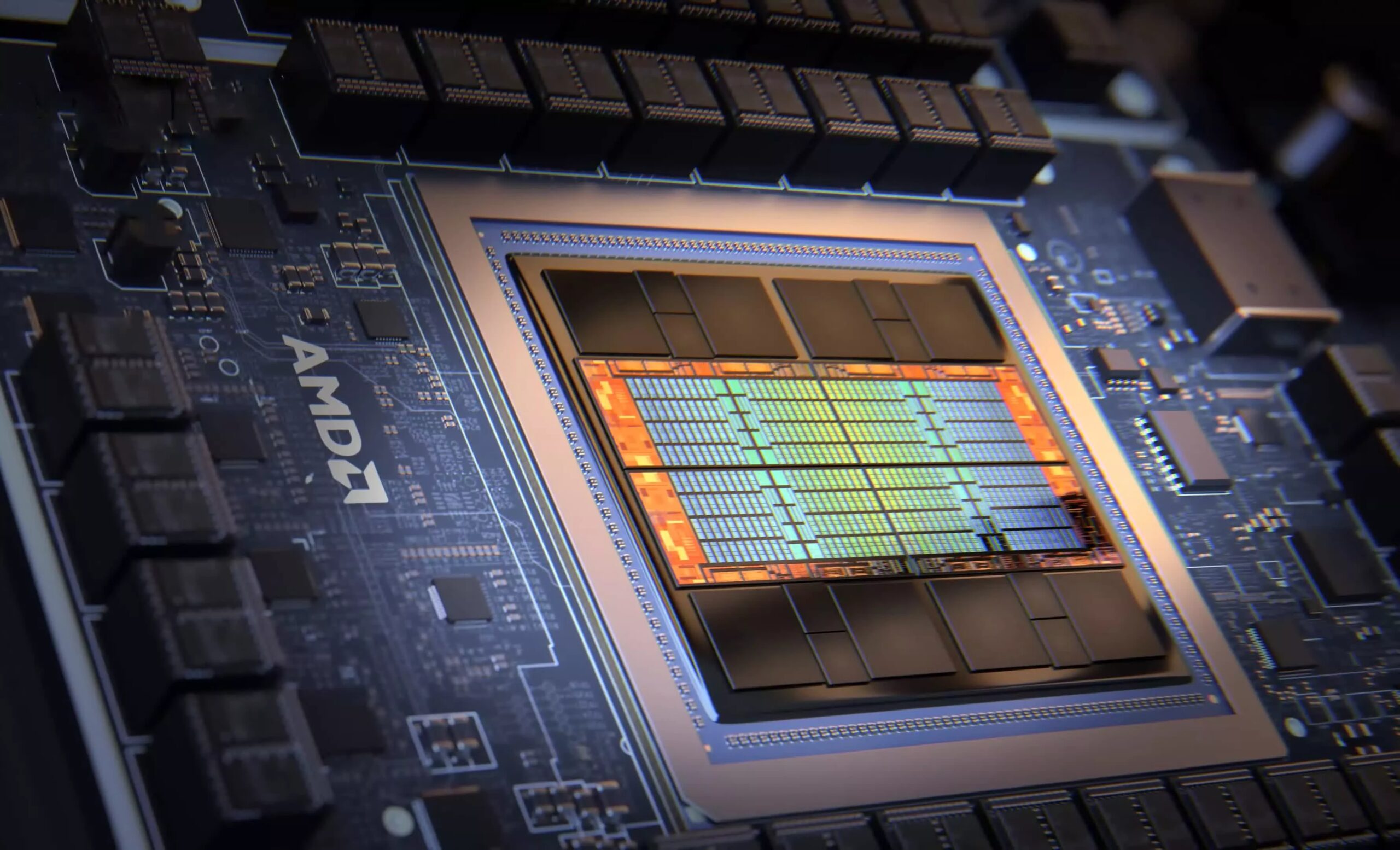
Looking ahead: Ever since AMD announced plans to expand FSR 4 support to older Radeon desktop graphics cards earlier this year, users have been waiting for a roadmap for laptop and handheld APU compatibility. The company’s latest update on the matter could also fuel ongoing rumors about a new generation of Ryzen mobile chips.
Jack Huynh, senior vice president of AMD’s computing and graphics division, recently told South Korean media that official FSR 4 support will be available for a range of APUs, gaming laptops and handheld gaming PCs before the end of 2026. The Elec reports that the company will also launch a new generation of APUs supporting FSR 4 this year, possibly the rumored Ryzen Z3 and Z3 Extreme.
FSR 4, which uses machine learning to improve games similar to Nvidia’s DLSS, initially only supported the RDNA 4 architecture that AMD uses in its RX 9000 GPUs. However, in June the company released a lightweight version for the RDNA 3-based RX 7000 series, replacing the FP8 calculation with the more widely used INT8 calculation.
— Gotou_3rd (@Gotou_kai3) May 6, 2026
At the time, Huynh confirmed that AMD was developing an even lighter model for RDNA 3 APUs, but did not provide further details until this week. This release would bring FSR 4 to devices with Ryzen AI Max APUs as well as handhelds like GPD Win, Asus ROG Ally X and Lenovo Legion Go.
However, the Steam Deck, the standard ROG Ally, and possibly the Xbox Series consoles would likely have to wait until AMD unlocks FSR 4 for RDNA 2 hardware next year.
Meanwhile, the next-generation APUs mentioned by Huynh will likely use the “RDNA 4m” architecture referenced in Linux driver updates earlier this year. Last year, AMD said its RDNA 4 strategy was focused on desktops and the leaked iGPUs weren’t really RDNA 4 anyway. Instead, they appear to be somewhere between RDNA 3.5 and RDNA 4, likely combining RDNA 4’s machine learning support with an RDNA 3.5 base.
Also Read: Testing AMD Radeon’s biggest software upgrade yet: FSR 4.1 to RDNA 3
When leaker Gotou_3rd released names for unannounced Ryzen Z3 and Z3 Extreme SoCs earlier this month, well-known tipster Kepler_L2 dubbed them “RDNA 3.5+.” Gotou claimed that the chips are semi-custom parts in 25mm x 25mm packages with 12 GPU compute units, four Zen 6 CPU cores and two low-power Zen 5 cores. The Z3 is reportedly optimized for 15W and the Z3 Extreme for 25W.
Import shipping information reported by ITHome also suggests a chip codenamed “Gainsborough,” which Kepler_L2 says uses the same architecture. This has led to speculation that it may be the Steam Deck 2 SoC, but it could also be something else entirely.
While the Steam Deck and Steam Deck OLED chips had Final Fantasy VII-inspired codenames such as Aerith and Sephiroth, these names came from AMD, not Valve. Additionally, 25mm x 25mm is a bit large for a Steam Deck, and AMD has codenamed the Ryzen Z2 A processor in the ROG Xbox Ally Aerith Plus.
In any case, handheld gaming PCs and other APU-based devices will see significant feature upgrades later this year or early next year.