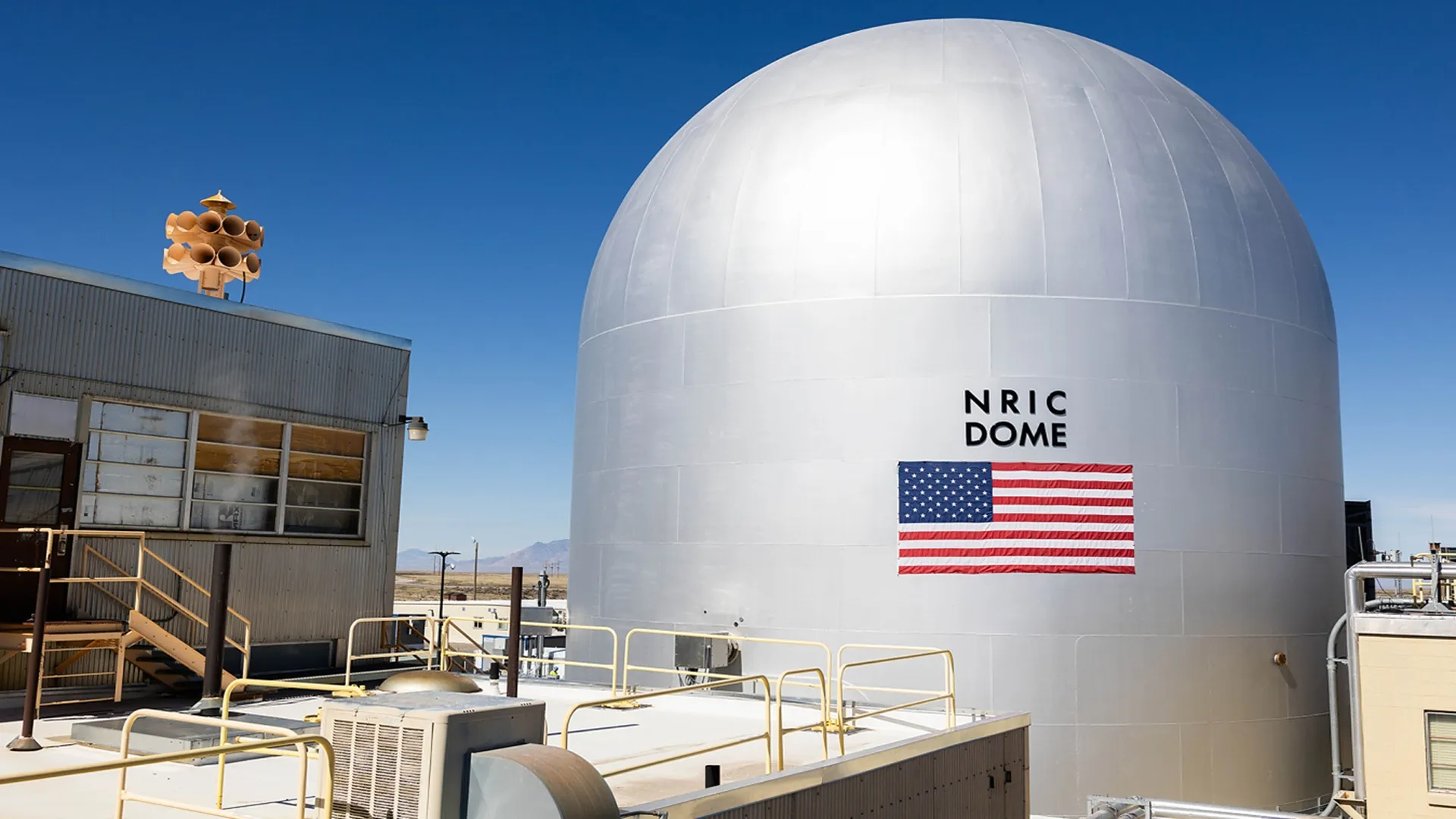
A US-developed nuclear battery that has achieved its first controlled chain reaction in about 150 days is scheduled to be demonstrated at full power at the Idaho National Laboratory (INL) in 2027.
Deployable Energy, a U.S. developer of transportable nuclear reactors, announced on October 7 that the Department of Energy (DOE) has selected its Unity nuclear battery for testing at the laboratory’s Demonstration of Microreactor Experiments (DOME) facility.
The upcoming test will examine whether the compact reactor can be operated at full power, transported with already loaded nuclear fuel and moved to another location after operation. The company is developing Unity to provide continuous power to industrial sites, ships and remote locations.
The selection follows a June 30 milestone when Unity reached criticality, the point at which a reactor sustains a controlled nuclear chain reaction. According to the company, this occurred approximately 150 days into the project, making it the first developer under the National Reactor Innovation Center’s (NRIC) Nuclear Energy Launch Pad initiative to reach this stage.
From criticality to power
Achieving criticality confirms that a reactor can sustain a chain reaction, but it does not ensure that the system can deliver its designed power output under operating conditions.
The 2027 campaign is designed to test this next level. Deployable Energy plans to fire Unity at a factory, transport the fired reactor to INL, install it in the DOME, and operate it at full power.
After the test, the company intends to move the reactor to another location in the laboratory and complete the process of managing its nuclear fuel.
Together, these steps would test more than just the reactor itself. They would provide data on transportation, installation, operation and redistribution, all important to a system designed to provide electricity without requiring a conventional nuclear power plant at each site.
DOME is housed in the former Experimental Breeder Reactor-II containment structure at INL. The facility offers space for experimental reactors with a thermal output of up to 20 megawatts. This number describes the capacity of the test facility, not the stated performance of Unity.
“Build the reactor, learn quickly and move to production: This is the model the advanced nuclear industry needs,” said Bobby Gallagher, co-founder and CEO of Deployable Energy.
Testing the operation of transportable reactors
Unlike large nuclear power plants that are built in fixed locations, Unity is being developed as a modular system that can be manufactured and transported to locations that require reliable power.
Potential applications include industrial facilities, maritime operations and remote locations where traditional power infrastructure may be unavailable or difficult to deploy.
The demonstration will also examine whether a fuel reactor can be moved and installed through a repeatable process, rather than requiring extensive construction at each site.
Deployable Energy said the Nuclear Regulatory Commission (NRC), which observed its previous criticality test, would continue to monitor the demonstrations. The planned campaign is intended to support future licensing negotiations, but does not itself constitute commercial regulatory approval.
The company will work with NRIC and INL on engineering, fuel preparation, safety reviews and test planning in the coming months.
Deployable Energy also said it was selected for a separate DOE-approved commercial maritime nuclear demonstration. This project is different from the DOME 2027 campaign.
The full performance test remains a future milestone. The results will help determine whether Unity’s reactor design and proposed deployment process can support repeatable manufacturing and commercial use.
