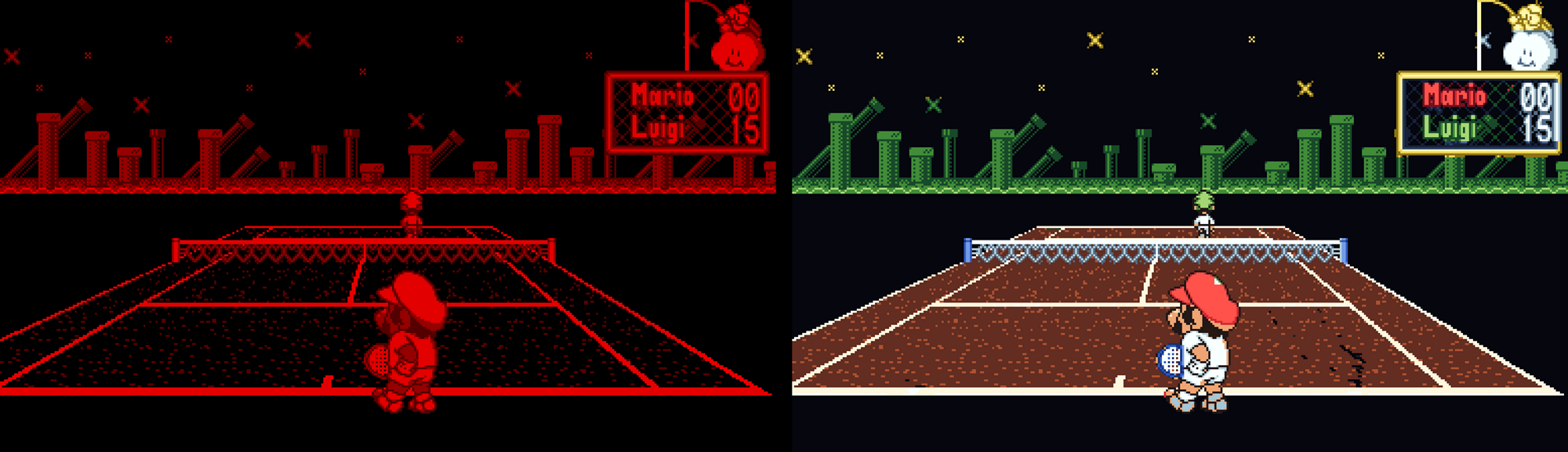
What just happened? Nintendo’s Virtual Boy famously used inexpensive red monochrome displays to create a stereoscopic 3D effect. Thanks to a newly developed emulator using Vibe code, some games in the console’s library can now be played with limited color, reportedly added through a hand-painted process.
Despite only selling 770,000 units worldwide, Nintendo’s Virtual Boy still has a small but dedicated fanbase experimenting with new ways to use the console. The stereoscopic system had no commercial success and could only display games in monochrome red tones. Now a new emulator called VBoy Color aims to change that by introducing limited colors to Virtual Boy games on desktop computers and in virtual reality (VR).
According to VBoy Color’s GitHub page, the open-source emulator adds colors to areas that would otherwise appear different shades of red on the original system. It uses a tile-based approach where each 8×8 pixel tile is assigned a color from a four-color palette. This technique can reportedly give different color schemes to pipes, platforms, bricks, and classic Nintendo characters.
Colorization could make games like Jack Bros. and Vertical Force look more visually appealing than on the Virtual Boy’s original monochrome display. The project could also renew interest in Nintendo’s ill-fated console, especially now that the company has released a new accessory for playing Virtual Boy games on modern Switch systems.
VBoy Color supports Meta Quest VR headsets, desktop operating systems and Android devices. Games on Quest can reportedly retain the 3D effect of the original console, while the desktop and mobile versions lack the same stereoscopic depth. The four-color effect is available on all supported platforms. Special, hand-painted color packs are reportedly available for most games released for the original system.
The new color scheme seems to work reasonably well, although there are some limitations. In games such as 3D Tetris and Red Alarm that use 3D wireframe graphics instead of traditional tile-based graphics, the colorization effect is less effective.
Furthermore, VBoy Color appears to be largely a Vibe-coded project with limited human involvement and no apparent upstream contributions to existing emulator development or research. Virtual Boy emulation may be a niche business, but several emulators already exist, and developers have been looking for ways to add color to the console’s monochrome games for years.
