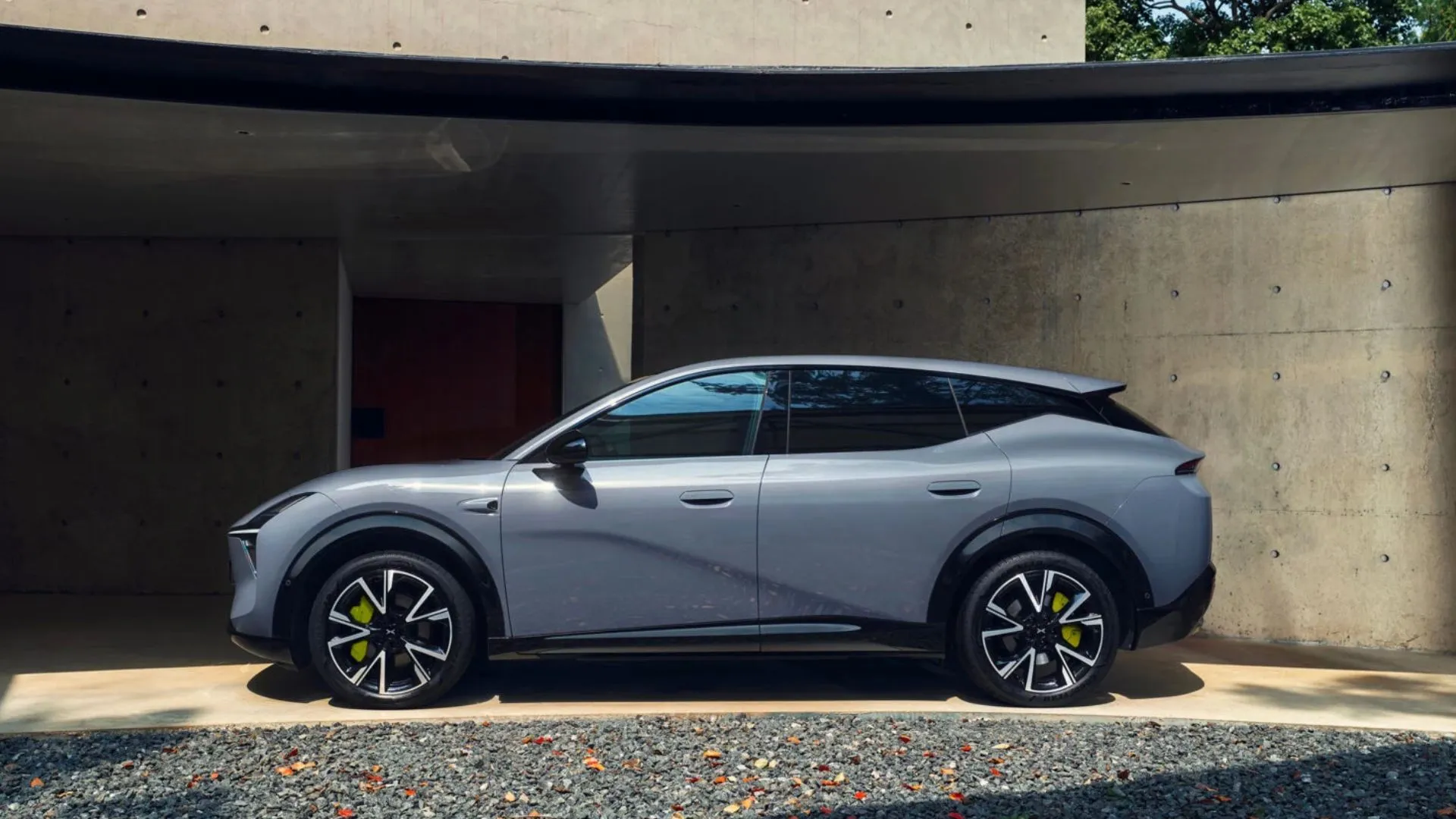
Chinese manufacturer XPeng has demonstrated the long-distance capability of its Mona L05 extended-range electric vehicle (EREV), with the crossover traveling 1,194.2 km (742 miles) without recharging or refueling in a road test. The result corresponds to 94.77 percent of the claimed combined area according to China’s CLTC test standard.
XPeng released footage of the test on October 23 following a drive organized by Chinese automotive platform BitAuto, also known as Yiche. The vehicle traveled from Guangzhou to Wenzhou along the G228 coastal road, taking 23 hours and 14 minutes to complete the journey.
The test was conducted in “Ultra Power Saving Mode,” which disabled most non-essential vehicle functions to reduce energy consumption. The climate control was set at 24°C (75°F). XPeng did not provide an average speed, although footage reportedly showed the vehicle traveling at around 50-80 km/h (31-50 mph) for most of the journey.
This is how the extended range powertrain works
The Mona L05 EREV combines a 183-kilowatt electric motor (245 hp) with a 37.2-kilowatt-hour lithium iron phosphate (LFP) battery and a 1.5-liter naturally aspirated gasoline engine.
Unlike a traditional hybrid, an extended-range electric vehicle primarily uses an electric motor to power its wheels. Its combustion engine serves as a range extender and generates electricity when the battery can no longer provide all the energy required for driving.
According to Car News China, during testing, the Mona L05 initially traveled 252.7 km (157 miles) on battery power alone, recording power consumption of 11.7 kWh per 100 km (18.8 kWh per 100 miles). The range extender motor was then activated to support the remainder of the journey.
XPeng claims a maximum all-electric range of 310 km (193 miles) for the EREV version and a combined CLTC range of up to 1,310 km (814 miles). The road test therefore covered almost 95 percent of the advertised combined range, without the need for a stop to refill either energy source.
Throughout the trip, reported electricity consumption was 2.5 kWh per 100 km (4.0 kWh per 100 miles) and gasoline consumption was 3.7 liters per 100 km (approximately 63.6 US mpg). These numbers reflect the respective test conditions and are not a guarantee of everyday efficiency.
A far-reaching alternative to purely battery-powered electric vehicles
The Mona L05 is also available as a fully battery electric vehicle. This version uses a larger 71.1 kWh LFP battery and the same 183 kW electric motor with a claimed CLTC range of 615-660 km (382-410 miles), depending on configuration.
The two versions address different driving needs. The battery-electric model offers greater all-electric range, while the EREV adds a gasoline-powered power source for longer trips where charging options may be limited.
The vehicle is 4,870 mm (191.7 in) long, 1,930 mm (76.0 in) wide and 1,636 mm (64.4 in) high, with a wheelbase of 2,940 mm (115.7 in). Features listed include a 17.3-inch central touchscreen, a 26.8-inch head-up display and a 702-liter trunk.
The Mona L05 was offered for pre-sale in China for 169,800-191,800 yuan, which is approximately $25,400-28,700 at the exchange rates quoted in reports. These are prices for the Chinese market and the range test announcement did not demonstrate availability in other markets.
What the test shows and what it doesn’t
The 1,194 km (742 mile) run provides a useful indication of the Mona L05 EREV’s long-distance capability under certain conditions. However, the energy saving mode, relatively moderate speeds and the limited disclosure of the test methodology make it difficult to directly compare the result with everyday driving.
Higher highway speeds, heavier loads, weather conditions and frequent acceleration can all impact real-world range and fuel economy. The result should therefore be viewed as reported road test performance rather than a universal estimate of how far each driver can drive.
Nevertheless, the test underlines the attractiveness of longer-range electric vehicles: they can offer significant battery-powered driving performance while also having an internal combustion engine-based option for trips that go beyond the range of the battery alone.
