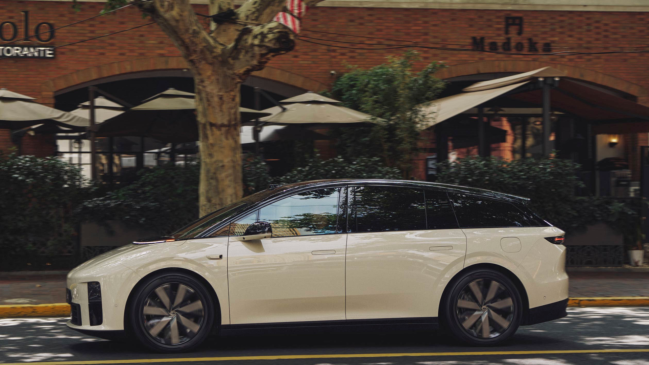
Chinese electric maker Li Auto’s updated i6 electric SUV covered 504 miles on a single charge in a livestreamed endurance test, exceeding its official Chinese range rating despite carrying four passengers and leaving the air conditioning on throughout the journey.
The vehicle completed the test with a 96 kWh battery, with the automaker reporting energy consumption of 11.8 kWh per 62 miles. The result demonstrates Li Auto’s efforts to improve efficiency through its own battery pack design, electric drive motors and silicon carbide power electronics while moving away from CATL as a battery supplier.
However, the test took place exclusively on city streets in mild weather, conditions that favor the efficiency of electric vehicles and do not reflect typical highway driving or winter use.
When driving in the city, the i6 exceeds its rated range
Li Auto conducted the test around Lake Tai in China’s Yangtze Delta, with temperatures ranging between 15 and 20°C. The SUV was carrying four passengers, their luggage and an additional 110 pounds of equipment. The company also left the air conditioning running during the 18-hour journey.
The route consisted entirely of city streets with speed limits between approximately 25 and 50 miles per hour. These relatively low speeds combined with mild temperatures provided favorable conditions for maximizing range. At constant highway speeds, electric vehicles generally use more energy, while cold weather can reduce battery performance and increase heating requirements.
During the live stream, the i6 traveled 504 miles before the displayed charge level reached 0%. Li Auto said the vehicle was still operational at the time, suggesting it may have traveled further, although the company has not determined how much usable range remains. CarNewsChina reported.
The result beat the i6’s official CLTC rating (485 miles) by about 4%. It also exceeded the model’s stated Worldwide Harmonized Light Vehicles Test Procedure (WLTP) value of about 398 miles by about 27%.
Li Auto moves battery development in-house
The updated i6 marks a shift in Li Auto’s battery strategy. Instead of relying on CATL for its battery cells, the automaker now uses cells from CALB and Sunwoda, which it then integrates into self-developed battery packs.
The company’s CEO, Li Xiang, attributed the improved range to the company’s battery design, self-developed electric motors and silicon carbide (SiC) power electronics. These components can influence the efficient transfer of energy from the battery to the wheels, so the vehicle’s range does not depend solely on battery capacity.
Chinese media reported that the revised battery design allows the i6 to hold an additional 3 kWh of cells. It was also reported that updated SiC power modules use revised current paths to reduce operational losses and could increase range by around 30 kilometers in winter.
Silicon carbide semiconductors can improve power conversion efficiency compared to traditional silicon-based components in some applications, helping to reduce energy losses in the form of heat. Combined with improvements to the battery pack and electric motors, these improvements can contribute to greater range without the need for a proportionately larger battery.
