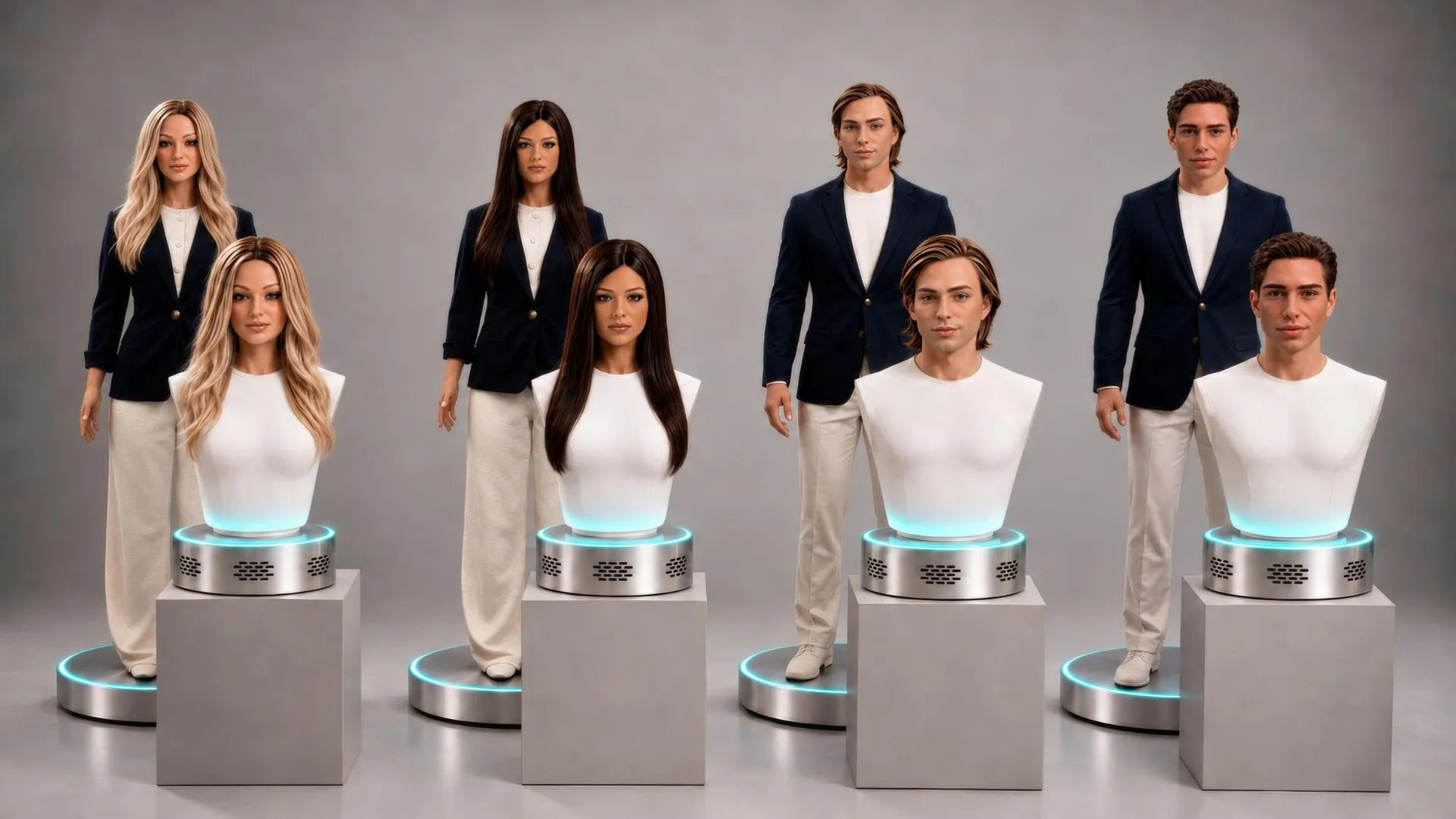
Realbotix is putting a high price on physical AI companionship, with its new humanoid Echo robots starting at $11,950. The range combines lifelike silicone skin, agile movements and integrations with popular conversational AI platforms. The most expensive configuration costs $59,950 and offers 39 degrees of freedom of upper body movement.
The Canadian robotics company plans to produce only 250 units in the first production run. This contingent includes 225 tabletop robots and 25 full-body models, scheduled for delivery in the second half of 2027. Customers can reserve a unit for a $199 deposit, although the purchase also includes a mandatory monthly software subscription.
Two configurations, different functions
The $11,950 Echo Tabletop stands 32 inches tall and weighs about 25 pounds. Its 17 degrees of freedom allow movement along its joint structure. A silicone-based synthetic skin covers the face and neck, giving the robot a more lifelike appearance. Realbotix positions this configuration for individual interactions with education, therapy and personal well-being.
The $59,950 Echo Full Body is significantly higher. The female configuration measures 72 inches while the male version reaches 77 inches. Both are 28 inches wide and deep and have a stated weight of approximately 88 pounds. Its 39 degrees of freedom support more comprehensive upper body movements.
Neither configuration provides a fully mobile human body. Realbotix describes a fluid movement of the upper body in the full-body model, so buyers should not confuse the number of joints with unrestricted, human-like mobility. Both models feature enhanced facial expressions and chest-mounted speakers for spoken interactions.
Vinci adds vision on device
Echo supports integrations with ChatGPT, Claude, and Gemini, giving users access to various conversation systems through subscription tiers. Four characters offer different personalities and voices: Aria, Mila, Dave and Amar. The robots can communicate in more than 100 languages and respond in the language of the person speaking to them.
Realbotix’s optional Vinci system adds on-device computer vision and processing. Its capabilities include facial recognition, eye tracking, emotional cue recognition, and spatial and temporal awareness. Realbotix claims a latency of less than a second for local processing, which could help the robot recognize returning users and maintain eye contact during conversations.
The company is also planning AI digital twins for 2027. Subscribers will be able to interact with their chosen character via a computer, tablet or phone when they are not near the physical robot. According to Realbotix, encrypted memories and preferences are transmitted to digital and physical versions of the same character.
Cloud AI raises questions about data protection
Realbotix says conversation histories, saved memories and facial recognition data remain on the robot or a paired device. The company claims that it neither receives nor reviews these records. It also states that locally stored information will not be used for advertising, analytics or model training.
Cloud-based features take a different approach. If Echo uses external AI, voice or avatar services, the information needed to provide these features may pass to third parties. Realbotix receives service usage logs, but states that it cannot directly access the conversation content processed by these providers.
A subscription to the Robot Configuration App is required to operate the robots. Plans start at $19.99 per month. This recurring fee adds to the already significant purchase price, especially for the full-body model. Organizations ordering at least 10 units can contact Realbotix for bulk pricing.
The initial production limit makes Echo a narrowly limited release rather than a mass market humanoid release. Whether the lifelike appearance and communication capabilities justify the price depends on how reliably the hardware works outside of demonstrations.
