AI workflow automation is changing the way companies build applications and manage day-to-day work, raising questions about the role of established software platforms. As companies experiment with AI-generated applications and autonomous agents, they must also decide how to maintain access controls, integrate existing systems, and manage increasingly complex workflows.
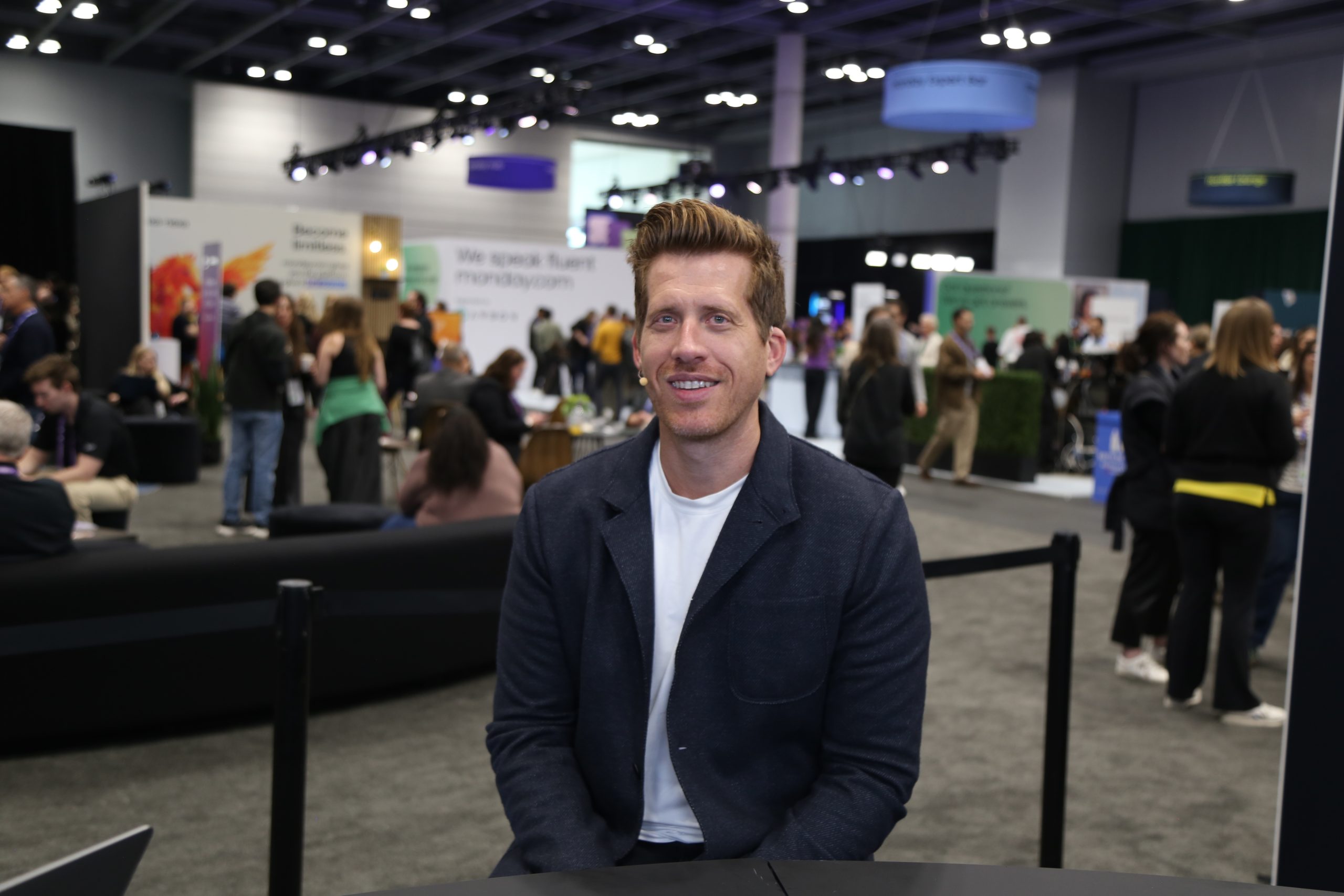
The increasing accessibility of AI development tools has led to speculation that companies could replace traditional software-as-a-service platforms with applications designed for specific needs. However, according to Casey George, chief revenue officer of monday.com Ltd., building an application and operating it securely across the organization presents different challenges.
“We are seeing customers return to a platform that is integrated – that is managed, that is authorized with their infrastructure, that is secure – like monday.com,” he told theCUBE. “I joke and say it was an expensive funeral, but we learned a lot. The customers learned a lot.”
George joined leaders and practitioners with host Rebecca Knight at monday.com’s Elevate event during an exclusive broadcast on theCUBE, SiliconANGLE Media’s livestreaming studio. Discussions covered the deployment of AI in enterprises, governance requirements and the challenges of scaling AI workflow automation across organizations. (*Disclosure below.)
Here is theCUBE’s full video interview with Casey George:
Here are three takeaways you may have missed from theCUBE’s coverage of monday.com’s Elevate event:
Insight #1: Deploying AI agents requires expertise and governance.
Providing employees with autonomous agents is no guarantee of business returns. After an internal initiative created more than 3,600 agents, monday.com launched monday Frontier, an organization that brings together managed services and delivery engineers to help customers identify workflow bottlenecks and implement AI projects. According to Eran Zinman (pictured), co-founder and co-CEO of monday.com, the initiative addresses the implementation challenges associated with bringing agents into production use.
“Adopting AI really requires expertise. I know how hard it is because we’ve experienced having this amazing technology, but how do you actually use it?” he said during the event.
As organizations deploy AI agents, security teams must consider how access rights change for users, applications, and environments. Incremental rollouts provide a way to test features before expanding their reach, while entitlement management remains an ongoing task, it says Ryan NigroHead of the Security Trust and Enablement Team at monday.com.
“It’s just about making sure your users get just enough to complete their tasks, but not too much to cause harm,” Nigro told theCUBE. “There is no reason why a sales rep should have the ability to change your production environment.”
Here is theCUBE’s full video interview with Ryan Nigro:
Insight #2: Shared dashboards improve operational visibility.
At Hewlett Packard Enterprise Co., employees use monday vibe, monday.com’s no-code application builder, to build custom tools. According to Kate Kenner, capability and community lead for strategic sourcing and planning at HPE, an executive dashboard replaces the manual process of copying charts into presentation slides while providing the ability to export to PowerPoint.
“[Executives] “I took a whole bunch of meetings off the calendar,” she told theCUBE. “Instead of weekly, they now happen monthly.”
Here’s theCUBE’s full video interview with Kate Kenner:
At Lowe’s Cos. Inc., coordinating store fixtures and remodels once required tracking information in Microsoft Excel, email and other communications. According to Lanny Finley, director of remerch and new stores at Lowe’s, the retailer now uses monday.com to monitor individual stores and dozens of simultaneous projects.
“I can use the dashboard to see which projects are on track and which are at risk, and then take the appropriate actions and put the right partners in the right places to make the corrections to get everything back on track and completed,” he said during the event.
Lowe’s also developed an internal Green Dot Board to track issues such as missing components in store projects. According to Brian Olms, senior business partner manager at Lowe’s, who accompanied Finley during the discussion, the company is exploring additional automation that could trigger supplier orders when components are needed and resolve issues once replacement parts are installed.
“We needed a way to automate the process and make it more user-friendly [and] make it easier. That’s why we created the Green Dot Board,” he told theCUBE. “Here at Elevate, we see opportunities where we can go a step further and start using agents and more automation.” [the] Vibe app.”
Here is theCUBE’s full video interview with Lanny Finley and Brian Olms:
Insight #3: AI workflow automation expands organizational capacity.
For nonprofits facing growing demand, AI workflow automation offers a way to expand organizational capacity without imposing additional administrative burdens on employees. At Feed the Children Inc., a two-person team oversees relationships with more than 500 community partners, said Colleen Finn Ridenhour, chief growth and strategy officer at Feed the Children.
“Things out [memorandums of understanding] and legal contracts, annual renewals, and compliance and reporting – it’s quite a lot. Historically, it has been a very manual process for them to constantly keep an eye on this. We really want them to focus on the human aspect of this work, which is bringing in new partners to help us increase our impact,” she told theCUBE.
The nonprofit uses monday.com’s forms, boards, automation, and agents to coordinate partner activities and manage information. Ridenhour says employees can also create dashboards for specific needs, including budget tracking, while maintaining human oversight of compliance-related work.
“We won’t increase our impact by always asking people to work harder. [We need to find] Ways to repeat many of these repetitive actions in a much simpler way and [share] So information [that] “People’s jobs will be easier and it will give them time to do the things that only they can do,” she said during the event.
Here is theCUBE’s full video interview with Colleen Finn Ridenhour:
To see more of theCUBE’s coverage of monday.com’s Elevate event, check out our full video playlist here:
(*Disclosure: TheCUBE is a paid media partner for monday.com’s Elevate event. Neither monday.com, the sponsor of theCUBE’s event coverage, nor other sponsors has editorial control over theCUBE or SiliconANGLE content.)
Photo: SiliconANGLE
Support our mission to keep content open and free by interacting with theCUBE community. Join theCUBE Alumni Trust Networkwhere technology leaders connect, share information and create opportunities.
- Over 15 million viewers of theCUBE videosto spark conversations about AI, cloud, cybersecurity and more
- Over 11.4k theCUBE alumni — Connect with more than 11,400 technology and business leaders shaping the future through a unique, trusted network
Founded by tech visionaries John Furrier and Dave Vellante, SiliconANGLE Media has built a dynamic ecosystem of industry-leading digital media brands, reaching over 15 million elite tech professionals. Our new proprietary theCUBE AI Video Cloud is a game-changer in audience engagement, leveraging the theCUBEai.com neural network to help technology companies make data-driven decisions and stay at the forefront of the industry conversation.
