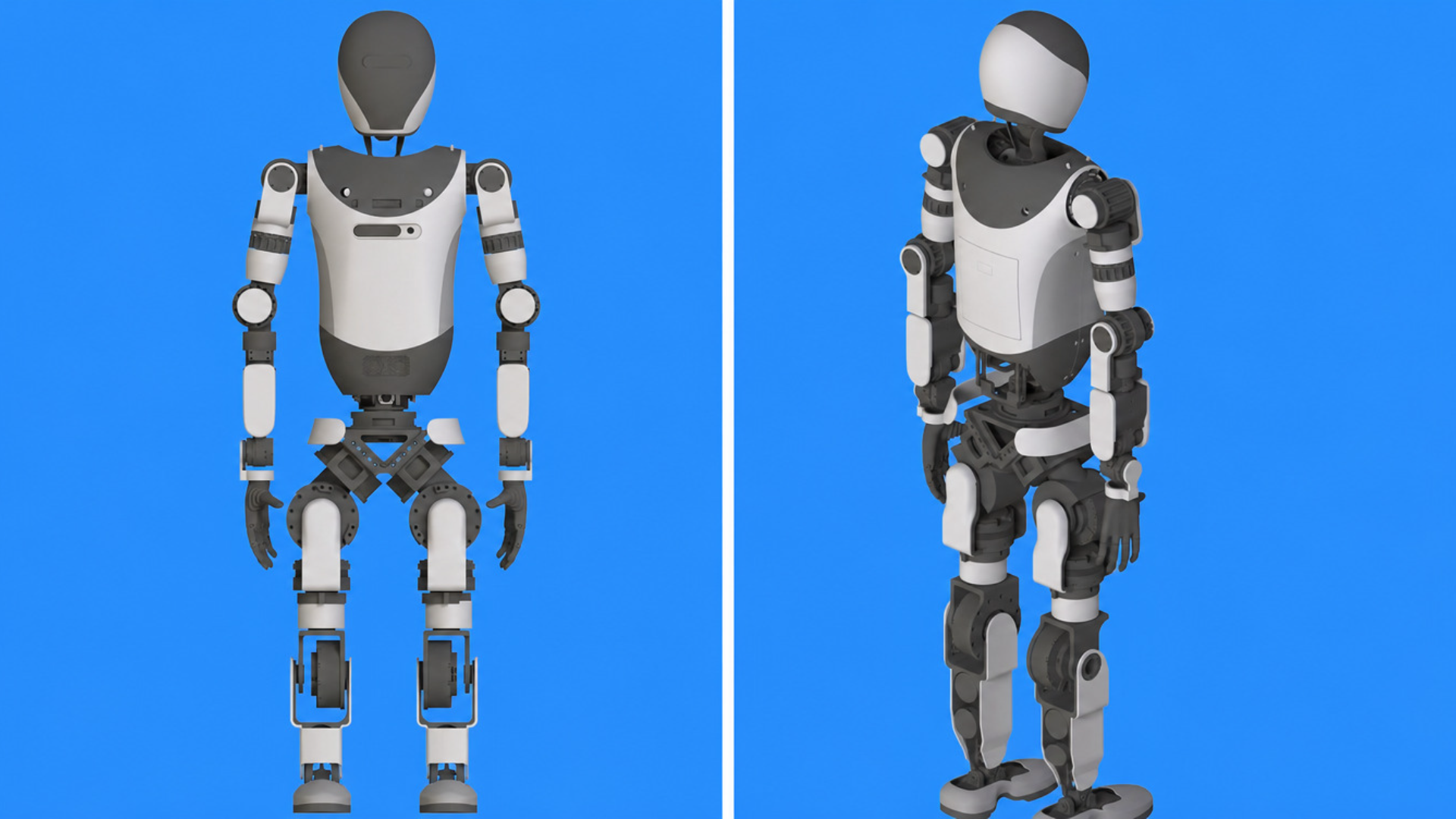
Chinese automaker BYD has unveiled the design of its first homegrown humanoid robot, marking a broader push into embodied AI and robotics that could eventually lead to the company using autonomous machines in its factories and dealerships.
The design appeared in a patent published by China’s National Intellectual Property Administration and describes a robot designed to walk, balance and interact with its environment.
The patent points to possible applications in service, education and industrial environments. Although the design is similar to BYD’s previously announced humanoid robot called Xiao Di, the company has not confirmed whether the patent represents the final production model.
Designed for real-world interaction
The newly revealed design features a black and white body, a round head without a display and movable joints on the torso, arms and legs. Its human-like proportions suggest a platform designed to operate in environments designed for humans, rather than a robot limited to a dedicated industrial workplace.
Previously released specifications for the Xiao Di concept put its height at about 5 feet 3 inches and its weight at about 129 pounds (58 kg). The robot reportedly has 31 degrees of freedom, allowing movement across multiple joints, and a dexterous hand with a repeatable positioning accuracy of about 0.04 inches.
These features could support tasks such as picking up objects, making gestures, and pointing information at people. However, the published design does not specify how reliably the robot can perform these tasks in real-world conditions or whether the specifications can be transferred to a production model.
As automakers and technology companies invest in embodied AI, which combines AI with physical systems that can perceive and interact with the real world, humanoid robots face a more complex challenge than software-based AI. They must coordinate perception, decision-making, and physical movement while maintaining balance and adapting to changing environments. BYD wants to use its manufacturing expertise to develop such robots.
Has been developing his robotics skills for years
BYD’s humanoid robot project is part of a longer-term research effort that began in 2022 with the formation of a dedicated team tasked with developing the hardware and software necessary to bring embodied AI into practical use. It has also invested in other companies in the sector. BYD invested in Agibot in August 2023 and acquired a stake in Percibot in April 2025, expanding its ties to China’s developing robotics industry.
The company has also explored industrial applications in its manufacturing operations. At its Changsha factory, Ubtech’s Walker S1 humanoid robot has been used for material handling and identification tasks, providing an example of how humanoid systems could be tested in real-world manufacturing environments.
BYD executives have previously suggested the company could deploy humanoid robots across its dealership network, with potential tasks such as greeting customers, explaining vehicle functions and demonstrating infotainment systems. Such applications could allow BYD to test whether humanoid robots can perform routine customer-facing work without requiring major changes to existing facilities.
For now, BYD has yet to announce a production schedule or confirm whether the newly released design represents the final version of its humanoid robot Xiao Di, leaving open questions about its commercial launch and the capabilities that will make it into a production model.