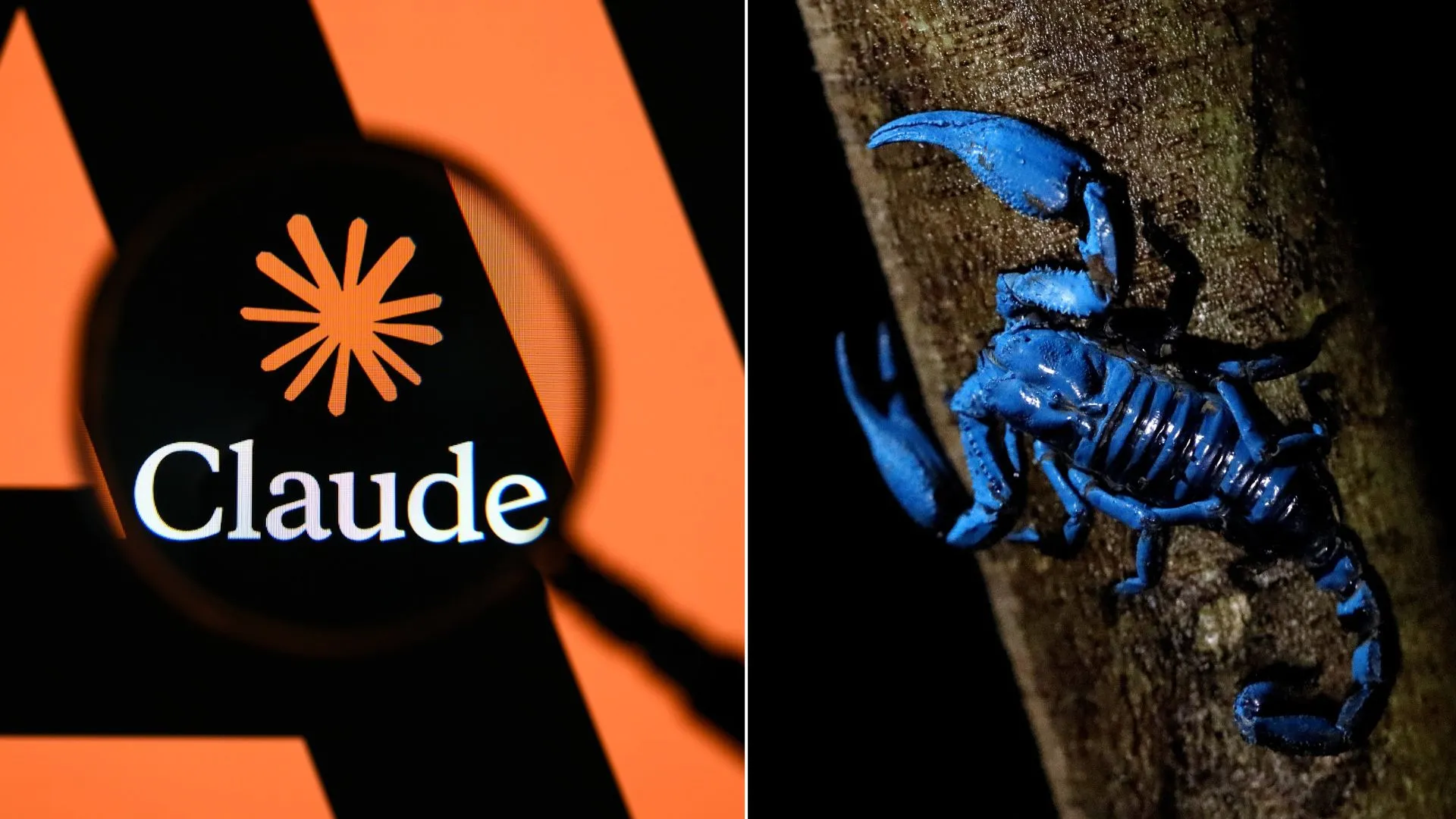
In a development that could accelerate antivenom research, Claude generated over 318,000 protein designs in just 64 hours, 17 of which passed laboratory binding tests against dangerous scorpion neurotoxins.
The study, conducted with support from Citrini Research and laboratory testing from Adaptyv Bio and Twist Bioscience, tested 211 selected designs, 17 of which met strict mandatory criteria. The strongest candidates attached to a Mexican scorpion toxin with an affinity in the single-digit nanomolar range, indicating a close molecular interaction.
The findings represent an early step toward the potential development of an antivenom, rather than an effective treatment.
Thousands of proteins screened
Each year, scorpion stings affect at least 1.2 million people worldwide and cause more than 3,250 deaths, mostly among children in regions with limited access to medical care.
Existing antivenoms are generally made by immunizing animals, including horses, with the venom and obtaining antibodies from their blood. It can take months to produce and treatments may only work against a limited number of toxins.
To address these limitations, Anthropic tasked an internal Claude research model with developing minibinders, small proteins engineered to bind to specific targets. The project focused on five scorpion neurotoxins found in Mexico, Brazil, North Africa and the Middle East.
Working largely autonomously, Claude used 12 protein design tools to generate 318,484 candidates and computationally screen 553,052 protein-toxin pairs. The campaign consumed approximately 10,000 GPU hours.
After an initial prompt and four follow-ups, Claude selected 180 designs for laboratory testing. The researchers then added 31 more using the model.
The resulting 211 candidates included proteins that target single toxins and others designed to bind multiple toxins at once.
Adaptyv Bio and Twist Bioscience produced the proteins using various laboratory methods. Both companies measured binding using surface plasmon resonance, a technique that tracks how strongly molecules attach and how quickly they separate.
To qualify, each candidate had to demonstrate consistent binding in both laboratories, meet a specific affinity threshold, and show no detectable binding to an unrelated human protein used as a control.
Strong bond, unresolved protection
Seventeen designs met these requirements, including seven against the Mexican scorpion toxin Cn2, four each against AaH I and AaH II, and two against LqhIII. None of the multitoxin designs have successfully qualified against more than one toxin.
Of the 60 designs developed specifically for individual toxins, 11 were successful, a hit rate of about 18 percent.
Two leading candidates, Cn2-B1 and Cn2-B2, showed particularly strong binding. Competition experiments suggested that they localize near the same site as an antibody previously shown to neutralize Cn2 in mice.
Still, the researchers only tested binding against lab-made toxins, not against venom extracted from scorpions. They have not determined whether the candidates can block toxin activity in cells or protect animals.
Further testing would need to examine the neutralization, safety, stability and therapeutic efficacy of the venom before clinical development could be considered.
Anthropic publishes all 211 designs, predicted structures and experimental results to support further research. The company explained its findings in a technical report rather than a peer-reviewed journal.
