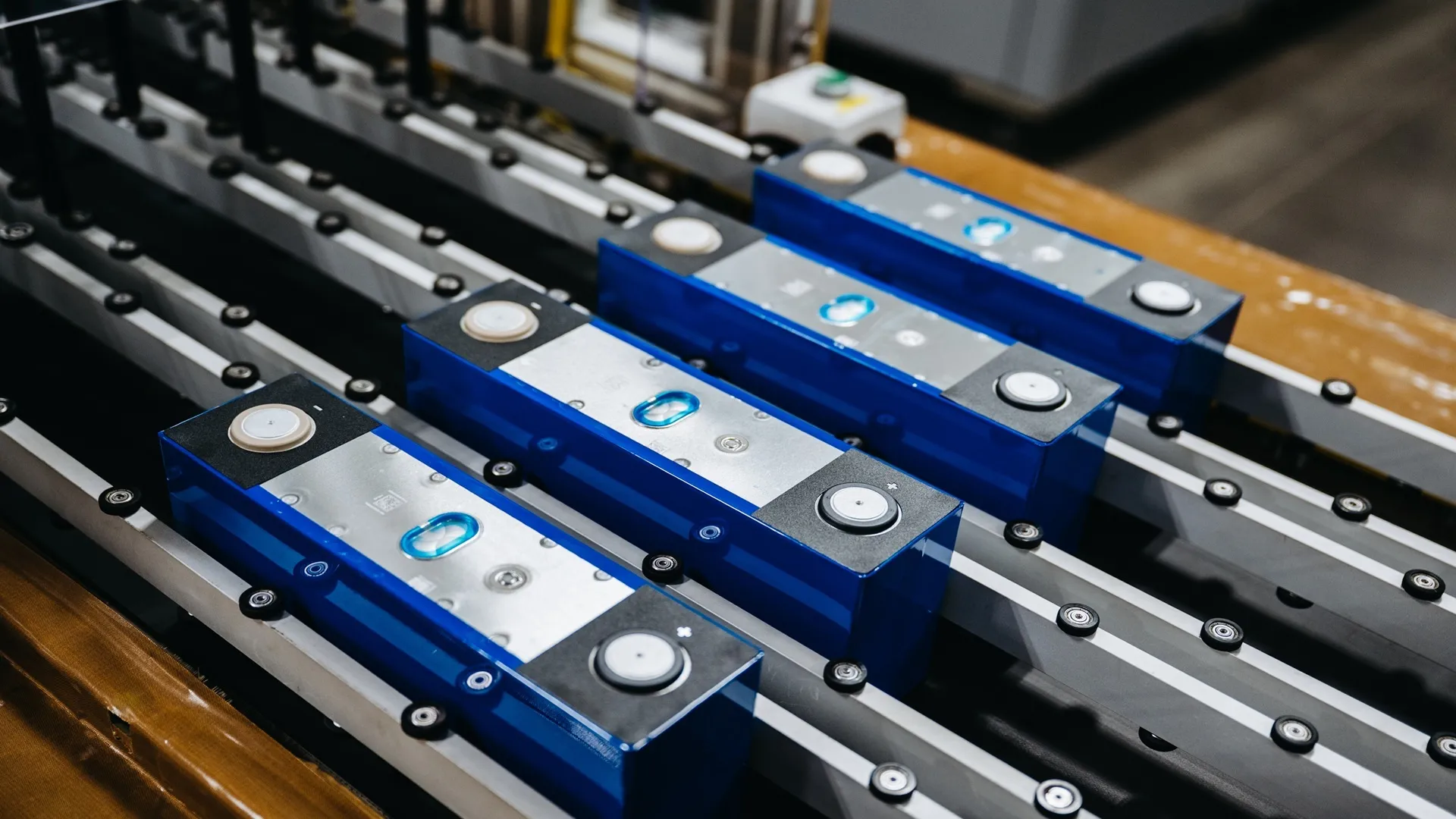
Ford has begun shipping its first lithium iron phosphate (LFP) battery cells from a new plant in Michigan. This marks the automaker’s entry into battery manufacturing and a step toward producing more affordable electric vehicles in the United States.
The first prismatic cells rolled off the assembly line at the BlueOval Battery Park Michigan in Marshall. They are on their way to Ford’s Louisville Assembly Plant in Kentucky, where they will power prototypes of the upcoming Fathom electric pickup truck.
Ford says it will be the first company to supply LFP batteries for mainstream automotive use in the United States. This milestone follows years of work to establish domestic production of a battery chemistry widely used by Chinese manufacturers.
The Michigan plant is owned and operated by Ford, but the manufacturing technology is licensed from China’s Contemporary Amperex Technology Co. Limited (CATL), the world’s largest electric vehicle battery manufacturer.
Lower cost batteries for electric vehicles
Ford chose LFP chemistry for its Universal Electric Vehicle Platform because it can help reduce battery costs without relying on nickel or cobalt. The chemistry also provides durability for years of charging and use, making it suitable for vehicles expected to support additional features such as bi-directional home power.
The automaker chose rectangular prismatic cells because they fit directly into the vehicle chassis. Ford is also designing the battery pack as a structural component of the vehicle, rather than simply housing it in the frame.
This approach is intended to reduce the number of parts, weight and manufacturing effort. Ford says the combination of cell design and vehicle architecture will help make the next generation of electric vehicles more affordable.
The Fathom pickup will be the first vehicle built on the Universal Electric Vehicle Platform. Its prototypes will use initial battery shipments from Michigan as engineers continue development.
Production scales in Michigan
According to Ford, BlueOval Battery Park Michigan’s assembly lines can produce 40 cells per minute, making the facility one of the fastest prismatic LFP battery production lines outside of China. The company says the factory has additional capacity to increase production.
Manufacturing speed is only part of the challenge. Ford also uses automated inspection systems, including image recognition tools, to identify defects during production. The company’s goal is to reduce defects to a level measured per billion cells, not per million.
The plant’s manufacturing capabilities will also support Ford Energy’s planned battery energy storage business in Glendale, Kentucky. The company is preparing to manufacture battery storage systems for non-electric vehicle applications.
Ford plans to launch a separate battery pack facility in Marshall in 2027, ahead of the Fathom’s launch. The first cells will help with prototype development and the next phases of production preparation.
The launch comes as automakers look for lower-cost battery technologies to make electric vehicles more competitive. LFP-Batterien haben an Boden gewonnen, weil sie teures Nickel und Kobalt vermeiden und gleichzeitig eine lange Lebensdauer bieten.
Für Ford stellt der Betrieb in Michigan auch einen Versuch dar, inländische Fertigungskompetenz aufzubauen und sich gleichzeitig auf lizenzierte Technologie eines etablierten chinesischen Zulieferers zu verlassen. The first deliveries mark a shift from factory construction and experimental production to supplying cells for vehicle development.
