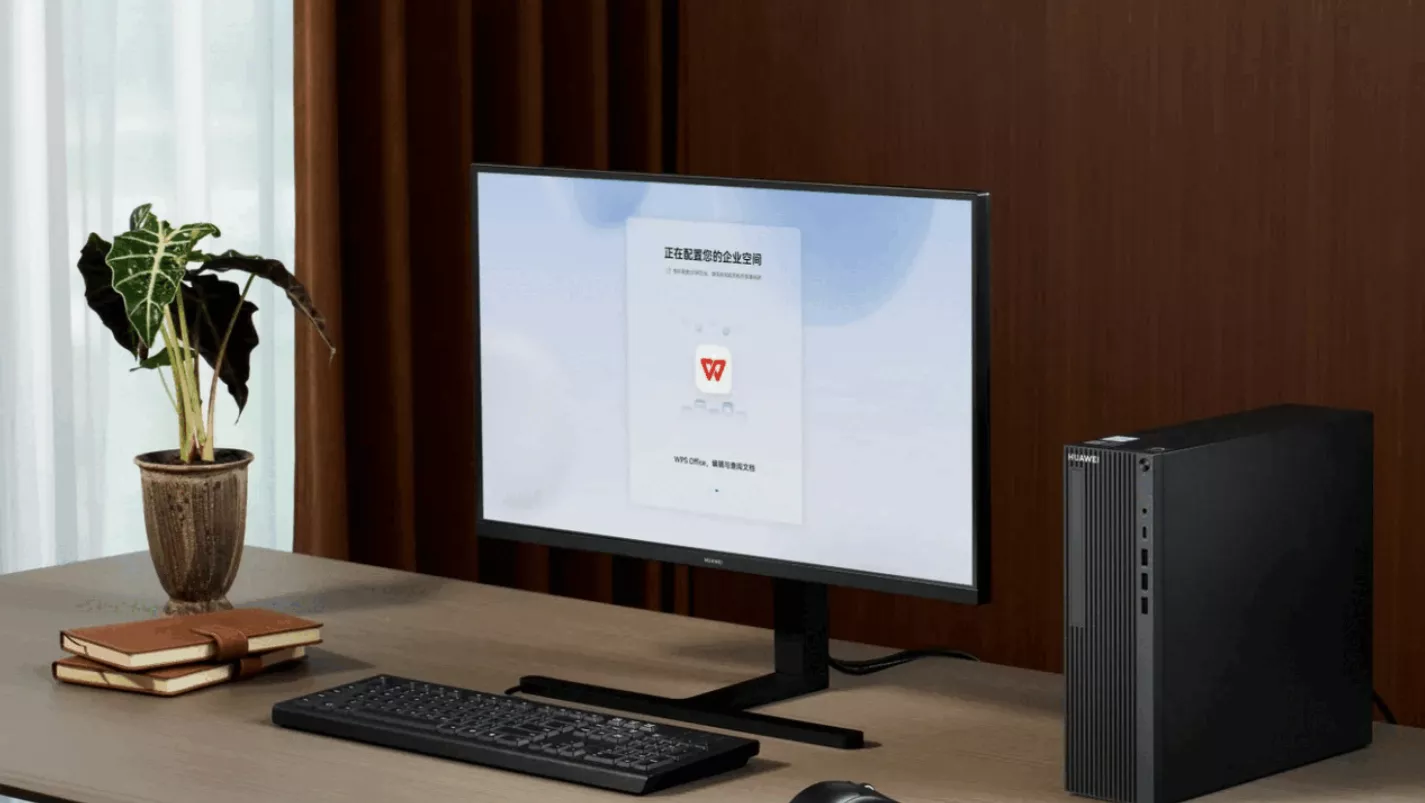
In short: Huawei claims to have built the first desktop PC that contains components made exclusively in China. While this claim appears to be true, there are some caveats, including the continued reliance on foreign technology used in chip manufacturing.
China has long pushed to reduce its dependence on U.S. technology. Huawei says its Qinyun HM650 series desktop computers are 100% domestically manufactured. They also use the company’s own HarmonyOS operating system.
The PC’s components list includes 16GB of LPDDR5 memory from China’s CXMT, a 256GB or 512GB SSD likely from YMTC, and the company’s own Kirin X90 system-on-chip used in the newer MateBook products.
Designed by Huawei HiSilicon and manufactured by SMIC, the Armv8-based Kirin X90 features 10 custom Taishan CPU cores in a 4+4+2 configuration and supports 20 threads through simultaneous multithreading. It also features an integrated Maleoon 916 GPU.
It is the use of this SoC that presents the downside of the Qinyun HM650 being 100% domestically manufactured. Before the release of the Kirin X90, there were rumors that it would use SMIC’s newer 5nm process. However, TechInsights confirmed that it uses the manufacturer’s 7nm Class N+2 process, which was first used in Huawei’s Mate 60 Pro in 2023.
The bespoke Taishan cores also use technology sourced from British design giant Arm. Huawei’s 2013 licensing agreement for the Armv8 architecture allows Huawei to design its own cores, but those designs are still based on overseas intellectual property.
SMIC has relied on foreign chip manufacturing tools. U.S. Department of Commerce documents detail shipments of Applied Materials ion implantation devices to the foundry.
Other components in the PC rely on equipment and materials from outside China, and HarmonyOS has a similar caveat. Huawei is developing the operating system, but its documentation confirms the use of international open source software and tools. While the exact components of the Enterprise Edition have not yet been verified, the fact that HarmonyOS is being developed in China does not necessarily mean that every line of code was written in the country.
Software compatibility could also be an issue for customers. HarmonyOS cannot run Windows .exe applications natively, so companies may need alternative apps or virtual machines to use their existing software. Huawei offers guidance on third-party virtualization tools, but companies would still need to check that their essential programs and peripherals are working.
Back in August, China asked some government-related organizations to uninstall a customized edition of Windows 10 several months earlier than planned. The country introduced government purchasing rules in 2023 that require “safe and reliable” processors and operating systems. The approved CPU list consisted entirely of Chinese products, while Intel and AMD chips, Windows and foreign database software are being phased out.
