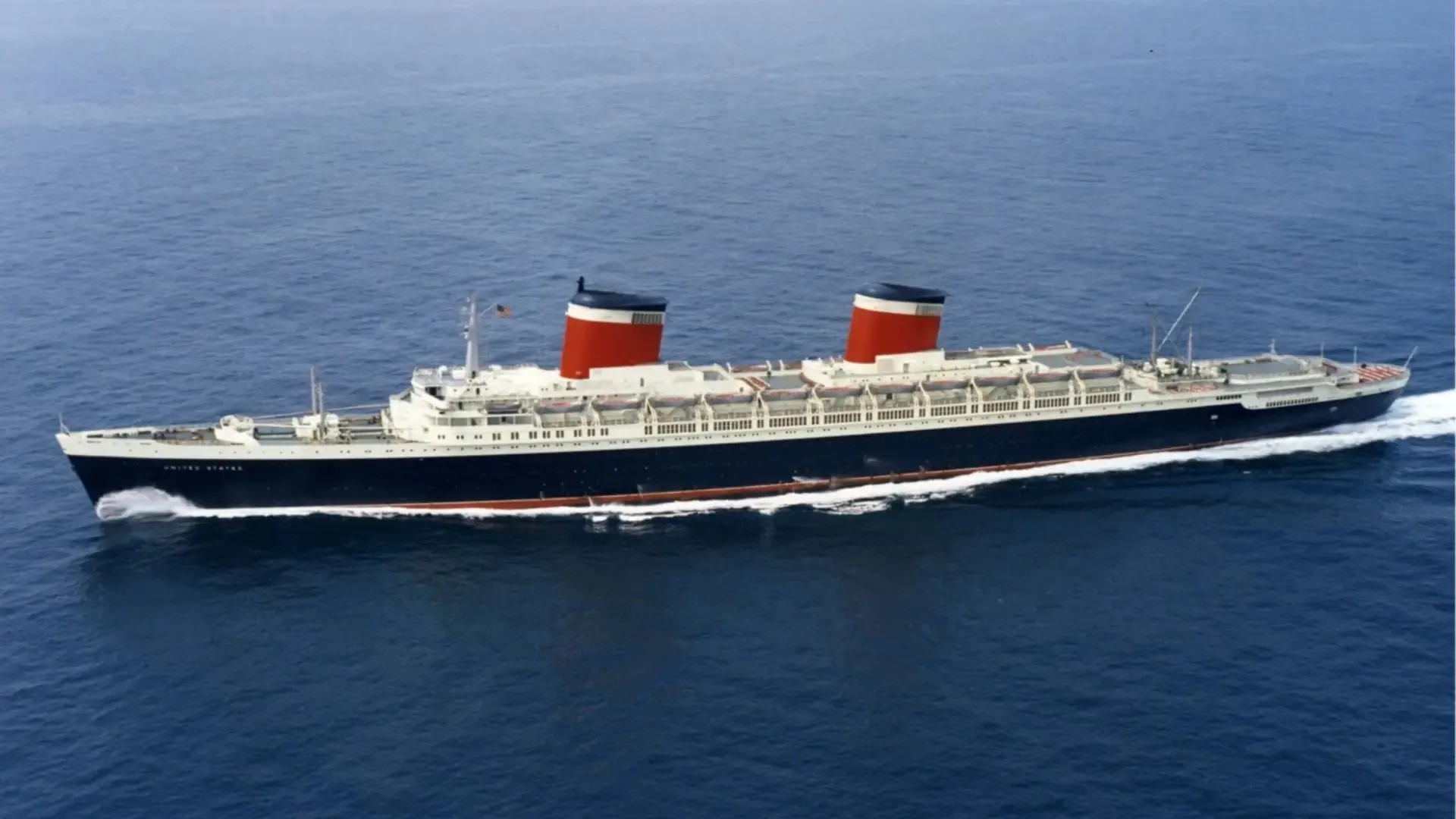
The historic SS United States sank off the coast of Destin, Florida, on Wednesday, marking the end of its 74-year journey and the beginning of a new role as an artificial reef in the Gulf of Mexico. The nearly 1,000-foot-long ship, once the world’s fastest ocean liner, will now rest on the ocean floor and provide a new habitat for marine life.
The sinking began Wednesday afternoon, with the ship deployed around 2:40 p.m. ET. The vessel’s flooding process began shortly before 5 p.m. After several hours, the ocean liner finally reached the seabed around 10 p.m
The ship will lie at a depth of approximately 180 feet, with its upper decks approximately 55 feet below the surface of the water. The site is expected to become a major diving destination and will be described as the largest artificial reef in the world.
Historic ocean liner completes its final voyage
The SS United States was launched in 1952 and made history on her maiden voyage by setting a transatlantic speed record. The American-built ocean liner carried thousands of passengers across the Atlantic during its 17 years of service before being decommissioned in 1969.
After its retirement, the ship remained docked in Philadelphia for decades. Several owners examined plans to preserve and restore the historic ship, but the aging ship became increasingly expensive to maintain.
In 2021, port authorities increased their daily docking fee to $1,700. The nonprofit SS United States Conservancy could no longer afford the rising costs, making it difficult to continue conservation efforts.
Florida County purchased Schiff for $1 million
In 2024, Okaloosa County in Florida purchased the ship for $1 million to convert it into an artificial reef. The project aims to create an underwater habitat that can accommodate multiple marine species.
Officials expect the structure to attract fish such as red snapper, grouper, amberjack, mackerel and tuna. Its size and location could also make it a major attraction for recreational divers visiting Florida’s Gulf Coast.
Before the sinking, Susan Gibbs, president and co-founder of the SS United States Conservancy, explained how the project would preserve some of the ship’s heritage.
“It will be reefed and remain intact, becoming a vibrant and dynamic marine habitat, so when combined with the museum and visitor experience on land, it will celebrate its history in a deeply moving way.”
The ship’s designer had a personal connection
Gibbs also has a family connection to the ocean liner. Her grandfather, William Francis Gibbs, designed the SS United States and played an important role in bringing the historic ship to life.
She remembered his deep connection to the ship and how he followed its travels across the Atlantic.
“His relationship with the ship was, I would say, a complete obsession. He joked that he loved the SS United States a thousand times more than my grandmother. He said goodbye to the ship every time it set sail for Europe and was one of the first to greet her when she returned.”
Converting the ship into an artificial reef will give it a new purpose after decades of uncertainty about its future. A land-based museum and visitor experience are also planned to help preserve history for future generations.
