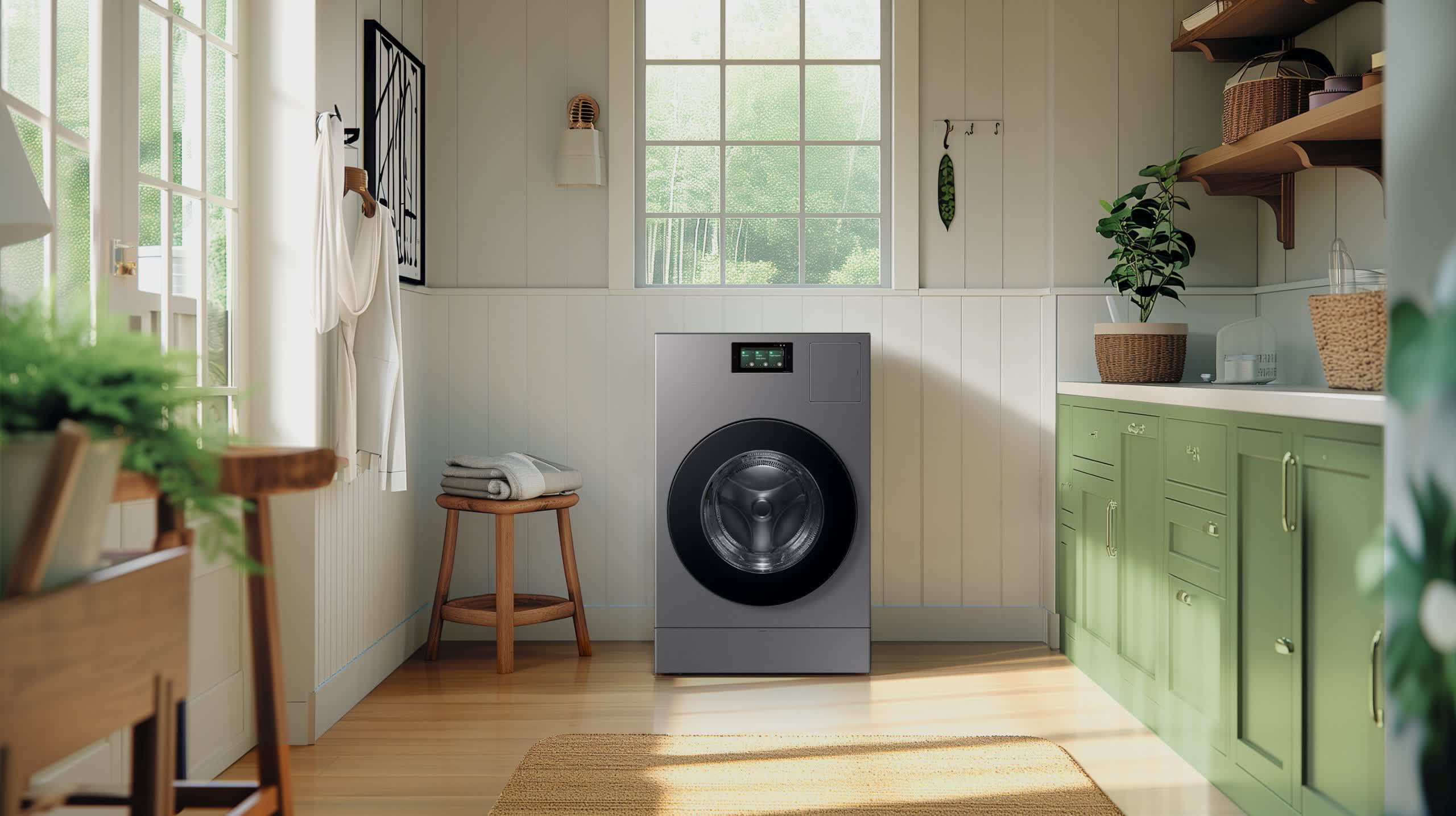
Future-oriented: Even the most efficient washing machine still requires a drum full of water. Once the wash cycle is complete, a dryer must heat the clothing so that all the water evaporates. A handful of commercial machines skip both steps and wash clothes in liquid carbon dioxide instead. Until now, these machines were mainly used in large laundries. Now LG and Samsung have filed patents for versions that could one day find a home in the home.
At around 900 psi, CO2 turns into a thin liquid. This liquid penetrates the fabric and removes oils and dirt. When the cycle ends, the pressure drops and the CO2 turns right back into gas. The clothes dry almost immediately. Filters remove dirt from CO2 along the way, allowing more than 90% of it to be recovered for the next load.
Colorado-based Tersus Solutions has been building these machines since 2009. These days, the company primarily cleans outdoor clothing and firefighting equipment that is contaminated with dangerous residue. The larger machine is approximately 10 feet tall and can handle up to 85 pounds of laundry at once. Tersus explained to Grist that this model saves about 300 gallons of water per load compared to traditional washing.
Surprisingly, skipping the dryer doesn’t save as much energy as you’d expect. Because cleaning the CO2 for reuse requires a lot of energy. A California Energy Commission report examined a test run with the U.S. Navy.
The report found that the system used about 15% less energy than laundromat-style washers and dryers and about the same amount as large industrial machines. However, it is much quicker: washing and drying a 30kg load takes around 45 minutes.
A home version would also have to squeeze all the pressurized hardware into a machine the size of a traditional washing machine. CO2 alone has difficulty removing water-soluble stains like sweat. That’s why LG’s patent application describes a unit that mixes in detergent and other additives. Samsung’s approach, on the other hand, mixes CO2 with other solvents to lower operating pressure. But as Grist notes, some of these blends contain PFAS.
Even then, a typical household only needs a few loads of laundry per week. Pressurizing and recovering CO2 for each load could be very inefficient compared to industrial machines that run all day. Tersus initially sees better opportunities in dry cleaners and apartment buildings. Ultimately, the CEC report concluded that one machine can replace two or three commercial washer-dryer sets.
