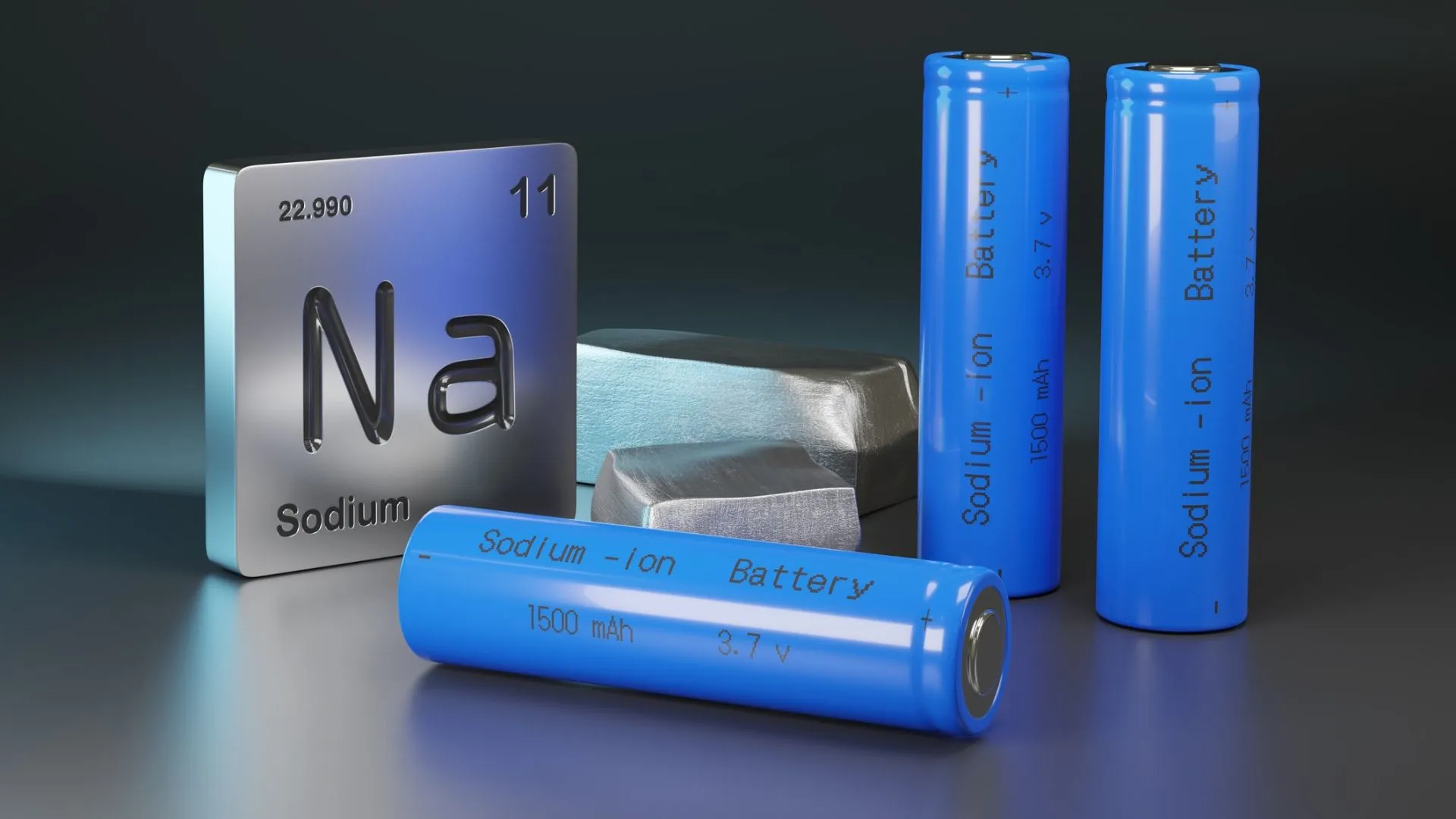
Researchers at the University of Surrey have developed a library of 28 materials to identify better candidates for building sodium-ion batteries.
The repository could help find alternative materials to replace traditional lithium-ion batteries made from scarce resources.
“We rely heavily on lithium-ion batteries, but lithium resources are relatively scarce and unevenly distributed around the world,” said Daniel Commandeur, lecturer in the School of Chemistry and Chemical Engineering and corresponding author of the study.
He noted that sodium-ion batteries are emerging as a robust alternative; However, further analysis is needed to improve their performance over repeated charging cycles and the amount of energy they can store.
“Sodium is far more common, making sodium-ion batteries an important technology to develop,” Commandeur added.
Library for accessing the performance
The team investigated how changing the chemical composition of sodium manganese oxide could improve its performance as a cathode. This key battery component determines how much energy a battery can store and how efficiently it operates.
During the study, they created a library consisting of 28 different metal compositions and compared their performance in sodium-ion batteries. The collection was made by replacing manganese with varying amounts of different metals, including iron, titanium and vanadium.
Iron increased energy storage capacity, vanadium improved cycling stability, and small amounts of titanium improved high-speed performance. The study found that some titanium-containing materials retained over 90% of their capacity after 100 charge-discharge cycles.
AI to speed up the hunt
The team agreed that a major hurdle is finding a material that delivers optimal performance.
To help explore suitable alternative materials, the researchers developed an automated approach to analyze the data generated by the experiments. They trained the machine learning models on datasets generated in their experiments.
“This work is a first step toward building the larger data sets needed for machine learning to guide this search. They will help us identify promising materials more quickly and accelerate the development of better sodium-ion batteries,” said Commandeur.
Researchers said expanding the data set could eventually allow AI to predict promising battery compositions before they are manufactured and tested in the lab. However, the current library is still too small for reliable predictions.
Extending the approach to a broader range of cathode materials could generate the large, high-quality data sets needed for machine learning to accelerate the discovery of new battery materials. Over time, this could help scientists develop sodium ion cathodes optimized for specific needs, such as higher energy storage, faster charging, or longer-lasting performance.
“What stood out most was how relatively small changes in composition can shift the balance between a material’s energy storage, its performance at higher speeds, and its durability. Mapping these relationships gives us a much clearer picture of where to look next,” said Eden Marks, a Ph.D. student in aerospace engineering and co-lead author of the study.
The results were published in a new study Journal of Materials Chemistry.
