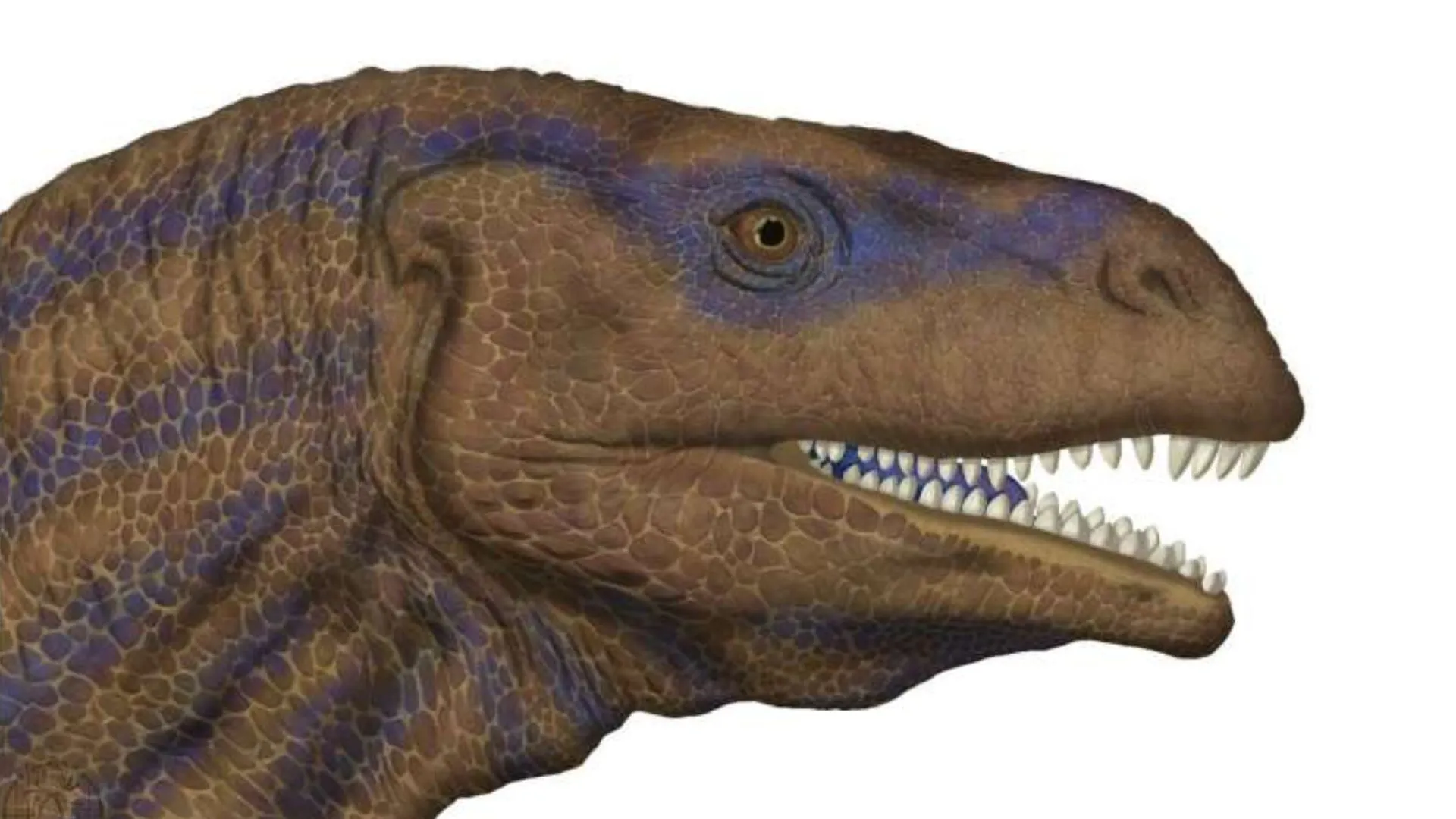
Researchers at South Africa’s University of the Witwatersrand have discovered a new species of dinosaur that lived in what is now South Africa almost 200 million years ago. The dinosaur, named Nyana rooiwalnesis, weighed 880 pounds (440 kg) and was only two years old.
Nyana belongs to the group of dinosaurs called sauropodomorphs or lizard-footed forms. These were bipedal dinosaurs that had a herbivorous diet. These dinosaurs with large necks and tails eventually evolved into Brachiosaurus and Diplodocus, animals with long tails and long necks that became the largest animals on the planet.
Dinosaurs emerged about 230 million years ago and lived until the late Cretaceous period, about 66 million years ago, roaming all continents. Because of their size, it is difficult to find fossil records of the entire animal, as fossil formation requires burial of the entire creature. For this reason, smaller fossils have been found on all continents.
The discovery dates back to the late Triassic era, when these early dinosaurs were still evolving. The researchers conducted their analysis using a fossilized skull, a rare find for this age and location in southern Africa. The fossil was found in 2018 on the outskirts of the village of Qhemegha in the Eastern Cape province.
3D model, age, weight
The researchers found incomplete skull remains that were sufficient to create three-dimensional detailed models. The skull was 8.4 inches (21.3 cm) in size and included an almost intact braincase, the palate, and the hyoid bone, a small bone of the throat.
A team of researchers from the University of the Witwatersrand used powerful X-rays at the European Synchrotron Radiation Facility to create the models and then used the features to determine Nyana’s place in the dinosaur family tree.
Using thin slices of bone from the limb, the team estimated Nyana’s age and growth pattern. The sections showed growth rings similar to tree rings and showed two growth lines. This means that Nyana was in her third year. Although it reached a considerable size, it was still growing at the time of its death and would have grown much larger, reaching a mass of several tons.
Nyana was about four times larger than Massospondylus and Mussaurus of comparable age, making it one of the largest young dinosaurs of the time.
Bringing light into the darkness of evolution
While the discovery of a new species of dinosaur is news, the research sheds new light on the evolution of early dinosaurs during this period. The researchers suspect that rapid growth occurred during the evolution of sauropodomorphs before true giants emerged.
Phylogenetic analysis shows that Nyana was a close relative of either Sarahsaurus from North America or Ngwevu from South Africa. If Nyana is a sister taxon to Sarahsaurus, it provides paleontologists with a biogeographical link between sauropodomorphs in southern Africa and western North America.
The research results were published in Royal Society Open Science.
