Every company’s AI strategy ultimately boils down to the same question: Should proprietary data be passed to the model or should the model be passed to the data?
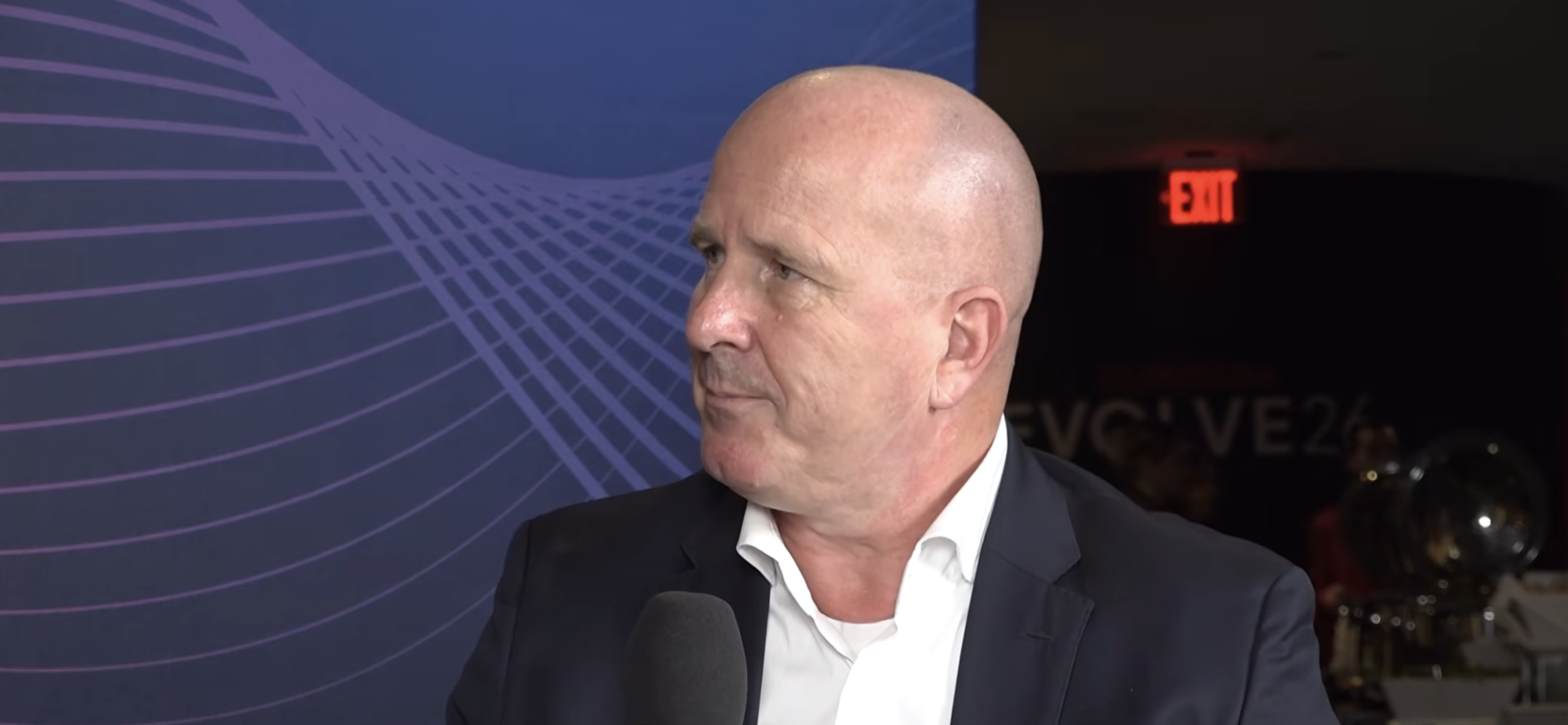
As data protection regulations tighten and geopolitical risk increases, more companies are choosing the second option. This is changing the way data platform providers present themselves, and Cloudera Inc. has focused its AI strategy on deployment flexibility. The company does not require its customers to hand over their data to an external AI service. Instead, it aims to run AI in the environments where that data already exists, according to Wim Stoop (pictured), product director at Cloudera.
“Instead of saying, ‘Just give us all your data and in return we’ll provide you with access to a model that will then be contextualized based on that data,’ we’re turning things around,” Stoop said. “We’re saying, ‘We’re bringing AI to where the data is and where the data lives.'”
Stoop spoke with theCUBE’s Rebecca Knight and Paul Gillin at Cloudera EVOLVE26 during an exclusive broadcast on theCUBE, SiliconANGLE Media’s livestreaming studio. They discussed how companies can integrate AI into their data while maintaining control and managing costs. (*Disclosure below.)
Sovereignty is becoming the focus of companies’ AI strategies
Cloudera’s latest move in this direction is a partnership with Mistral AI SAS, which brings Mistral’s models into Cloudera’s data platform. For European customers in particular, the model maker’s local roots are just as important as its technology, emphasized Stoop.
“For us in Europe, having a French organization, a local company, providing these models and providing the complete package is certainly very attractive to many of our customers,” Stoop said. “With Mistral, it was very easy for us to say, ‘These are the ones we’re going to take.’”
According to Stoop, AI is at the top of a maturity curve that starts with sovereign data, sovereign cloud and on-premises operations. Regulations like the European Union’s Digital Operational Resilience Act and the US CLOUD Act are pushing organizations to demonstrate they have control rather than simply claiming it. But control alone will not get AI out of the pilot phase. For many companies, the cost of running models at scale is the bigger obstacle to an enterprise AI strategy, as generating tokens requires a lot of hardware.
“If you use a public provider to do this, the more you use your model, the more you will be affected by the costs,” Stoop said. “How do I achieve the high utilization of a good model in my organization without being exposed to horrendous costs? In my opinion, this is the biggest challenge that companies are currently struggling with.”
Here’s the full video interview, part of SiliconANGLE and theCUBE’s coverage of Cloudera EVOLVE26:
(*Disclosure: TheCUBE is a paid media partner for the EVOLVE26 2026 event. Neither Cloudera, the sponsor of theCUBE’s event coverage, nor other sponsors have editorial control over theCUBE or SiliconANGLE content.)
Photo: SiliconANGLE
Support our mission to keep content open and free by interacting with theCUBE community. Join theCUBE Alumni Trust Networkwhere technology leaders connect, share information and create opportunities.
- Over 15 million viewers of theCUBE videosto spark conversations about AI, cloud, cybersecurity and more
- Over 11.4k theCUBE alumni — Connect with more than 11,400 technology and business leaders shaping the future through a unique, trusted network
Founded by tech visionaries John Furrier and Dave Vellante, SiliconANGLE Media has built a dynamic ecosystem of industry-leading digital media brands, reaching more than 15 million elite tech professionals. Our new proprietary theCUBE AI Video Cloud is a game-changer in audience engagement, leveraging the theCUBEai.com neural network to help technology companies make data-driven decisions and stay at the forefront of the industry conversation.
