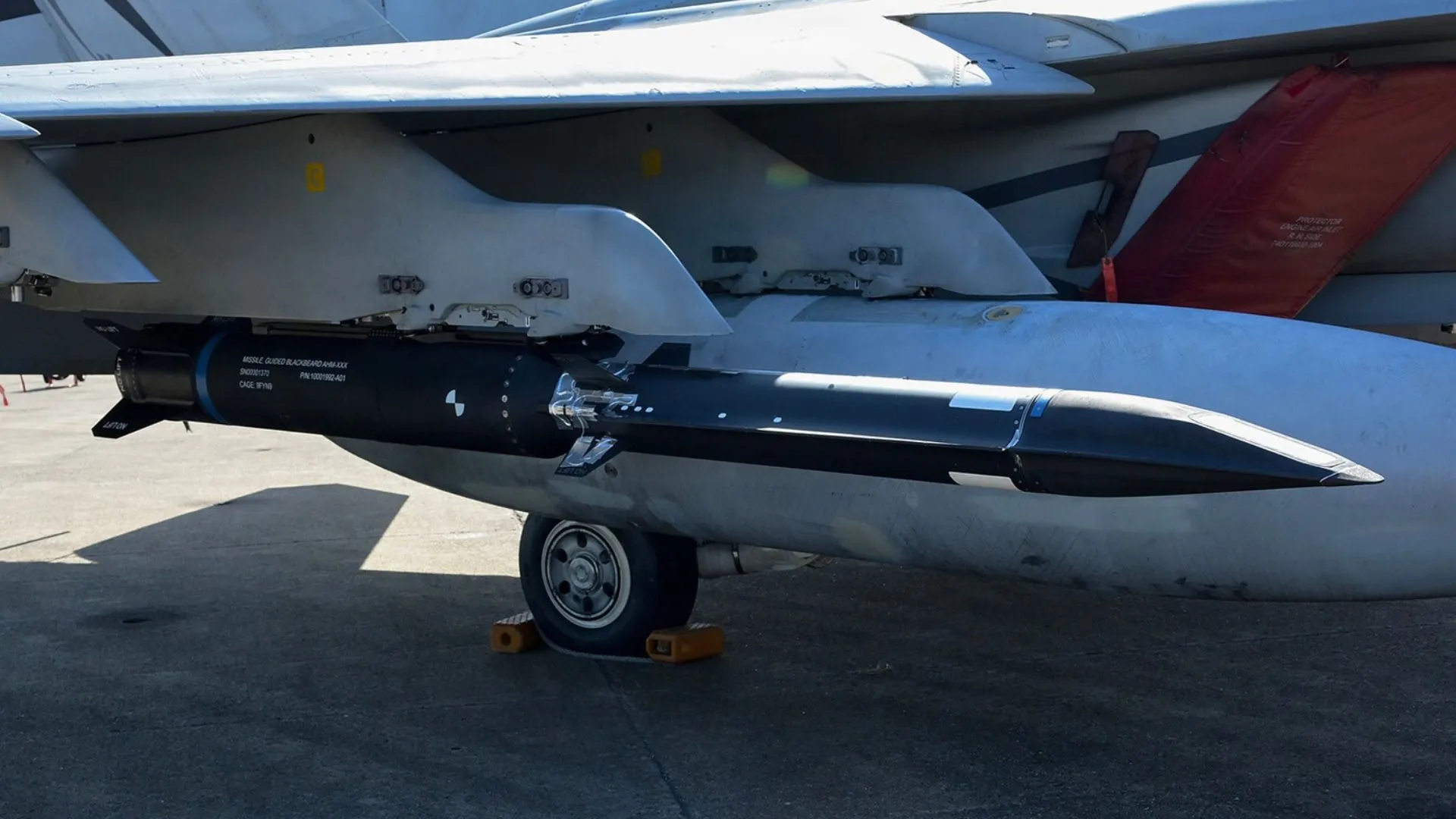
The U.S. Navy is preparing to expand its carrier-based fighter fleet with a new class of high-speed attack weapons. Chief of Naval Operations Adm. Daryl Caudle recently examined Blackbeard, a hypersonic missile developed by defense startup Castelion, during a visit to Naval Air Station Patuxent River in Maryland.
The Oct. 28 visit provided a closer look at the weapon’s progress toward integration with the F/A-18E/F Super Hornet. The Navy has already conducted an initial flight assessment. Further tests are planned before the rocket goes into service.
Caudle inspected the weapon with Air Test and Evaluation Squadron 23 (VX-23), which conducts weapons testing at the facility. The visit also included discussions about the Navy’s broader approach to developing autonomous aircraft and expanding the reach of carrier-based operations.
Hypersonic weapon is about to be tested
Blackbeard falls into the hypersonic category, which includes weapons capable of exceeding Mach 5. Its flight profile also allows it to change direction during atmospheric flight. This combination could make interception attempts by enemy air defense networks more difficult.
The integration of the weapon into the Super Hornet has already resulted in several testing milestones. At a Navy presentation in August, two Blackbeard test articles were shown mounted under the fighter’s wings.
On September 18, engineers took the next step. A Super Hornet left Patuxent River with two rockets during a development flight. The aircraft completed the mission without firing a weapon, allowing the Navy to assess how the fighter handles its added weight and external configuration.
Footage released by the Navy on September 25 documented the flight. The service ultimately wants each Super Hornet to be able to carry four Blackbeard missiles, potentially giving individual aircraft a significant attack payload.
Navy increases missile orders
Castelion has positioned Blackbeard as a cheaper alternative to existing American hypersonic weapons. Founded by former SpaceX engineers, the California-based startup aims to simplify production to increase production capacity.
The Navy awarded the company a $105 million contract in April to advance integration with the Super Hornet. The program also includes preparations for live-fire assessments in the Indo-Pacific.
Since then, procurement activity has picked up pace. In June, the Navy purchased 50 pre-production missiles for $23.4 million. A September agreement added a production contract worth up to $200 million. USNI News reported that the deal includes 444 missiles.
The Pentagon has also outlined much larger ambitions for the weapon. A framework agreement calls for the delivery of at least 500 missiles per year after testing is completed. The War Department has also indicated plans to seek funding for more than 12,000 units over five years.
Multiple launch platforms planned
The Super Hornet is just one possible application for Blackbeard. Castelion is aiming for compatibility with several other military platforms.
The planned launch platforms include the US Army’s HIMARS rocket artillery system. The company has also begun adapting the weapon for the Air Force’s F-16 as part of a research agreement.
Eventually, unmanned ships could also be involved in naval operations. Castelion intends to demonstrate the launch of Saronic’s Marauder unmanned surface vessel in 2027.
The Navy is working toward an early operational capability that would allow a limited missile inventory to reach front-line units. Additional development flights at Patuxent River will help prepare the weapon for subsequent live-fire evaluations.
An important milestone is still pending. The Navy has not yet announced a date for Blackbeard’s first live launch from a Super Hornet. This test will provide a clearer indication of the weapon’s operational readiness.
