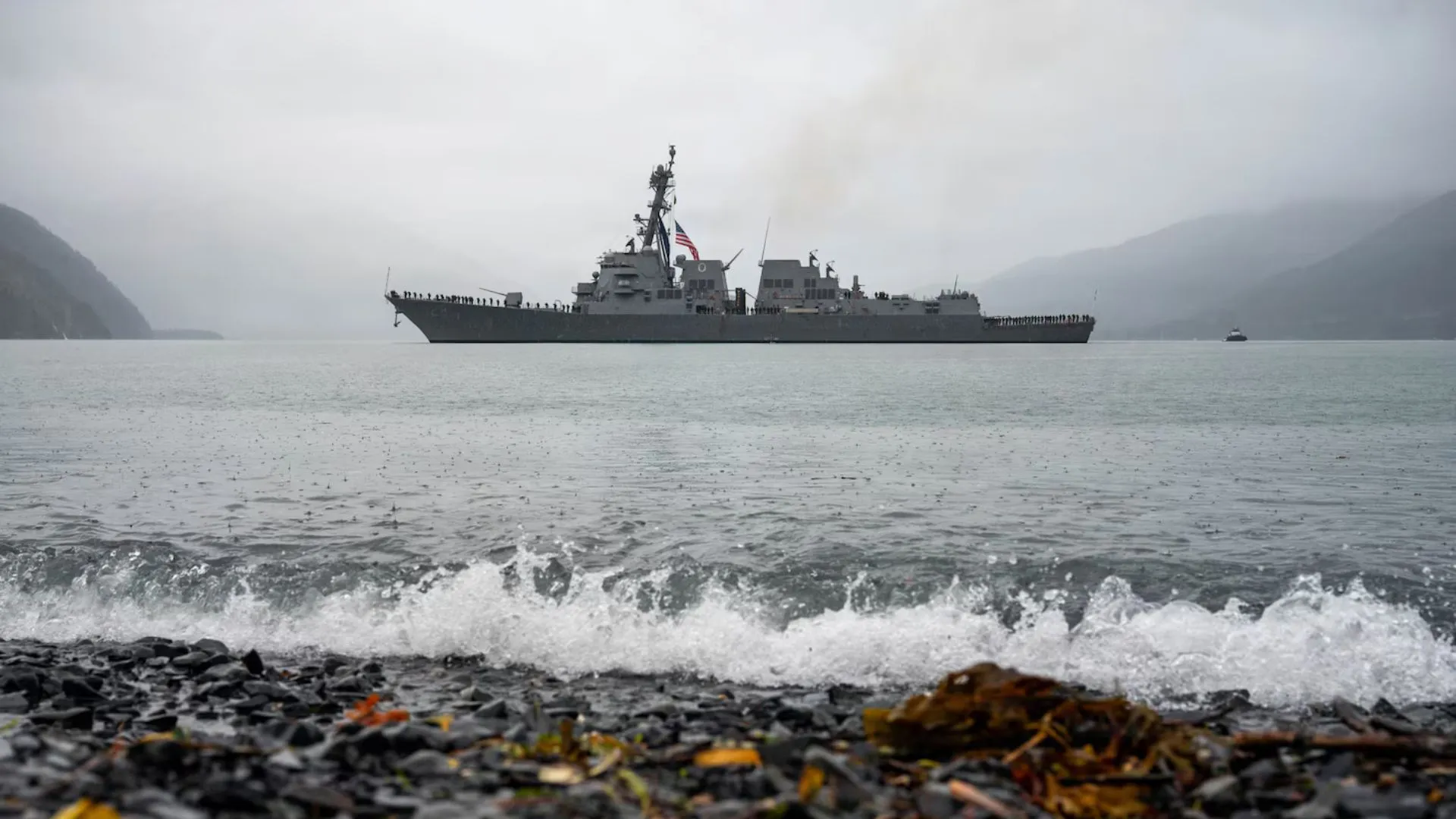
The U.S. Navy commissioned its newest Arleigh Burke-class guided-missile destroyer, USS Ted Stevens (DDG 128), at a ceremony in Whittier, Alaska, Oct. 3. With the commissioning, the approximately 9,700-ton (8,800-ton) warship will enter active service as the second Flight III destroyer in the U.S. fleet.
The ship is named after the late Senator Ted Stevens, who represented Alaska in the U.S. Senate from 1968 to 2009. The ceremony also underscored Alaska’s importance to U.S. naval operations in the North Pacific and Arctic.
Advanced radar and combat system
The USS Ted Stevens is equipped with the AN/SPY-6(V)1 air and missile defense radar and the Aegis Baseline 10 combat system. The Flight III configuration is intended to strengthen the destroyer’s ability to simultaneously conduct air defense and ballistic missile defense.
The ship also supports anti-submarine warfare, anti-surface warfare and aggressive warfare. Its Mk 41 vertical launch system gives the ship much of its offensive and defensive weapons capacity.
The destroyer features improved power distribution and additional cooling capacity to support its advanced systems. These upgrades are designed to help the ship function in demanding combat environments while collaborating with U.S. and allied forces.
“Today, USS Ted Stevens is no longer preparing to join the fleet. Today, Ted Stevens is the fleet,” said Acting Secretary of the Navy Hung Cao. “Today, the USS Ted Stevens is ready to defend the homeland, deter aggression and, when necessary, fight and win.”
A ship built in Mississippi
The Ingalls Shipbuilding division of Huntington Ingalls Industries built the USS Ted Stevens at its shipyard in Pascagoula, Mississippi. The destroyer completed manufacturer sea trials in early 2025 before undergoing acceptance trials by the Navy’s Board of Inspection and Survey.
The Navy accepted delivery of the ship on December 29, 2025. It departed Ingalls Shipbuilding on May 8, 2026 and arrived at Naval Station Norfolk, Virginia, seven days later.
Before commissioning, the destroyer sailed from Norfolk to Florida and then traveled through the Panama Canal to Alaska. It will return to Norfolk once post-commissioning work is completed.
In honor of Ted Stevens
Stevens’ military service was also recognized at the commissioning ceremony. During World War II, he served as a U.S. Army Air Forces pilot, flying transport missions over the Himalayas in the China-Burma-India theater.
For his war service he received two Distinguished Flying Crosses and two Air Medals. Stevens later became a prominent advocate for Alaska and the U.S. Armed Forces during his four decades in the Senate.
The ship’s sponsors, Catherine Ann Stevens, Susan Stevens Covich and Lily Stevens Becker, gave the traditional command: “Man our ship and bring it to life!”
“I am deeply honored and proud to be your sponsor, along with my mother and sister Susan,” said Lily Stevens Becker, daughter of Senator Ted Stevens. “When you wake up every day, know that we and all the people here believe in you to take care of this ship, care for each other, and maintain the peace and security of our nation.”
Norfolk will be his permanent home
Capt. Mary Katey Hayes, commanding officer of USS Ted Stevens, said the crew was prepared for the deployment.
“To my crew, my shipmates, the men and women who are the heart and soul of this great ship: you have exceeded all expectations,” said U.S. Navy Capt. Mary Katey Hayes, commanding officer of the USS Ted Stevens. “We are ready to answer our nation’s call. We are ready to defend freedom whether the winds of war blow near the rugged coast of Alaska or in the most remote parts of the world.”
The Navy said Whittier’s commissioning also reflects Alaska’s role in northern maritime defense. Following post-commissioning activities, USS Ted Stevens will return to Norfolk where she will be stationed for future global deployments.