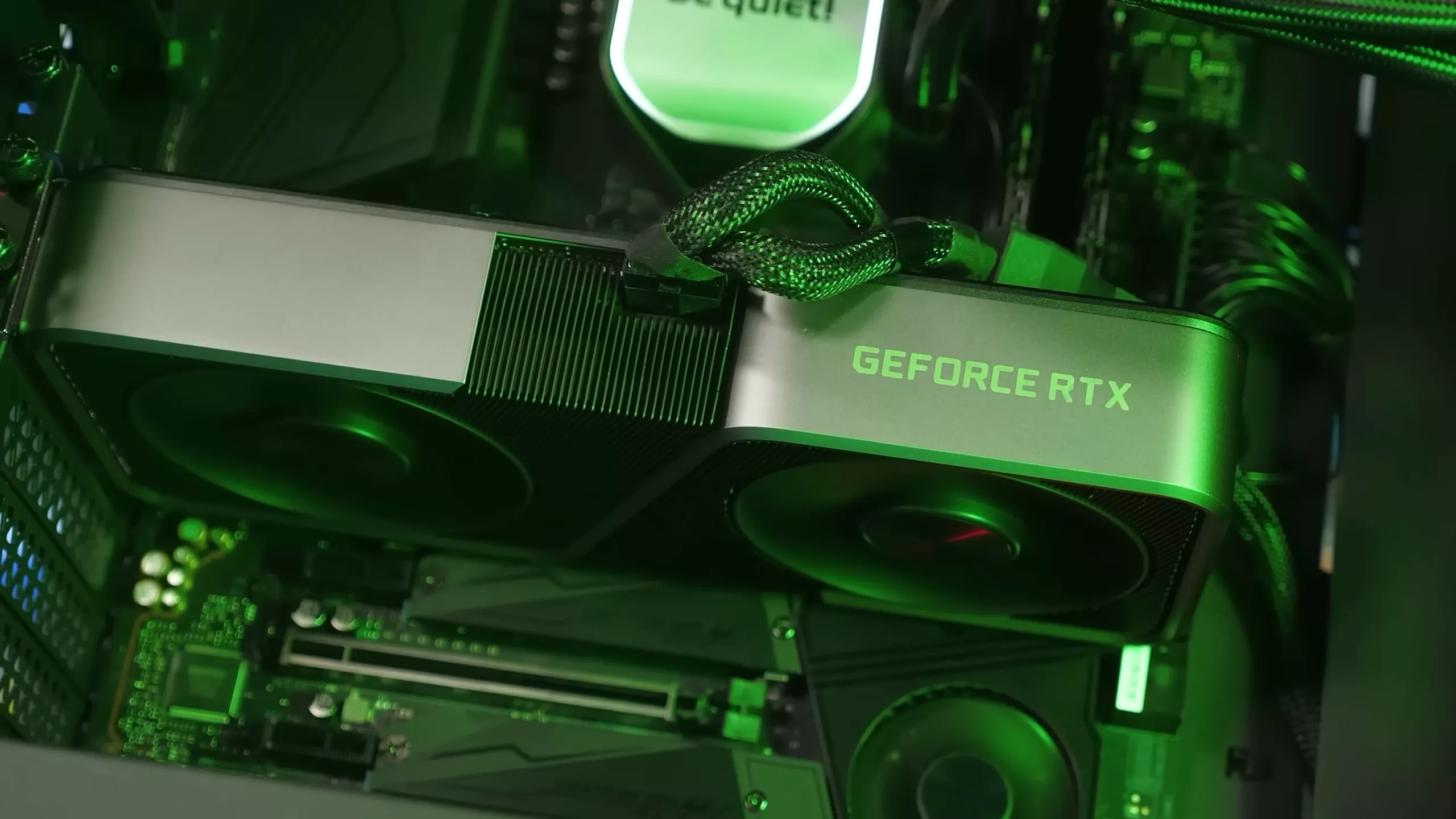
Enthusiast zone: Nvidia’s signed firmware has ensured that BIOS modifications are largely off the table for GeForce owners. A new set of tools bypasses this blocking rather than destroying it by loading a custom VBIOS through the driver itself. It reopens a door that enthusiasts thought was closed, but it arrives on a platform where the power connectors on high-end GPUs are already threatening to melt and a single driver update could close them. Proceed with caution.
A developer has released three tools to help GeForce RTX 30, 40 and 50 series owners run a modified VBIOS without writing to the card’s flash chip: a VBIOS editor for Windows and Linux, and separate loaders for each operating system.
The cool trick is that nothing is flashed. On Windows, the loader stores the edited image in the GPU’s driver registry, a place where the Nvidia driver already checks for a VBIOS override every time the device boots. The tool then restarts the GPU and the driver’s GSP firmware boots from the custom image instead of the one on the card.
The Linux version takes a different approach and patches Nvidia’s open kernel modules so that the GSP firmware starts with the custom image. Both projects build on previous override research, which the developer directly acknowledges.
The editor exposes settings that overclockers have wanted for years: board power limits, voltage caps, clock offset ranges, 12V input current and output overcurrent protection, fan PWM frequency, and fan channels. Blackwell cards receive the full set, while Ada and Ampere images are limited to fields that the developer has validated.
The numbers shared so far are aggressive. On what appears to be an RTX 5090 FE, the board’s power cap increased from 600W to 700W and the NVVDD and MSVDD voltage caps increased from 1,110mV to 1,150mV. For an RTX 4090, the power limit was increased from 550W to 671W, which was confirmed by nvidia-smi. In the developer’s own tests, an RTX 5090 reached 800W, an RTX 5080 went from 360W to 500W, and an RTX 5060 Ti went from 185W to 300W.
It also works both ways. On an RTX A2000, the loader lowered the card’s power floor to just 5W, and the developer states that the voltage can be lowered to a hard floor of around 0.4 to 0.45V, depending on the GPU generation. This makes the tools just as interesting for anyone who wants a cooler, quieter card with Undervolt built in instead of Afterburner being applied every time they boot.
No flashing means the card won’t be damaged by a failed write, but of course it won’t make the hardware harder. The 12V 2×6 port on these cards is rated at 600W, and there are numerous reports of RTX 5090 ports melting at default settings. Driving 800W through a card is a big gamble, and with supplies for the RTX 5090 and 5080 tight and warranty claims unlikely to cover a modified card, replacing a broken GPU won’t be easy. The developer recommends keeping a copy of the original ROM and testing on a GPU that doesn’t drive the display, and documents a recovery path in Safe Mode since Nvidia’s driver won’t load there.
The developer is not optimistic about how long this will last. He says Nvidia will most likely patch the method he used in upcoming drivers and urges users to enjoy it while they can. Meanwhile, some enthusiasts are happy about the return of BIOS editing, others just want it for undervolting, and many are already joking about how many cards will die before Nvidia closes the gap.
