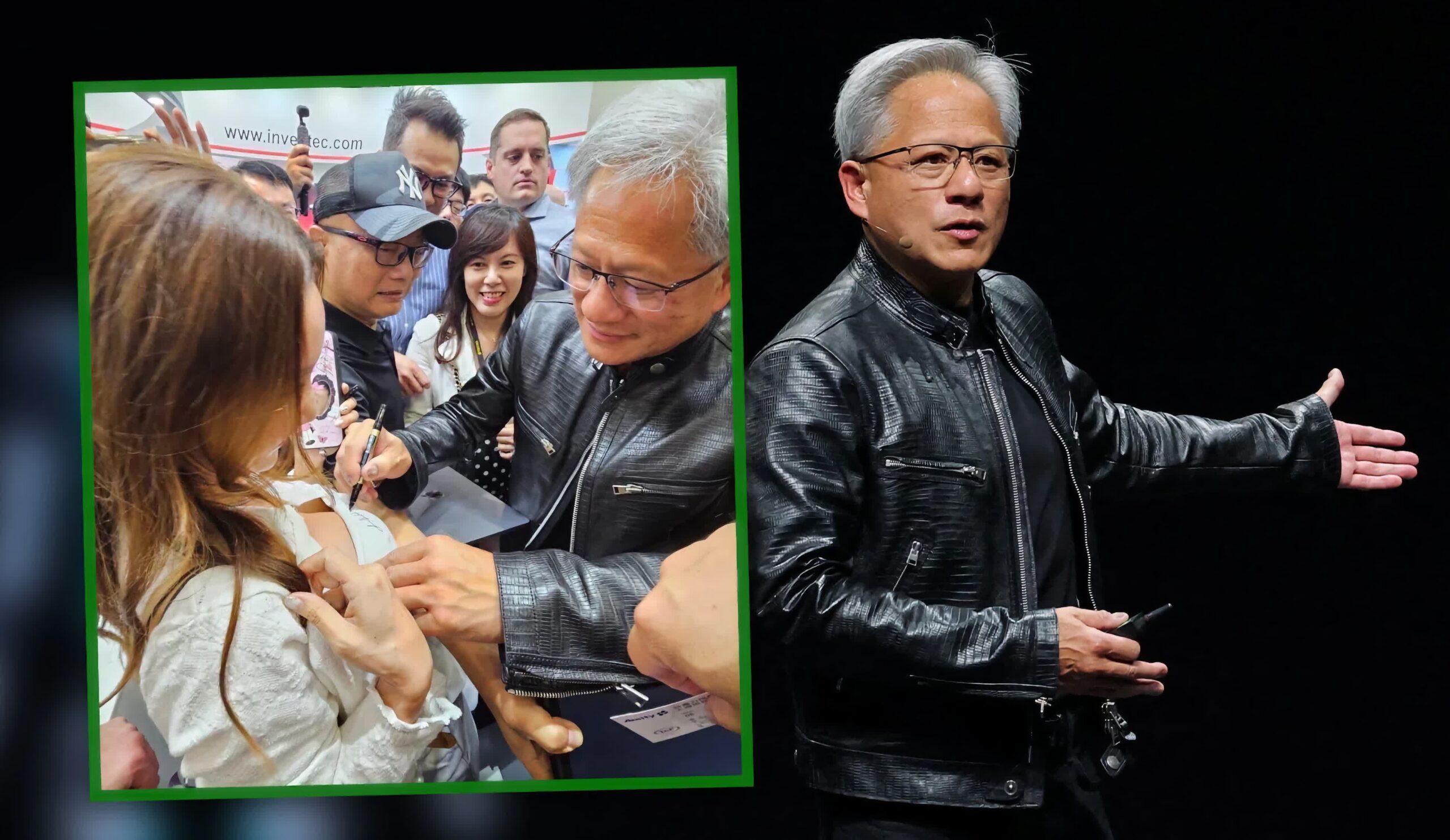
The spy who fucked? U.S. intelligence believes Alice Huang, a Chinese businesswoman who befriended Nvidia CEO Jensen Huang while her company was buying billions of dollars worth of his AI chips, was spying for China’s Ministry of State Security. Last spring, a memo circulated among top Trump policymakers said she had been recruited to learn about American AI chips and possibly persuade the Nvidia boss to pressure China to get the company’s most advanced processors.
Jensen Huang is a close ally of Trump and the Republican leaders of three House committees have now asked him to explain his dealings with his namesake in a closed-door briefing later this month.
U.S. export regulations prevent Nvidia’s best chips from reaching China, and he has been pushing Washington for years to allow the company to sell more of its technology in the country.
US intelligence agencies had been electronically monitoring Chinese citizen Alice Huang for at least a year. The report also said that President Trump was informed about the relationship last year but chose not to act. The two Huangs are not related.
Her company, Megaspeed, began buying chips in 2024, around the time she and Jensen Huang were photographed together at a bar in Taipei. Many in the industry were surprised because the company had no visible track record in this area.
Megaspeed is building data centers in Southeast Asia and leasing their computing capacity to Alibaba. Nvidia can’t ship its top data center chips to China, but by leasing offshore capacity, a Chinese company can run workloads on the same hardware without having to import it. The setup effectively allows Chinese companies to access computing power that they cannot directly import under U.S. export controls.
Alice Huang was part of a group of companies and investors based in Shanghai and Zhejiang Province. This group used its connections with Shanghai officials to move from mobile video games to data centers. It also has a financial connection to China’s defense sector through an investment in a cybersecurity subsidiary of China Electronics Technology Group, a major military technology manufacturer.
People who have met her say she speaks English fluently and attends industry conferences and private executive dinners. In addition to Jensen Huang, she knows the executives of Gigabyte, a large manufacturer of Nvidia-based supercomputers.
Peter Mattis, a former CIA counterintelligence analyst and now head of the Jamestown Foundation, said the department views technology as “the defining battle for dominance in the economic world.”
— Patrick Moorhead (@PatrickMoorhead) November 7, 2026
“They’re interested in what’s happening in technology, in the technical specifications of what’s being built, and in shaping decision-making around these things,” Mattis told the New York Times. “Jensen is someone you want to influence because he has great power and is at the forefront of world-shaping technology.”
Nvidia spokesman John Rizzo said the company does not share classified information with customers. He also said customers would not ask Nvidia to pressure Washington to change its chip policy toward China. He said Beijing has “consistently promoted its own domestic alternatives in China, including Huawei, and strictly limited imports of our data center products.”
Rizzo has described Jensen Huang’s meetings with Alice Huang as “not unusual,” noting that the CEO speaks with thousands of executives who do business with Nvidia every year.
Liu Chang, a spokesman for the Chinese Embassy, called the reporting “unfounded” and “nothing but slander against China.” Alice Huang did not respond to repeated requests for comment. The White House and the CIA declined to comment.
Jensen Huang argues that selling in China would enable Nvidia to compete with Huawei and slow its progress. In 2025, he persuaded Trump to lift a ban and allow the sale of a less powerful Nvidia chip. The two later agreed that Nvidia would be allowed to sell its second-most powerful chip in China, with the U.S. government receiving 25% of the revenue. Trump also considered approving Blackwell, Nvidia’s latest architecture, but dropped the idea.
At an investor conference in May, Jensen Huang said China should not get Blackwell or the upcoming ruby chip. He said the United States should have “the first, the most and the best, but at the same time all American companies should compete globally.”
The Ministry of State Security was founded in 1983 and for years was behind the People’s Liberation Army’s espionage and hacking units in Beijing’s pecking order. That began to change after Xi Jinping took power in 2012 and poured money into the ministry. After a 2015 agreement between the US and China to curb cyber operations, the company increasingly took over China’s espionage work. The Justice Department later accused hackers affiliated with the department of trying to steal U.S. technology.
By 2023, the department had become a rival to the CIA, using AI to select and profile targets. It is estimated that there are hundreds of thousands of agents, far more than the United States has counterintelligence officers. China wants to be the world leader in AI by 2030.
The ministry’s current head, Chen Yixin, is from Zhejiang and served under Xi when the current president ruled the province in the early 2000s. In a September essay in the state-run journal China Cyberspace, Chen said China needs to gain control of AI and that algorithms will help countries “seize the initiative on the battlefield.”
