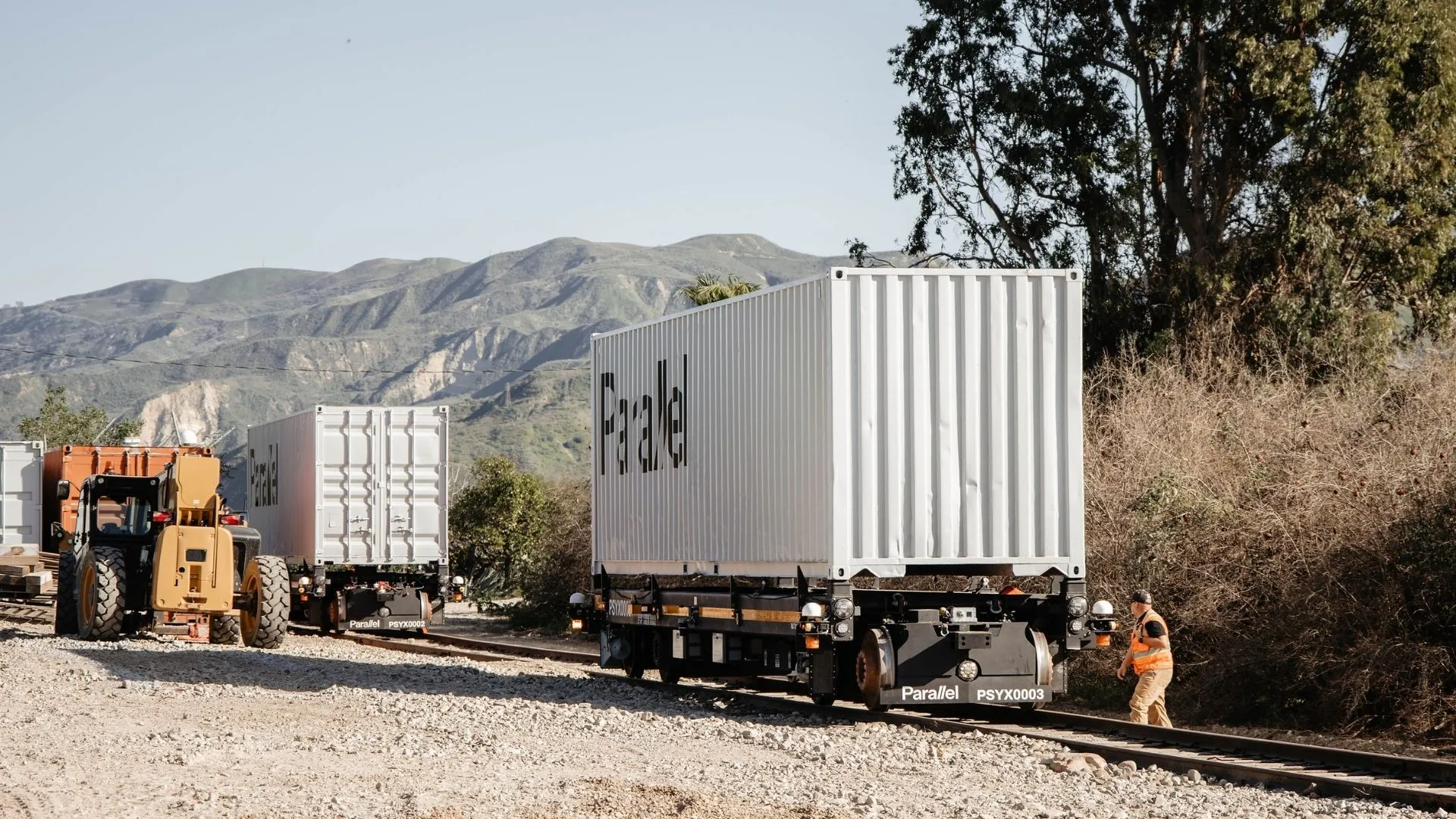
Parallel Systems has raised $100 million in a new round of funding to expand production of its autonomous, battery-electric freight rail vehicles. The company is betting that smaller, self-propelled railcars can make rail shipping more competitive than trucks on shorter routes.
The Los Angeles-based company announced the close of its Series C round on Oct. 7, saying the funding would support production of its third-generation Panther vehicle, commercial expansion and entry into international markets.
Founded in 2020 by former SpaceX engineer Matt Soule, Parallel Systems is developing a cargo system that combines electric propulsion, autonomous control and software-coordinated rail vehicles. The aim is to make rail usable for shipments that are often transported by trucks, as traditional freight trains are less flexible on shorter routes.
Railcars that run without a locomotive
Traditional freight trains rely on locomotives pulling long rows of coupled wagons. This arrangement is suitable for transporting large quantities over long distances, but the assembly of trains and the coordination of terminal operations can make smaller shipments less economical on short routes.
Parallel’s approach is different. Its battery-electric vehicles propel themselves rather than relying on a traditional locomotive, and can run individually or in coordinated groups called platoons. Vehicles can be separated and regrouped to transport cargo to different destinations without requiring the same traditional coupling arrangements.
The system is designed to transport standard shipping containers and can therefore work with existing freight infrastructure and handling equipment. On-board sensors and vehicle control software track position and operating conditions, while the company’s software is designed for integration with railway control and logistics systems.
The technical challenge is not simply making a railcar electric or autonomous. It coordinates multiple self-driving vehicles while meeting railway operating regulations and safety requirements without sacrificing the energy efficiency that makes rail transport attractive in the first place.
Testing goes beyond the lab
At the same time, it is testing its technology in Georgia with short-line railroad operator Genesee & Wyoming as part of a program approved by the Federal Railroad Administration.
The pilot has made progress beyond an isolated test track. In September 2026, FreightWaves reported that the program had reached a phase that included a 30-mile route between Vidalia and an area east of Helena, Georgia. The more comprehensive test program is intended to evaluate the vehicles and their operating approach under increasingly representative conditions.
The company says several major railroads have now signed contracts to use its system for commercial freight transportation. However, the Georgia program remains an important step in determining how the technology will work in real-world railroad operations.
Making short-haul transport more competitive
Parallel argues that its system could open up routes that are currently difficult to serve economically for conventional rail services, particularly trips under 500 miles. The company’s goal is to combine the energy and cost advantages of rail with more frequent departures and greater flexibility.
The website says the vehicles can travel up to 500 miles on a charge, although this is a company-claimed capability rather than an independently determined performance figure.
The new funding will help scale Panther production in parallel and pursue international opportunities. The company has not disclosed a production timeline or the number of vehicles it plans to fund through the Series C funding.
If the system can operate reliably on a large scale, it could give railroads another way to transport containerized freight while reducing reliance on short-haul trucking. The key test for now is whether autonomous electric railcars can transition from supervised pilots to reliable commercial services on existing rail networks.