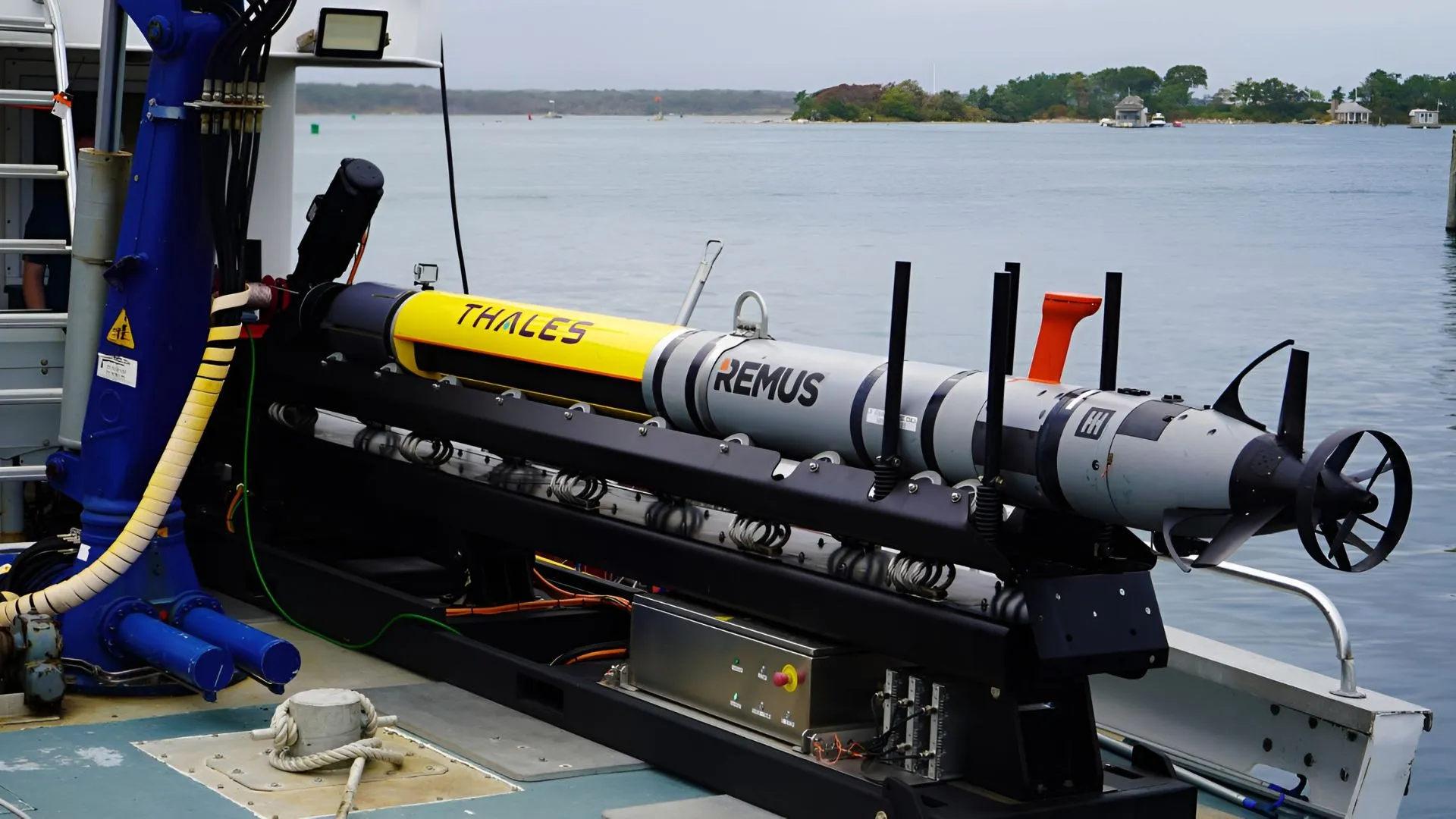
An autonomous underwater vehicle has conducted a comprehensive demonstration of mine countermeasures, bringing naval forces closer to safer and faster demining operations. The exercise combined underwater search, sonar-based identification and mine neutralization in a coordinated mission.
HII and Thales carried out the demonstration using an integrated network of autonomous underwater systems and specialized mine countermeasures equipment. The build focused on HII’s REMUS 620 unmanned underwater vehicle (UUV) and Thales’ Expeditionary PathMaster architecture.
The system followed a complete “Find, Repair, Finish” workflow. It allowed operators to detect potential mine threats and coordinate their identification and subsequent neutralization. The approach also reduces the need to send manned platforms near suspected minefields.
Autonomous systems hunt mines
Naval mines continue to pose a persistent threat to maritime operations. They can restrict shipping routes, disrupt commercial traffic and force warships to avoid entire areas. Traditional demining missions often require multiple platforms and repeated missions before operators can confirm a threat.
The integrated system is intended to shorten this process. Its REMUS 620 UUV carries Thales’ SAMDIS 600 multi-aspect sonar to scan the underwater environment for potential mines. HII’s command and control software manages the vehicle and connects its operations to Thales’ Expeditionary Portable Operation Center (ePOC).
The ePOC serves as the mission’s central control hub. It houses Thales’ mission management system and sonar analysis software, as well as HII’s Odyssey mission management solution. Operators can monitor mission assets through a unified operational picture.
As soon as the sonar detects suspicious objects, Thales’ software analyzes the collected images. Its automatic target detection technology helps operators classify and locate mine-like objects. Human staff maintain control over the identification process and subsequent operational decisions.
Detect and neutralize threats
In the final phase of the demonstration, the underwater effector ANGLER from Thales Advanced Acoustic Concepts was used. An accompanying remotely operated vehicle (ROV) quickly recaptured the previously detected objects. She then carried out visual inspections to determine whether there was a mine hazard.
The ANGLER system provides the ability to attack and neutralize identified mines. This completes the mission chain without the sailors having to approach the suspected explosives directly.
The exercise also tested automated startup and recovery features. HII’s Sea Launcher system deployed and recovered the REMUS 620 with SAMDIS 600 sonar. This adds another layer of automation to expeditionary mine warfare operations.
Thales’ open Expeditionary PathMaster architecture also supports devices from multiple manufacturers. Its NATO-compliant framework allows allied navies to combine various autonomous vehicles, sensors and neutralization systems. This could make it easier to match the mine-clearing capabilities of different naval fleets.
Faster mine countermeasures missions
The demonstration builds on an integration exercise in 2025 involving the SAMDIS 600 sonar and REMUS 620. This previous work focused on sensor integration and underwater performance. The more recent exercise included mission management, automatic target detection and mine neutralization.
“Together, we are giving naval forces a way to conduct these demanding missions faster, at greater scale, and with sailors further from mine threat,” said Duane Fotheringham, president of HII’s Unmanned Systems Group.
Sébastien Guérémy, vice president of subsea systems at Thales, said the exercise showed how different autonomous platforms and specialized equipment could work within one framework.
The approach could help U.S. and allied navies reduce exposure to personnel during dangerous mine clearance missions. It also provides a more flexible way to deploy underwater systems in expeditionary operations.