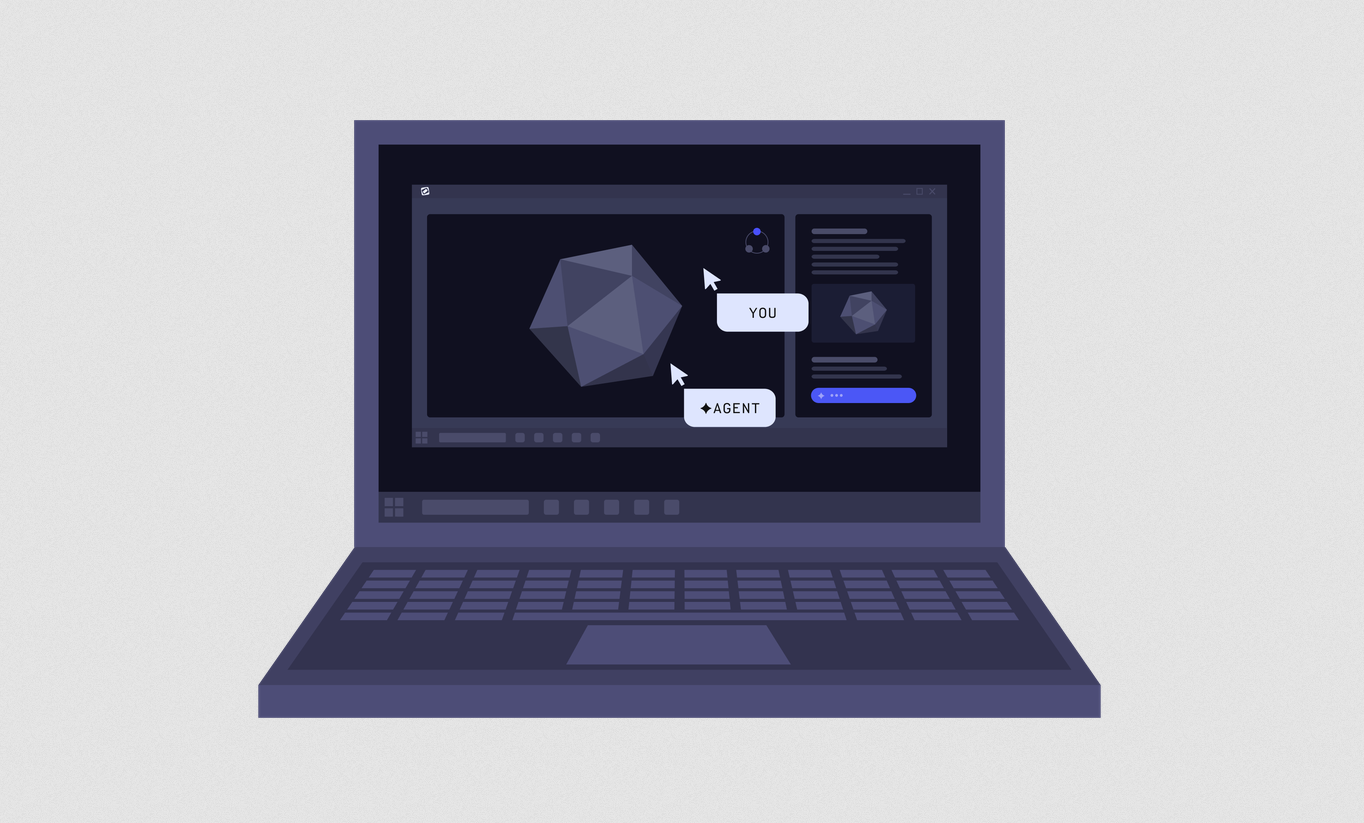
If autonomous artificial intelligence agents are truly to become the future of business, they must have their own computer so they can do their work without disturbing others.
The founders of remote desktop company Parsec Technologies Inc. have developed a new offering designed to give these agents the computer access they need. Their new startup is called Phaze Inc. and has just launched its offering after receiving $8.75 million in seed funding from Andreessen Horowitz. Index, NextView, Makers and Lerer Hippeau also took part in today’s round.
Phaze has developed a powerful remote desktop platform designed for both humans and AI agents, giving them access to powerful computers, including high-end workstations. Its platform allows these users to control a remote workstation with the same low-latency responsiveness and visual fidelity that they would receive if they accessed the hardware locally.
The startup says it’s trying to solve some glaring efficiency problems in many companies. One problem is the emergence of computer agents that like to hijack employees’ screens while automating everyday business tasks, thereby reducing human productivity.
Another challenge is that many companies invest in powerful workstations that can render complex 3D graphics and compile large code bases, which can cost up to $10,000. These machines are needed, but many IT departments tend to assign one machine to each employee, meaning expensive hardware often goes unused when that person goes out to lunch, sits in a meeting, or takes a few days off.
Phaze’s solution is to transform these workstations into a shared pool of elastic computing power so that everyone in an organization can access it on demand via its proprietary low-latency streaming technology. This streaming technology is supported by a specially designed Model Context Protocol server that allows computer users to log into expensive workstations and operate them in the same way a human employee would.
The result: Instead of working exclusively through expensive and brittle application programming interfaces, agents can directly access a computer and navigate its operating system, launch applications and get their work done.
Benjy Boxer, co-founder and chief executive of Phaze, said the platform also supports collaboration between humans and agents, allowing them to work together to complete more complex tasks. For example, an automated IT support bot could diagnose problems when new tickets are created, then redirect the session to a human technician if the resolution is more detailed than what it is authorized to do.
“The computer on your desk shouldn’t determine what computing power you have access to,” Boxer said. “Humans need powerful workstations to get their work done, and now AI agents need computers they can actually operate. We’re building the access layer that allows anyone to connect to the machine they need, wherever it is.”
By converting expensive workstations into a shared infrastructure, administrators can dynamically allocate their computing resources to anyone who needs access as people and agents’ workflows fluctuate. The workstations themselves can be placed on a desk, installed in a data center, or locked in a closet. Regardless of where they are located, companies can get the maximum efficiency out of them.
Phaze’s job now is to convince companies of the benefits of its platform, and Boxer said the money from today’s round will be used to accelerate its go-to-market plans and attract new customers. The startup will also look to expand its engineering team and develop more features.
Martin Casado, general partner at Andreessen Horowitz, expects Phaze to see strong interest in its remote access platform because workstations are too expensive to sit idle for hours. “Phaze turns these machines into a shared infrastructure for humans and AI agents,” he said. “Benjy and the team have been working in this space for more than a decade and bring that experience to a new era of remote access and machine management.”
Image: Phaze
Support our mission to keep content open and free by interacting with theCUBE community. Join theCUBE Alumni Trust Networkwhere technology leaders connect, share information and create opportunities.
- Over 15 million viewers of theCUBE videosto spark conversations about AI, cloud, cybersecurity and more
- Over 11.4k theCUBE alumni — Connect with more than 11,400 technology and business leaders shaping the future through a unique, trusted network
Founded by tech visionaries John Furrier and Dave Vellante, SiliconANGLE Media has built a dynamic ecosystem of industry-leading digital media brands, reaching over 15 million elite tech professionals. Our new proprietary theCUBE AI Video Cloud is a game-changer in audience engagement, leveraging the theCUBEai.com neural network to help technology companies make data-driven decisions and stay at the forefront of the industry conversation.
