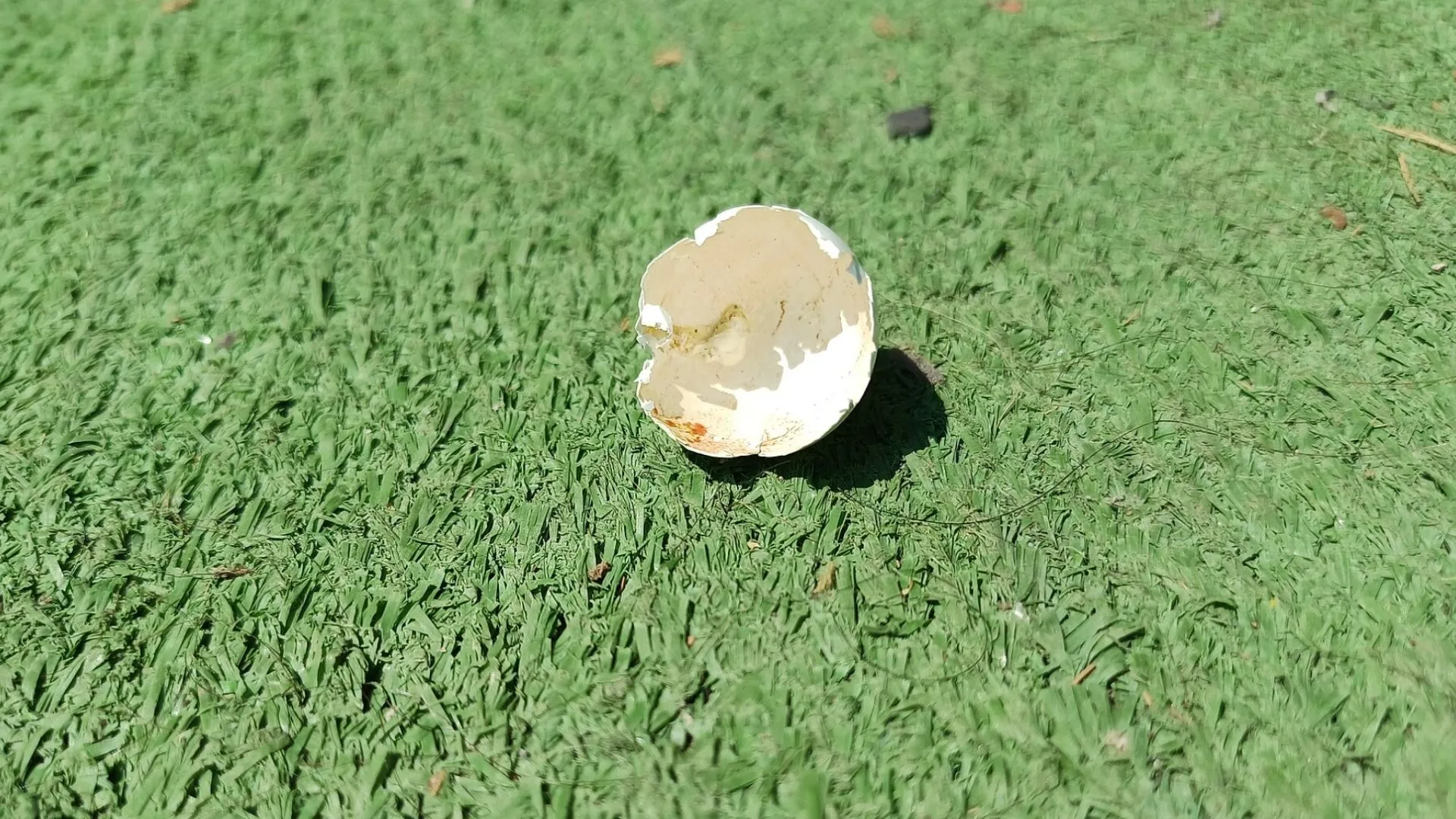
US researchers have demonstrated a way to convert powdered eggshells into stronger, harder magnesium alloys by using waste material to replace traditional calcium ingredients from mined ores.
The proof-of-concept study uses friction stir extrusion to incorporate eggshell powder into magnesium. The process creates calcium materials during manufacturing and bypasses the separate ore processing step.
Magnesium alloys find application in the automotive, aerospace and biomedical industries. The researchers’ approach offers a cheaper and less energy-intensive way to improve their mechanical properties.
Eggshells replace degraded calcium materials
Eggshells consist of 95 percent calcium carbonate and are therefore a source of calcium for alloy production. During processing, this calcium carbonate converts into calcium oxide and resulting calcium.
“For example, calcium carbonate and calcium oxide are important materials for making metal alloys,” said Bharat Gwalani, corresponding author of the paper and assistant professor of materials science and engineering at North Carolina State University.
“But producing these calcium materials requires a complex process that uses mined materials. We have demonstrated a technique that allows us to skip a step,” he added.
Instead of processing ore into calcium products and then adding them to the metals, the researchers introduced finely ground eggshells directly into the manufacturing process.
“There are a lot of advantages to this. There are fewer steps. You have a reliable, sustainable supply chain. Eggshells are inexpensive. And you use a lot less energy because you don’t have to go through the process of making calcium products from ore,” Gwalani said.
For the demonstration, the team focused on magnesium, whose combination of strength and light weight makes its alloys useful for electronics and aerospace equipment.
The process begins with a cylindrical block of magnesium. Researchers drill holes in it at even intervals, fill them with finely ground eggshells and place the block in a steel cylinder.
A steel mandrel with a central hole is then lowered into the cylinder. It acts like a pestle in a mortar, pushing on the magnesium while rotating at 300 revolutions per minute.
Pressure and rotation mix the eggshell powder with the surrounding metal. The friction between the eggshell particles and magnesium drives the conversion of calcium carbonate into calcium oxide and calcium, resulting in the formation of Mg2Ca.
At the same time, the downward force of the mandrel pushes the processed material through its central hole. The result is an extruded rod made from the finished magnesium alloy.
“Magnesium is added to calcium to improve its mechanical properties,” Gwalani said.
“We wanted to see if we could use biogenic waste – eggshells – to produce the necessary calcium materials during the manufacturing process,” he added.
The applications go beyond eggshells
The researchers describe the approach as scalable and energy efficient, with applications that extend beyond this particular combination of waste material and metal.
Earlier this year, the team demonstrated another application of friction stir extrusion, using magnetic samarium-cobalt powder with aluminum waste to produce magnetic composites.
The eggshell study is published in Journal of Magnesium and Alloys. The work shows how discarded eggshells can directly provide useful alloy components during magnesium processing.